• HOME
  • NEWS
  • EXPLORE
    • CAREER
      • Companies
      • Jobs
    • EVENTS
    • iGEM
      • News
      • Team
    • PHOTOS
    • VIDEO
    • WIKI
  • BLOG
  • COMMUNITY
    • FACEBOOK
    • INSTAGRAM
    • TWITTER
Wednesday, July 1, 2026
BIOENGINEER.ORG
No Result
View All Result
  • Login
  • HOME
  • NEWS
  • EXPLORE
    • CAREER
      • Companies
      • Jobs
        • Lecturer
        • PhD Studentship
        • Postdoc
        • Research Assistant
    • EVENTS
    • iGEM
      • News
      • Team
    • PHOTOS
    • VIDEO
    • WIKI
  • BLOG
  • COMMUNITY
    • FACEBOOK
    • INSTAGRAM
    • TWITTER
  • HOME
  • NEWS
  • EXPLORE
    • CAREER
      • Companies
      • Jobs
        • Lecturer
        • PhD Studentship
        • Postdoc
        • Research Assistant
    • EVENTS
    • iGEM
      • News
      • Team
    • PHOTOS
    • VIDEO
    • WIKI
  • BLOG
  • COMMUNITY
    • FACEBOOK
    • INSTAGRAM
    • TWITTER
No Result
View All Result
Bioengineer.org
No Result
View All Result
Home NEWS Science News Biology

Analysis of bird species reveals how wings adapted to their environment and behavior

Bioengineer by Bioengineer
May 18, 2020
in Biology
Reading Time: 2 mins read
0
IMAGE
Share on FacebookShare on TwitterShare on LinkedinShare on RedditShare on Telegram

IMAGE

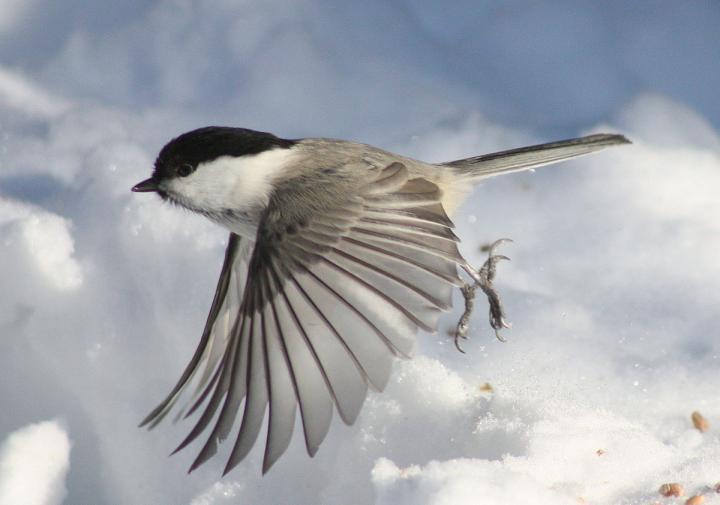
Credit: Photo in the public domain: https://commons.wikimedia.org/wiki/File:Poecile_Montanus_Kittila_20120306.JPG

Bird wings adapted for long-distance flight are linked to their environment and behaviour, according to new research on an extensive database of wing measurements, led by the University of Bristol.

The Arctic tern flies from the Arctic to the Antarctic and back again each year, while the Inaccessible Island rail – the world’s smallest flightless bird – never leaves its five-square-mile island.

The way different organisms vary in how much they move around is a key factor in understanding and conserving biodiversity. Yet since tracking animal movement is difficult and expensive, there are still huge gaps in knowledge about animal movements and dispersal, particularly in more remote parts of the world. The good news is that bird wings offer a clue.

Measurements of wing shape – particularly a metric called the ‘hand wing index’, which reflects the elongation of the wing – can quantify how well the wing is adapted for long-distance flight and is easily measured from museum specimens.

New research published today in Nature Communications has analysed this index for over 10,000 species of birds, providing the first comprehensive study of a dispersal-linked trait across an entire class of animals.

A global team of researchers, led by the University of Bristol and Imperial College London, measured the wings of 45,801 birds in museums and field sites around the world.

From these, the team created a map of the global variation in wing shape, showing that the best-adapted fliers were primarily found in high latitudes while birds adapted to more sedentary lifestyles were generally found in the tropics.

By analysing these values along the bird family tree, together with detailed information about each species’ environment, ecology, and behaviour, the authors found that this geographical gradient is primarily driven by three key variables: temperature variability, territory defence, and migration.

The study’s lead author, Dr Catherine Sheard from the University of Bristol’s School of Earth Sciences, said: “This geographic pattern is really striking. Given the role we know dispersal plays in evolutionary processes, from speciation to species interactions, we suspect this relationship between behaviour, the environment, and dispersal may be shaping other aspects of biodiversity.”

Examples of fundamental patterns potentially explained by variation in dispersal include the smaller geographical ranges noted in tropical species.

Dr Joseph Tobias, senior author of the study, based at Imperial College London, added: “We hope our measures of wing shape for over 10,000 bird species will have numerous practical applications, particularly in ecology and conservation biology, where so many important processes are regulated by dispersal.”

###

Media Contact
Victoria Tagg
[email protected]

Related Journal Article

http://dx.doi.org/10.1038/s41467-020-16313-6

Tags: Earth ScienceEvolution
Share12Tweet8Share2ShareShareShare2

Related Posts

KAIST Creates AI That Interprets Animal Behavior as a Language — Biology

KAIST Creates AI That Interprets Animal Behavior as a Language

July 1, 2026
New Study Uncovers 3D Genome Organization During Germ Cell Formation Across Evolutionary Time — Biology

New Study Uncovers 3D Genome Organization During Germ Cell Formation Across Evolutionary Time

July 1, 2026

Promising New HIV Vaccine Shows Remarkable Success in Primate Trials

July 1, 2026

UMaine Researchers Discover Woodcocks Charge Deer to Protect Their Nests

June 30, 2026
Please login to join discussion

POPULAR NEWS

  • Detection of EDCs in Breast Milk and Infant Urine Up to Six Months Highlights Early Exposure Risks

    77 shares
    Share 31 Tweet 19
  • Saying Goodbye to PGY-6: Pediatric Fellowship Realities

    103 shares
    Share 41 Tweet 26
  • New Drug Candidate Developed at McMaster Shows Potential for Treating Brain Cancer

    58 shares
    Share 23 Tweet 15
  • KTU Researchers Explore Ultrasound’s Role in Enhancing Blood Flow Beyond Diagnostics

    53 shares
    Share 21 Tweet 13

About

We bring you the latest biotechnology news from best research centers and universities around the world. Check our website.

Follow us

Recent News

Advancing Improved Diagnostics and Therapies for Lyme Disease

New Study Identifies Spring Break as the Most Hazardous Period for Holiday Travel in Florida

Persistent Back Pain? Major Clinical Trial Highlights the Effectiveness of Self-Management Strategies

Subscribe to Blog via Email

Enter your email address to subscribe to this blog and receive notifications of new posts by email.

Join 82 other subscribers
  • Contact Us

Bioengineer.org © Copyright 2023 All Rights Reserved.

Welcome Back!

Login to your account below

Forgotten Password?

Retrieve your password

Please enter your username or email address to reset your password.

Log In
No Result
View All Result
  • Homepages
    • Home Page 1
    • Home Page 2
  • News
  • National
  • Business
  • Health
  • Lifestyle
  • Science

Bioengineer.org © Copyright 2023 All Rights Reserved.