A metagenomic survey of surface waters in the Brazilian Amazon has revealed that bacteria living in rivers flowing through towns and farmland carry a richer and more diverse arsenal of antibiotic efflux pump genes than bacteria in pristine headwaters, and that a regulatory gene called cbrB, which helps control these pumps, is recoverable and structurally intact at nearly every polluted site. The study, published in Molecular Biology Reports, profiled the Cereja River in Bragança and the Uraim River in Paragominas, two waterways shaped by very different economic pressures. By sequencing environmental DNA collected along a gradient of human impact, the researchers identified resistance-nodulation-division and small multidrug resistance pump genes as the dominant families, recovered two-component system repressor genes from the water, and built three-dimensional protein models of CbrB from metagenomic sequence data. The authors propose that the higher coverage of cbrB at anthropogenically impacted sites could make this regulatory gene a novel biomarker of environmental pollution and of the spread of antibiotic resistance in aquatic ecosystems.
The rise of multidrug-resistant bacteria in natural water bodies is a growing public health concern, and the excessive use of antibiotics has selected for strains that resist many drugs at once. These bacteria thrive in heavily anthropogenic environments because such settings contain a cocktail of chemical compounds, including antibiotics, biocides, hydrocarbons, and heavy metals. This mixture enables cross-resistance, a situation in which a single resistance mechanism protects a bacterium against more than one agent from the same family or against different biocides. Efflux pumps sit at the center of this problem. They catalyze the active export of a wide range of stressful substances, from antibiotics and organochlorine compounds to metals, and some pumps even provide specific resistance to drugs such as colistin. Crucially, the genes encoding these pumps can be embedded in mobile genetic elements such as plasmids and insertion sequences, which guarantees their dissemination and persistence across different bacterial communities, allowing resistance traits to move between species and genera in contaminated waters.
Beyond antibiotic resistance, efflux pumps perform functions that shape bacterial behavior in ecosystems. They participate in virulence and biofilm formation by transporting extracellular polymeric substances and quorum sensing molecules that help build the biofilm matrix, they indirectly regulate genes related to biofilm development, they expel harmful molecules such as antibiotics and metabolic intermediates that could damage growing biofilms, and they can influence aggregation by promoting or preventing adhesion to surfaces and to other cells. Their regulation is complex and highly interconnected, varying between species and even within a species depending on the physiological state, so that inhibiting or deleting one pump may trigger the expression of others. Two main regulatory pathways have been described: control mediated by transcriptional activators or repressors carrying DNA-binding motifs, and activation through two-component systems, which adjust gene expression in response to environmental signals. It is this second pathway, and the repressors within it, that the Amazon study set out to characterize in river water.
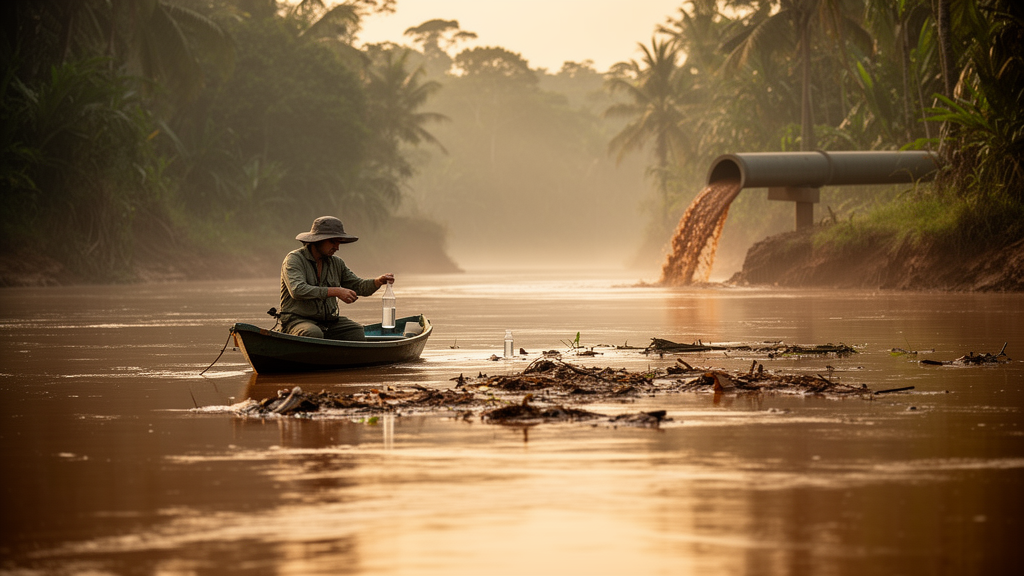
The choice of rivers reflects the environmental realities of the region. Bragança, one of the oldest cities in the Amazon with more than 100,000 inhabitants, is crossed by the 4-kilometer Cereja River, whose acidic waters carry high concentrations of fecal coliforms and receive inputs of domestic, commercial, and hospital sewage directly from illegal discharge points, a consequence of the widespread lack of basic sanitation and sewage systems in the Amazon. Paragominas, located 320 kilometers from Belém, is the largest grain producer in Pará, harvesting corn and soybeans, and hosts intense mining activity, mainly of bauxite and to a lesser extent aluminum compounds, kaolin, and silver. The Uraim River basin has undergone considerable deforestation of its native vegetation, which has led to frequent flooding problems further influenced by climate change. Few studies of resistance genes have been carried out in the Amazon, a region underserved by healthcare systems and constantly transformed by economic activity, making these two rivers a revealing comparison.
The team selected five sampling points along each river, from an untouched pristine site at the start to a final point downstream of the city, with intermediate points between the extremes. At each point, independent 5-liter water samples were collected in triplicate at a depth of 20 centimeters using a Van Dorn bottle, preserved on ice, and filtered through 47-millimeter membranes with 0.22-micrometer pores. DNA was extracted with the Pro-DNeasy PowerSoil kit, libraries were prepared with the Nextera XT kit, and sequencing produced 150-base-pair paired-end reads on the Illumina NovaSeq 6000 platform. Reads were quality-filtered with Fastp at a minimum Phred score of 20, classified with kraken2, and screened for resistance genes using the CARD-RGI database, retaining only genes with at least 75 percent completeness. Abundances were normalized as aligned reads over total reads per sample, and genetic diversity was quantified with the Shannon index. Repressor genes were mapped with Bowtie2 against a custom protein database, with coverage calculated using bedtools genomecov.
The physicochemical data confirmed strong human influence. In the Bragança area, pH values ranged from 3 to 6.4, starting at 4 at the pristine site and rising toward point 5, with significant differences between almost all points, and the authors note that acidic headwaters are typical of Amazonian rivers draining flooded forest areas rich in humic and fulvic acids. Sequencing yielded an average of 31,291,237 reads for Bragança and 70,185,881 reads for Paragominas. Alpha diversity was high along both rivers, with Shannon values between 7.184 and 7.488 for the Uraim and between 6.728 and 8.409 for the Cereja, and no significant differences between points within each city. In Bragança, the genus Acidovorax increased from the pristine point to the most polluted one, while Streptomyces declined, and Enterobacter stood out at point BP4 alongside a higher relative abundance of Acinetobacter. In Paragominas, the most prevalent genera were Polynucleobacter, followed by Bradyrhizobium, Streptomyces, and Limnohabitans, with several Polynucleobacter species represented across points.
The resistance gene profiles differed sharply between the two rivers. Bragança showed higher abundances of genes such as spd, cprR, ugd, POM-1, lfrA, TriB, and amrAB, whereas Paragominas featured MexS, catB3, ugd, mel, arnT, MexA, yajC, TriA, tap, and vanI, with most identified genes tied to efflux pump mechanisms. Efflux pump gene diversity was low at pristine sites and increased along the rivers’ courses, peaking at point 4 in Bragança, where significant differences separated it from all other points. The RND and SMR families dominated in both municipalities, with the MFS and ABC families also significantly enriched at Bragança’s point 4. The most abundant individual gene was qacG, an SMR-family pump conferring resistance to disinfectants and antiseptics, followed by adeF, MuxC, the mdtB and mdtC complex, which resists aminocoumarins, tetracyclines, fluoroquinolones, monobactams, and macrolides, and OprM, an RND-family gene related to resistance to 15 different drug classes. Abundance and diversity fell at Bragança’s point 5, possibly because the encroaching Caeté River diluted pollutants and microorganisms.
Among the repressor genes, cbrB and gacS of the two-component system family were the most abundant in both municipalities. Alignment of reads against the Pseudomonas aeruginosa cbrB reference revealed the gene at all sampling points, with recovered regions between 883 and 1438 nucleotides and the best coverage at point 2, reaching 1437 nucleotides. Multiple alignments grouped low-coverage points 1 and 5 separately from better-performing points 2, 3, and 4. For protein modeling, the recovered cbrB consensus sequences showed 96.65 percent identity with the AlgB template for Bragança and 97.28 percent for Paragominas, both with a GMQE index above 0.8, indicating good model quality. Ramachandran analysis placed over 90 percent of residues in energetically favored regions, and comparison with the NCBI reference confirmed high structural similarity with an RMSD of 0.01. The regulatory response domain, spanning residues 3 to 113, was considerably conserved in Bragança, while the Sigma 54 domain, residues 149 to 378, accumulated the most mutations at sites 3 and 4 in both rivers.
The authors interpret the rising diversity of efflux pump genes at polluted sites as evidence of horizontal gene transfer, which is more active in contaminated water bodies and ensures the transfer of resistance, while gene duplication and genomic amplification, estimated at roughly 10 percent of bacterial adaptive mechanisms, could explain the higher abundance of cbrB. The cbrAB system, first described in Pseudomonas aeruginosa as a regulator of carbon source utilization, also modulates biofilm formation, pyocyanin and rhamnolipid production, quorum sensing, virulence factor secretion, and antibiotic resistance, and its CbrB protein regulates RND-family efflux pumps in pathogens such as Acinetobacter baumannii. The team acknowledges limitations: the repressor role of cbrB rests on sequence-based evidence rather than functional validation, sampling occurred at a single time point in each river, and low coverage at points 1 and 5 limited mutation analysis. Even so, the study concludes that characterizing efflux pump and repressor genes in these ecosystems visualizes bacterial adaptation to anthropogenic impact, identifies multidrug resistance genes for antibiotics and biocides in river bacterial communities, and positions cbrB as an alternative biomarker of environmental stress that may help control multidrug-resistant strains.
Subject of Research: Antimicrobial resistance genes in Amazonian surface waters
Article Title: Prospecting for efflux pump and repressor genes in rivers of the Amazon region of Brazil
Article References: Chaves, V. A., Martins, D. T., Dantas, C. W. D., da Silva, S. M., da Silva, J. A. G., Queiroz Cavalcante, A. L., Macedo, D. B., Fernandes, A. L. L., Tiwari, S., Ramos, R. T. J., & Cardenas-Alegria, O. V. (2026). Prospecting for efflux pump and repressor genes in rivers of the Amazon region of Brazil. Molecular Biology Reports, 53(1), Article 1800. https://doi.org/10.1007/s11033-026-12979-1
Image Credits: AI Generated
DOI: 10.1007/s11033-026-12979-1
Keywords: antimicrobial resistance, efflux pumps, metagenomics, Amazon rivers, cbrB repressor, two-component system, RND family, SMR family, environmental DNA, water pollution, Prospecting, efflux
News Source: Juliet Wilcox. (October 24, 2026). Amazon Rivers Reveal Abundant Antibiotic Efflux Pump Genes Near Polluted Sites. Scienmag.