• HOME
  • NEWS
  • EXPLORE
    • CAREER
      • Companies
      • Jobs
    • EVENTS
    • iGEM
      • News
      • Team
    • PHOTOS
    • VIDEO
    • WIKI
  • BLOG
  • COMMUNITY
    • FACEBOOK
    • INSTAGRAM
    • TWITTER
Saturday, October 24, 2026
BIOENGINEER.ORG
No Result
View All Result
  • Login
  • HOME
  • NEWS
  • EXPLORE
    • CAREER
      • Companies
      • Jobs
        • Lecturer
        • PhD Studentship
        • Postdoc
        • Research Assistant
    • EVENTS
    • iGEM
      • News
      • Team
    • PHOTOS
    • VIDEO
    • WIKI
  • BLOG
  • COMMUNITY
    • FACEBOOK
    • INSTAGRAM
    • TWITTER
No Result
View All Result
Bioengineer.org
No Result
View All Result
Home NEWS Science News Technology

Self-healing waterborne polyurethane coatings combine UV curing with antibacterial ZnO

by
October 24, 2026
in Technology
Reading Time: 2 mins read
0
Self-healing waterborne polyurethane coatings combine UV curing with antibacterial ZnO

Self-healing waterborne polyurethane coatings combine UV curing with antibacterial ZnO

Share on FacebookShare on TwitterShare on LinkedinShare on RedditShare on Telegram

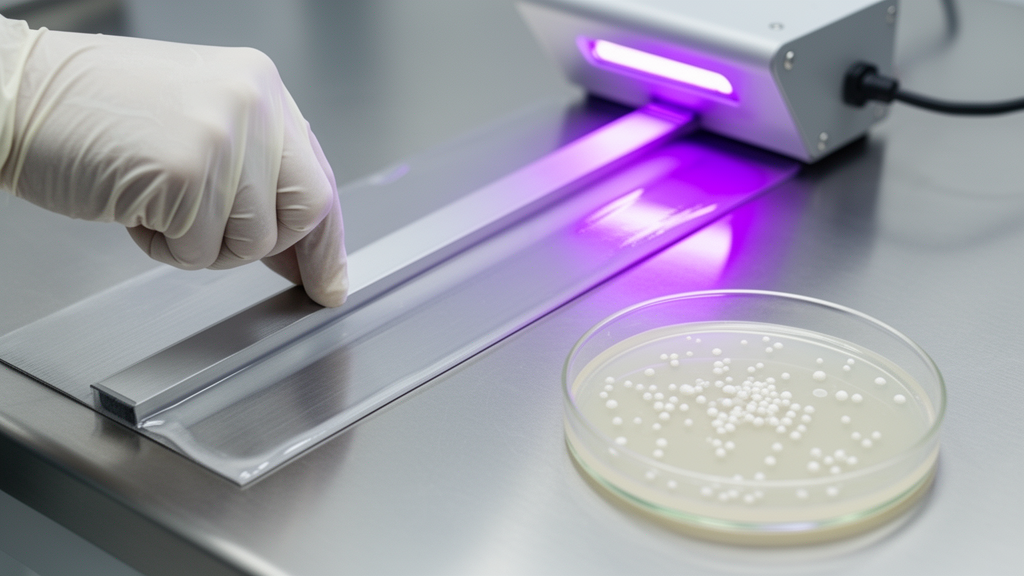
Researchers report a waterborne polyurethane acrylate (WPUA) coating that unites three properties rarely achieved in a single formulation: intrinsic self-healing, UV-driven crosslinking, and antibacterial performance. Writing in the Journal of Materials Science, Hamed Javadi, Roya Sedghi, and Ismail Omrani describe how they built the dynamic healing function directly into the polymer backbone by incorporating 2-hydroxyethyl disulfide (HEDS) as a chain extender. Disulfide bonds can reversibly exchange with one another when heated, allowing the network to re-form across a scratch rather than simply resisting damage passively.

The coating backbone was assembled from an unsaturated polyester polyol (UNPES), isophorone diisocyanate (IPDI), and 2-hydroxyethyl methacrylate (HEMA), with PEG 400-diacrylate and the photoinitiator TPO enabling UV-induced crosslinking. Three thermally triggered self-healing formulations containing different HEDS concentrations reached gel contents of up to 90 percent. When scratched and held at 90 degrees Celsius, the coatings closed scratches extensively within 30 minutes, an outcome the team assessed qualitatively by optical microscopy.

The reversible sulfur–sulfur exchange reactions underlying this repair are what allow the crosslinked network to rearrange and flow back together at moderate temperature. To add antimicrobial function, the optimized formulation was modified with ZnO nanoparticles surface-functionalized with 3-(methacryloyloxy)propyltrimethoxysilane (MAPTMS) at three loading levels. The reactive vinyl groups on the modified particles covalently participated in the crosslinked network, which enhanced crosslink density, thermal stability, and surface hardness.

Because the particles are chemically incorporated into the network rather than merely blended in, they reinforce the coating structure itself. The nanocomposite coatings showed potent antibacterial activity against both Staphylococcus aureus and Escherichia coli, alongside exceptional abrasion resistance and strong adhesion to steel substrates exceeding 1.2 megapascals. Together with the healing and crosslinking results, these measurements point to a coating designed for applications where durability, self-repair, and microbial resistance are required at the same time.

The authors position the waterborne system as an eco-friendly platform that converges damage-responsive healing, UV-driven crosslinking, and sustained antimicrobial protection, making it a candidate for next-generation multifunctional protective coatings.

Subject of Research: Self-healing antibacterial UV-cured waterborne polyurethane acrylate coatings with disulfide dynamics and ZnO nanostructures

Article Title: Multifunctional UV-cured waterborne polyurethane acrylate coatings with dynamic disulfide healing and antibacterial ZnO nanostructures

Article References: Javadi, H., Sedghi, R., & Omrani, I. (2026). Multifunctional UV-cured waterborne polyurethane acrylate coatings with dynamic disulfide healing and antibacterial ZnO nanostructures. Journal of Materials Science. https://doi.org/10.1007/s10853-026-13986-0

Image Credits: AI Generated

DOI: 10.1007/s10853-026-13986-0

Keywords: waterborne polyurethane acrylate, self-healing coatings, disulfide exchange, UV curing, ZnO nanoparticles, antibacterial activity, MAPTMS silane, crosslink density, scratch repair, protective coatings, Multifunctional, UV-cured

News Source: Denise Maddox. (October 24, 2026). Self-healing waterborne polyurethane coatings combine UV curing with antibacterial ZnO. Scienmag.

Tags: antibacterial activitycrosslink densitydisulfide exchangeMAPTMS silaneMultifunctionalprotective coatingsscratch repairself-healing coatingsUV curingUV-curedwaterborne polyurethane acrylateZnO nanoparticles
Share12Tweet7Share2ShareShareShare1

Related Posts

Freezing Shifts Serum Neurofilament Light Chain Results Differently Across Four Immunoassays

Freezing Shifts Serum Neurofilament Light Chain Results Differently Across Four Immunoassays

October 24, 2026
Curriculum-guided AI framework boosts semi-supervised chest X-ray disease classification

Curriculum-guided AI framework boosts semi-supervised chest X-ray disease classification

October 24, 2026

Fighting AI Fake News With a Five-Minute Chatbot Conversation

October 24, 2026

Multimodal AI system turns regional music into visual classroom cues

October 24, 2026

POPULAR NEWS

  • Freezing Shifts Serum Neurofilament Light Chain Results Differently Across Four Immunoassays

    Freezing Shifts Serum Neurofilament Light Chain Results Differently Across Four Immunoassays

    29 shares
    Share 12 Tweet 7
  • AI Reads the Hidden Shape of the Optic Nerve to Spot Glaucoma in Highly Myopic Eyes

    29 shares
    Share 12 Tweet 7
  • Curriculum-guided AI framework boosts semi-supervised chest X-ray disease classification

    29 shares
    Share 12 Tweet 7
  • Nearly Half of Multiple Myeloma Patients Suffer Pathological Fractures, Chinese Study Finds

    29 shares
    Share 12 Tweet 7

About

We bring you the latest biotechnology news from best research centers and universities around the world. Check our website.

Follow us

Recent News

Freezing Shifts Serum Neurofilament Light Chain Results Differently Across Four Immunoassays

AI Reads the Hidden Shape of the Optic Nerve to Spot Glaucoma in Highly Myopic Eyes

Curriculum-guided AI framework boosts semi-supervised chest X-ray disease classification

Subscribe to Blog via Email

Enter your email address to subscribe to this blog and receive notifications of new posts by email.

Join 85 other subscribers
  • Contact Us

Bioengineer.org © Copyright 2023 All Rights Reserved.

Welcome Back!

Login to your account below

Forgotten Password?

Retrieve your password

Please enter your username or email address to reset your password.

Log In
No Result
View All Result
  • Homepages
    • Home Page 1
    • Home Page 2
  • News
  • National
  • Business
  • Health
  • Lifestyle
  • Science

Bioengineer.org © Copyright 2023 All Rights Reserved.