• HOME
  • NEWS
  • EXPLORE
    • CAREER
      • Companies
      • Jobs
    • EVENTS
    • iGEM
      • News
      • Team
    • PHOTOS
    • VIDEO
    • WIKI
  • BLOG
  • COMMUNITY
    • FACEBOOK
    • INSTAGRAM
    • TWITTER
Monday, May 11, 2026
BIOENGINEER.ORG
No Result
View All Result
  • Login
  • HOME
  • NEWS
  • EXPLORE
    • CAREER
      • Companies
      • Jobs
        • Lecturer
        • PhD Studentship
        • Postdoc
        • Research Assistant
    • EVENTS
    • iGEM
      • News
      • Team
    • PHOTOS
    • VIDEO
    • WIKI
  • BLOG
  • COMMUNITY
    • FACEBOOK
    • INSTAGRAM
    • TWITTER
  • HOME
  • NEWS
  • EXPLORE
    • CAREER
      • Companies
      • Jobs
        • Lecturer
        • PhD Studentship
        • Postdoc
        • Research Assistant
    • EVENTS
    • iGEM
      • News
      • Team
    • PHOTOS
    • VIDEO
    • WIKI
  • BLOG
  • COMMUNITY
    • FACEBOOK
    • INSTAGRAM
    • TWITTER
No Result
View All Result
Bioengineer.org
No Result
View All Result
Home NEWS Science News Chemistry

Alternative material for superconducting radio-frequency cavity

Bioengineer by Bioengineer
July 15, 2019
in Chemistry
Reading Time: 2 mins read
0
IMAGE
Share on FacebookShare on TwitterShare on LinkedinShare on RedditShare on Telegram

IMAGE

Credit: HZB

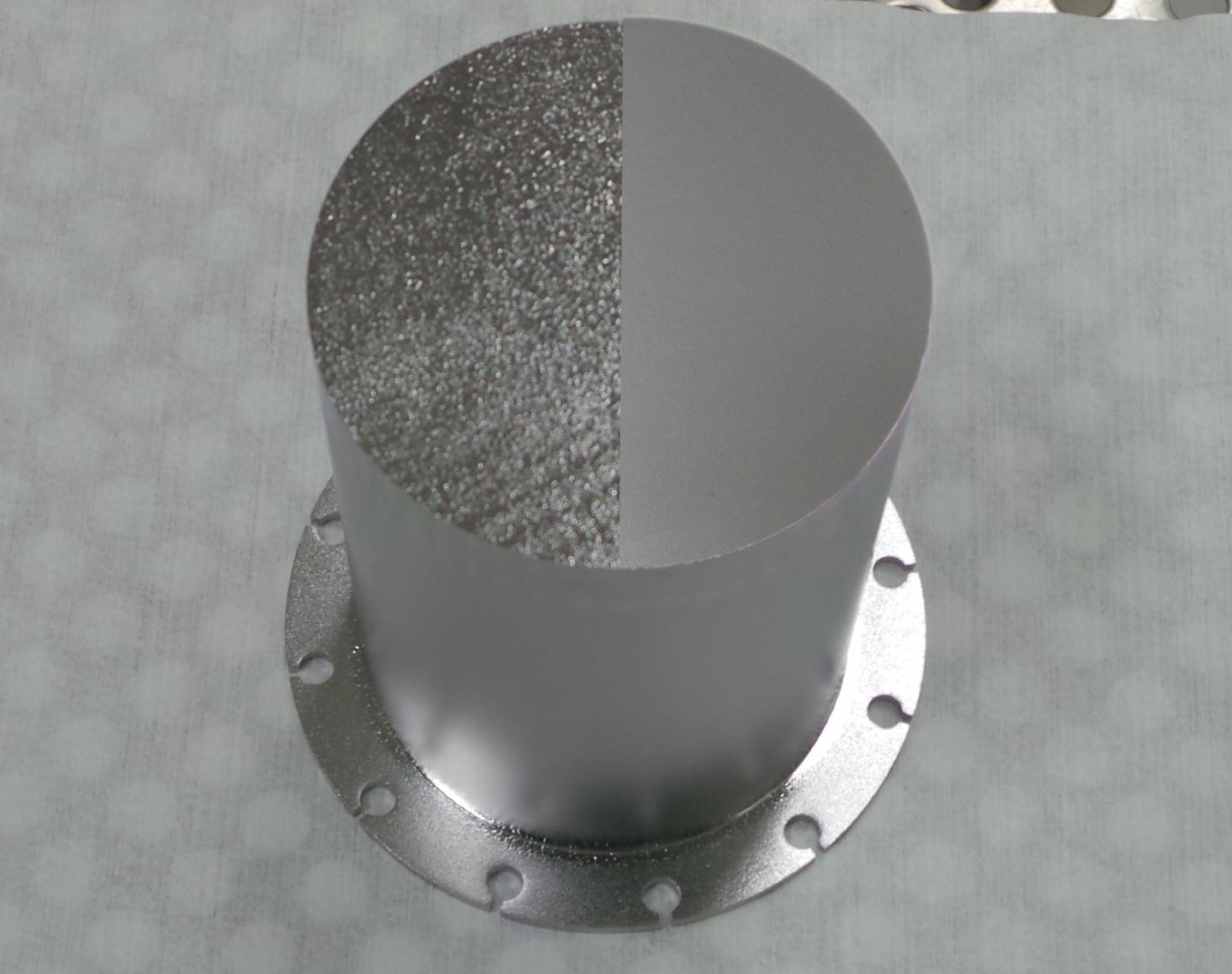
At present, niobium is the material of choice for constructing superconducting radio-frequency cavity resonators. These will be used in projects at the HZB such as bERLinPro and BESSY-VSR, but also for free-electron lasers such as the XFEL and LCLS-II. However, a coating of niobium-tin (Nb3Sn) could lead to considerable improvements.

Superconducting radio-frequency cavity resonators made of niobium must be operated at 2 Kelvin (-271 degrees Celsius), which requires expensive and complicated cryogenic engineering. In contrast, a coating of Nb3Sn might make it possible to operate resonators at 4 Kelvin instead of 2 Kelvin and possibly withstand higher electromagnetic fields without the superconductivity collapsing. In the future, this could save millions of euros in construction and electricity costs for large accelerators, as the cost of cooling would be substantially lower.

A team led by Prof. Jens Knobloch, who heads the SRF Institute at HZB, has now carried out tests of superconducting samples coated with Nb3Sn by Cornell University, USA, in collaboration with colleagues from the USA, Canada, and Switzerland. The experiments took place at the Paul Scherrer Institute, Switzerland, at TRIUMF, Canada, and the HZB.

“We measured the critical magnetic field strengths of superconducting Nb3Sn samples in both static and radio-frequency fields”, says Sebastian Keckert, first author of the study, who is doing his doctorate as part of the Knobloch team. By combining different measurement methods, they were able to confirm the theoretical prediction that the critical magnetic field of Nb3Sn in radio-frequency fields is higher than that for static magnetic fields. However, the coated material should display a very much higher critical magnetic field level in a radio-frequency field. Thus, the tests have also shown that the coating process used currently for the production of Nb3Sn might be improved upon in order to more closely approach the theoretical values.

###

Media Contact
Antonia Roetger
[email protected]

Original Source

https://www.helmholtz-berlin.de/pubbin/news_seite?nid=20622;sprache=en;seitenid=1

Related Journal Article

http://dx.doi.org/10.1088/1361-6668/ab119e

Tags: Chemistry/Physics/Materials SciencesElectromagneticsSuperconductors/Semiconductors
Share12Tweet8Share2ShareShareShare2

Related Posts

Humans and Zebra Finches Share Similar Speech Learning Techniques #ASA190 — Chemistry

Humans and Zebra Finches Share Similar Speech Learning Techniques #ASA190

May 11, 2026
Unveiling Dark Matter Through Molecular Insights — Chemistry

Unveiling Dark Matter Through Molecular Insights

May 11, 2026

From Touch to Sight: A Bioinspired Multisensory Framework Endows Robots with Human-Like Perception

May 11, 2026

Announcing the 2026 Carbon Future Young Investigator Award Winners

May 11, 2026
Please login to join discussion

POPULAR NEWS

  • Research Indicates Potential Connection Between Prenatal Medication Exposure and Elevated Autism Risk

    841 shares
    Share 336 Tweet 210
  • New Study Reveals Plants Can Detect the Sound of Rain

    728 shares
    Share 290 Tweet 182
  • Salmonella Haem Blocks Macrophages, Boosts Infection

    62 shares
    Share 25 Tweet 16
  • Breastmilk Balances E. coli and Beneficial Bacteria in Infant Gut Microbiomes

    57 shares
    Share 23 Tweet 14

About

We bring you the latest biotechnology news from best research centers and universities around the world. Check our website.

Follow us

Recent News

Humans and Zebra Finches Share Similar Speech Learning Techniques #ASA190

New Study Uncovers How Fungal Parasites Attack Strawberries and Raspberries

City of Hope Researchers to Present Groundbreaking Immunotherapy and Precision Medicine Advances Across Multiple Cancer Types at ASCO 2026

Subscribe to Blog via Email

Enter your email address to subscribe to this blog and receive notifications of new posts by email.

Join 82 other subscribers
  • Contact Us

Bioengineer.org © Copyright 2023 All Rights Reserved.

Welcome Back!

Login to your account below

Forgotten Password?

Retrieve your password

Please enter your username or email address to reset your password.

Log In
No Result
View All Result
  • Homepages
    • Home Page 1
    • Home Page 2
  • News
  • National
  • Business
  • Health
  • Lifestyle
  • Science

Bioengineer.org © Copyright 2023 All Rights Reserved.