• HOME
  • NEWS
  • EXPLORE
    • CAREER
      • Companies
      • Jobs
    • EVENTS
    • iGEM
      • News
      • Team
    • PHOTOS
    • VIDEO
    • WIKI
  • BLOG
  • COMMUNITY
    • FACEBOOK
    • INSTAGRAM
    • TWITTER
Monday, October 26, 2026
BIOENGINEER.ORG
No Result
View All Result
  • Login
  • HOME
  • NEWS
  • EXPLORE
    • CAREER
      • Companies
      • Jobs
        • Lecturer
        • PhD Studentship
        • Postdoc
        • Research Assistant
    • EVENTS
    • iGEM
      • News
      • Team
    • PHOTOS
    • VIDEO
    • WIKI
  • BLOG
  • COMMUNITY
    • FACEBOOK
    • INSTAGRAM
    • TWITTER
No Result
View All Result
Bioengineer.org
No Result
View All Result
Home NEWS Science News Biology

AI Tool Designs DNA Sequences to Fold Genomes in Desired 3D Patterns

by
October 26, 2026
in Biology
Reading Time: 2 mins read
0
AI Tool Designs DNA Sequences to Fold Genomes in Desired 3D Patterns

AI Tool Designs DNA Sequences to Fold Genomes in Desired 3D Patterns

Share on FacebookShare on TwitterShare on LinkedinShare on RedditShare on Telegram

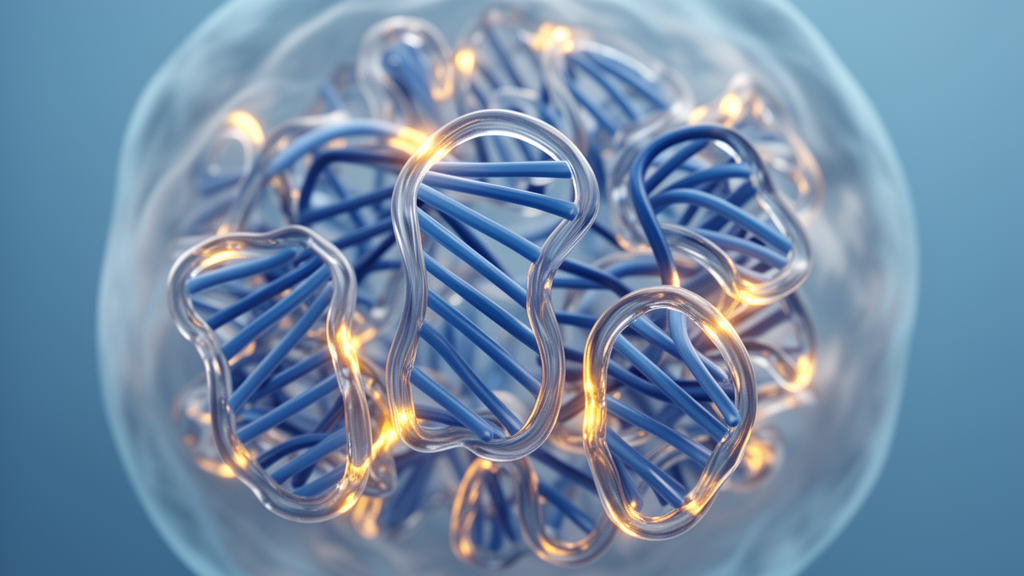
Researchers have introduced Akita Semifreddo, a computational framework that designs DNA sequences intended to produce specified three-dimensional genome folding patterns. The method, described in Genome Biology by Paulina N. Smaruj, David R. Kelley, and Geoffrey Fudenberg, pairs an efficient “half-frozen” version of the AkitaV2 genome folding model with the Ledidi sequence optimizer, allowing DNA sequences with desired folding behavior to be designed entirely in silico.

DNA sequence directs genome folding, which in turn shapes enhancer-promoter communication and gene expression. According to the authors, how to design sequences that yield desired folding patterns had remained largely unexplored. Akita Semifreddo addresses this gap by making the folding model fast enough to sit inside an iterative optimization loop, in which candidate sequences are repeatedly evaluated and revised toward a target folding outcome.

In demonstrations reported in the paper, the framework enabled design for major folding features — boundaries, dots, and flames — with desired positions and strengths. These feature classes correspond to structural elements of genome organization that the underlying AkitaV2 model can predict from sequence, and the design pipeline was able to steer sequences toward specified configurations of each.

The study’s results are computational: the authors present in silico design demonstrations rather than experimental validation of synthesized sequences in cells. The findings therefore establish a design capability within the model’s predictions, and their behavior in laboratory settings remains to be tested.

Beyond design, the researchers position Akita Semifreddo as a platform for two broader purposes: dissecting the sequence grammar of genome folding — that is, learning which sequence features drive which folding outcomes — and engineering synthetic regulatory landscapes. By making folding objectives directly optimizable, the tool offers a way to probe how sequence encodes spatial genome organization and, potentially, to construct regulatory environments with prescribed folding architectures.

Subject of Research: Computational design of DNA sequences for three-dimensional genome folding

Article Title: Sequence design for three-dimensional genome folding using Akita Semifreddo

Article References: Smaruj, P. N., Kelley, D. R., & Fudenberg, G. (2026). Sequence design for three-dimensional genome folding using Akita Semifreddo. Genome Biology. https://doi.org/10.1186/s13059-026-04313-6

Image Credits: AI Generated

DOI: 10.1186/s13059-026-04313-6

Keywords: genomics, 3D genome folding, deep learning, sequence design, computational biology, synthetic biology, Sequence, design, three-dimensional, genome, folding, Akita

News Source: Juliet Wilcox. (October 26, 2026). AI Tool Designs DNA Sequences to Fold Genomes in Desired 3D Patterns. Scienmag.


Tags: 3D genome foldingAkitacomputational biologydeep learningdesignfoldingGenomeGenomicsSequencesequence designsynthetic biologythree-dimensional
Share12Tweet7Share2ShareShareShare1

Related Posts

Fiery red moth from Central America finally gains a scientific name

Fiery red moth from Central America finally gains a scientific name

October 26, 2026
Water Movement and CO2 Uptake Reshape the Carbon Removal Promise of Ocean Alkalinity Enhancement

Water Movement and CO2 Uptake Reshape the Carbon Removal Promise of Ocean Alkalinity Enhancement

October 26, 2026

Gestational diabetes DNA methylation markers confirmed in small cohort, fail larger validation

October 26, 2026

Androgen Receptor Signaling May Explain Why Liver Cancer Strikes Men Far More Often

October 26, 2026

POPULAR NEWS

  • Fiery red moth from Central America finally gains a scientific name

    Fiery red moth from Central America finally gains a scientific name

    29 shares
    Share 12 Tweet 7
  • Bulgarian specialists flag gaps in lupus nephritis care in first national survey

    29 shares
    Share 12 Tweet 7
  • Finerenone Shows Favorable Real-World Profile in Chinese Heart Failure Patients

    29 shares
    Share 12 Tweet 7
  • Water Movement and CO2 Uptake Reshape the Carbon Removal Promise of Ocean Alkalinity Enhancement

    29 shares
    Share 12 Tweet 7

About

We bring you the latest biotechnology news from best research centers and universities around the world. Check our website.

Follow us

Recent News

Fiery red moth from Central America finally gains a scientific name

Bulgarian specialists flag gaps in lupus nephritis care in first national survey

Finerenone Shows Favorable Real-World Profile in Chinese Heart Failure Patients

Subscribe to Blog via Email

Enter your email address to subscribe to this blog and receive notifications of new posts by email.

Join 85 other subscribers
  • Contact Us

Bioengineer.org © Copyright 2023 All Rights Reserved.

Welcome Back!

Login to your account below

Forgotten Password?

Retrieve your password

Please enter your username or email address to reset your password.

Log In
No Result
View All Result
  • Homepages
    • Home Page 1
    • Home Page 2
  • News
  • National
  • Business
  • Health
  • Lifestyle
  • Science

Bioengineer.org © Copyright 2023 All Rights Reserved.