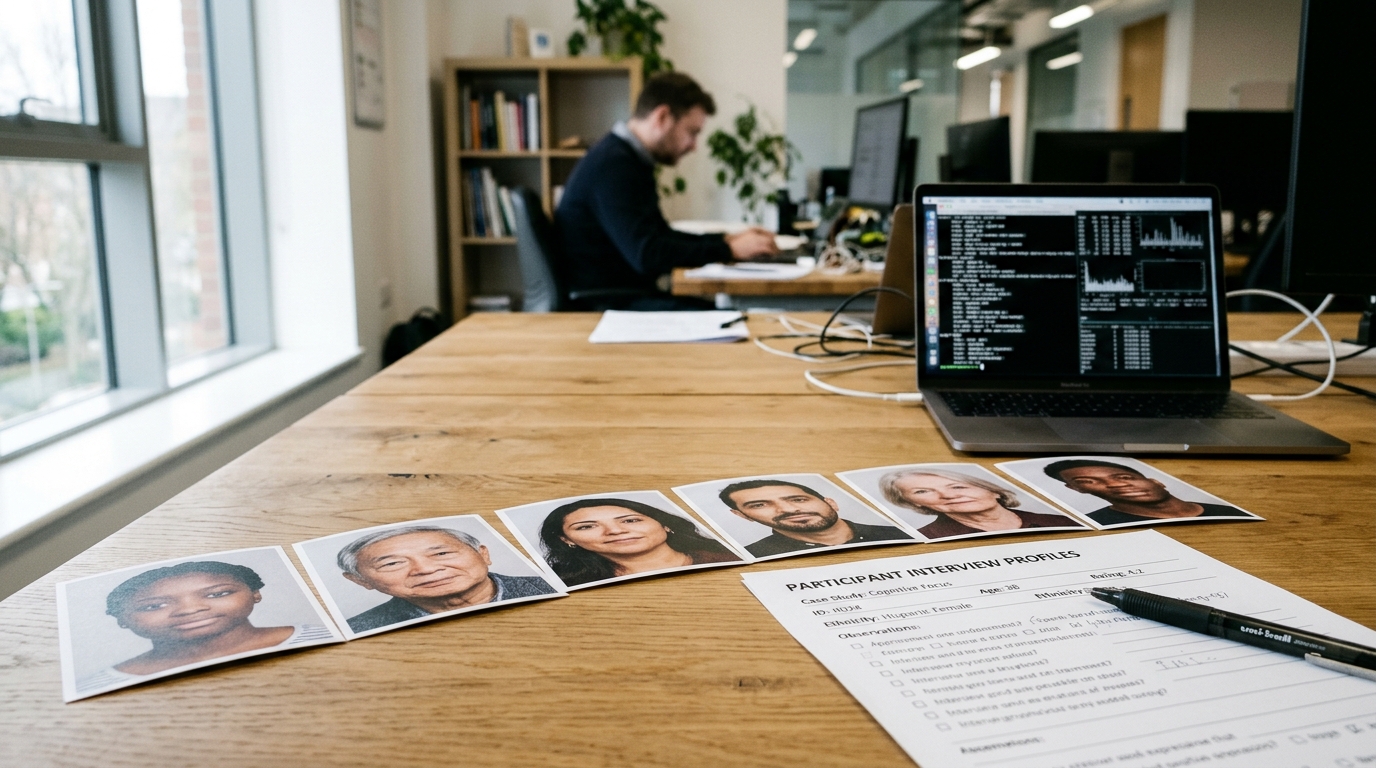
Although generative large-language models powering widely used tools like ChatGPT and Gemini have become increasingly nuanced and aligned with human values, their internal reasoning processes frequently reproduce deep-seated human stereotypes, according to a peer-reviewed study published in Nature Machine Intelligence. Led by Messi H.J. Lee, an expert in machine psychology based in South Korea, and Calvin K. Lai, an associate professor of psychology at Rutgers University–New Brunswick, the research investigated how advanced artificial intelligence systems deliberate when performing cognitive tasks. By examining the computational processes of multiple reasoning models, the researchers discovered that even when system outputs appear refined, most models struggle to counter stereotypical assumptions during deliberation, demonstrating that some artificial intelligence systems remain notably more prejudiced than others.
In human psychology, the speed with which people form conceptual associations provides researchers with meaningful clues regarding the hidden biases that influence their thinking. Unlike conscious bias, which involves prejudices that are deliberately expressed, implicit bias refers to automatic assumptions that shape perceptions, judgments, and behaviors based on categories such as race, gender, or age. Lai, who serves on the scientific advisory board at Project Implicit, a nonprofit organization for research and education on hidden biases, explained that implicit biases capture forms of memory, like a gut reaction, that can be more intrusive or harder to control. As Lai noted, these biases can be unconscious in ways that individuals do not even know that they have them.
To study these reactions in people, researchers use the Implicit Association Test, a widely used social psychology tool that can detect implicit biases. Under this experimental approach, the faster a response to a question, the more implicit the bias is deemed. For instance, race-related studies using this test have shown that when people are presented with images of faces and words, they are quicker to associate white faces with pleasant words and Black faces with unpleasant words. Inspired by this established foundation of human psychological testing, Lai and Messi H.J. Lee wanted to determine whether a similar test could be developed and conducted for large-language models.
When advanced large-language models work through a complex question or task, they produce reasoning tokens, which measure how much energy the model expended in responding. Researchers can examine these tokens, which offer valuable insights into how proprietary models operate. Drawing directly from work on human implicit bias, Lai and Lee adapted the Implicit Association Test to use reasoning tokens to gauge how much deliberation a model invests when processing potentially biased information.
In their experiment, five reasoning models—OpenAI’s o3-mini, DeepSeek’s R1, Claude 3.7 Sonnet from Anthropic, OpenAI’s gpt-oss-20b, and Alibaba Cloud’s Qwen-3 8B—were introduced to a list of male and female names, alongside words associated with career and family. The career category included terms such as executive, professional, and salary, while the family category included words such as home, marriage, and wedding. The models were initially asked to pair a name with a career or family word, and researchers then counted the number of tokens generated during the reasoning process.
Next, the models were instructed to categorize words in a way that conflicted with established stereotypes, such as pairing the female name Amy with executive or the male name Kevin with home. Tokens were again counted during this counter-stereotypical reasoning task. The researchers compared the average token counts across the two tasks, with higher token counts indicating greater computational effort expended by the model during deliberation.
In nearly every model tested, more reasoning tokens were spent on tasks that conflicted with established stereotypes, suggesting greater computational effort when processing counter-stereotypical information. Only Claude 3.7 Sonnet exhibited reversed patterns across the experimental tasks. Discussing the broader patterns observed across the systems, Lai explained that what the researchers found across most models was that they consistently reproduced human implicit biases during their reasoning process, adding that no one wants models that are spewing out material that is racist or sexist.
Lai noted that these findings are particularly significant because most large-language models are closed systems that do not allow for easy inspection. Moreover, as the pace of model development accelerates and systems are increasingly used to automate critical activities, from dynamic pricing to emergency room staffing, the role of the researcher in understanding model behavior is more important than ever before.
Given the growing deployment of language models in decision-making contexts, understanding and addressing these hard-to-detect patterns is crucial for preventing discriminatory outcomes, Lai said. But short of governmental accountability or legal mandates that require transparency, he concluded, the best researchers can do is pick at these systems using the tools that are available to see what comes out the other side.
Subject of Research: Implicit bias and reasoning token expenditure in artificial intelligence models
Article Title: AI’s gut reaction: Researcher finds that some bots still think in stereotypes
Article References: AI’s gut reaction: Researcher finds that some bots still think in stereotypes. Original publication (Bibliographic details unavailable.)
Image Credits: AI Generated
DOI: Not provided
Keywords: artificial intelligence, large language models, implicit bias, machine psychology, reasoning tokens, stereotypes, Rutgers University, Nature Machine Intelligence, reaction, Researcher, finds, some
News Source: Denise Maddox. (November 6, 2026). AI Reasoning Processes Consistently Reproduce Human Stereotypes, Study Finds. Scienmag.