• HOME
  • NEWS
  • EXPLORE
    • CAREER
      • Companies
      • Jobs
    • EVENTS
    • iGEM
      • News
      • Team
    • PHOTOS
    • VIDEO
    • WIKI
  • BLOG
  • COMMUNITY
    • FACEBOOK
    • INSTAGRAM
    • TWITTER
Tuesday, October 20, 2026
BIOENGINEER.ORG
No Result
View All Result
  • Login
  • HOME
  • NEWS
  • EXPLORE
    • CAREER
      • Companies
      • Jobs
        • Lecturer
        • PhD Studentship
        • Postdoc
        • Research Assistant
    • EVENTS
    • iGEM
      • News
      • Team
    • PHOTOS
    • VIDEO
    • WIKI
  • BLOG
  • COMMUNITY
    • FACEBOOK
    • INSTAGRAM
    • TWITTER
No Result
View All Result
Bioengineer.org
No Result
View All Result
Home NEWS Science News Agriculture

AI-guided discovery of fungal-derived salty and saltiness-enhancing peptides for sodium-reduced foods

by
October 20, 2026
in Agriculture
Reading Time: 2 mins read
0
AI-guided discovery of fungal-derived salty and saltiness-enhancing peptides for sodium-reduced foods

AI-guided discovery of fungal-derived salty and saltiness-enhancing peptides for sodium-reduced foods

Share on FacebookShare on TwitterShare on LinkedinShare on RedditShare on Telegram

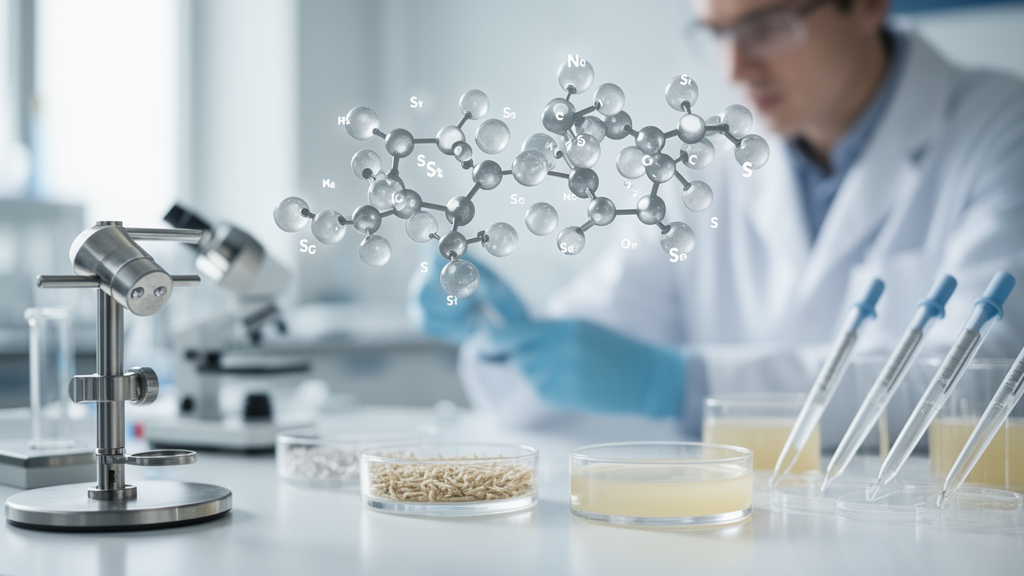
Artificial intelligence-assisted screening has identified six fungal-derived peptides that can produce a salty taste or enhance saltiness, providing molecular candidates for developing sodium-reduced foods. The study combines in silico protein digestion, embedding-based machine learning, electronic-tongue measurements, cellular assays, molecular docking and molecular-dynamics simulations. It was published as an accepted article in npj Science of Food and presents the peptides as promising ingredients rather than established commercial solutions or proven nutritional interventions.

The researchers first built a dataset of taste-active peptides and compared three molecular-embedding approaches: Uni-Mol, ESM-3 and MolCLR. All three were evaluated with the same FT-Transformer classification framework. ESM-3 gave the most favorable classification performance and was selected to screen peptides generated through in silico hydrolysis of proteins from 14 fungal proteomes. Six candidates were then synthesized for experimental assessment. Three were classified as salty peptides—AGHQR, AHDQY and SKPGNR—and three as saltiness-enhancing peptides: IPVVVDL, DNNEEW and ANSDL.

Electronic-tongue analysis distinguished the most effective candidates under the laboratory conditions tested. AHDQY was the strongest salty peptide in deionized water, while ANSDL was the most effective saltiness enhancer in a low-salt sodium chloride system. These measurements show that the screened compounds could modify saltiness in the specified test solutions. The reported results do not establish the amount of sodium that could be replaced in finished foods, whether the ingredients could perform similarly across different formulations, or whether their use would produce health benefits in people.

In cellular experiments, the peptides exhibited good cytocompatibility and, to varying degrees, protected human umbilical vein endothelial cells from high-salt-induced injury. That protection was accompanied by restored nitric oxide production and reduced accumulation of reactive oxygen species. These findings concern responses in an experimental cell model and are not evidence of cardiovascular benefits in humans. Molecular docking and molecular-dynamics simulations also supported stable interactions between the selected peptides and transmembrane channel-like protein 4, together with peptide-associated changes in local receptor flexibility and secondary structure. The combined screening, sensory, cellular and computational evidence identifies AHDQY and ANSDL as leading candidates for further investigation of natural saltiness-modulating ingredients for sodium-reduced foods.

Subject of Research: AI-guided screening of fungal peptides for saltiness modulation in sodium-reduced foods

Article Title: AI-guided discovery of fungal-derived salty and saltiness-enhancing peptides for sodium-reduced foods

Article References: Zhang, Y., Shen, X., Liu, Y., Li, W., & Han, W. (2026). AI-guided discovery of fungal-derived salty and saltiness-enhancing peptides for sodium-reduced foods. npj Science of Food. https://doi.org/10.1038/s41538-026-01209-4

Image Credits: AI Generated

DOI: 10.1038/s41538-026-01209-4

Keywords: artificial intelligence, fungal peptides, saltiness enhancement, sodium reduction, food science, machine learning, electronic tongue, cytocompatibility, molecular docking, protein embeddings, AI-guided, discovery

News Source: Blake Davidson. (October 20, 2026). AI-guided discovery of fungal-derived salty and saltiness-enhancing peptides for sodium-reduced foods. Scienmag.

Tags: AI-guidedArtificial Intelligencecytocompatibilitydiscoveryelectronic tongueFood sciencefungal peptidesMachine Learningmolecular dockingprotein embeddingssaltiness enhancementsodium reduction
Share12Tweet7Share2ShareShareShare1

Related Posts

Greenhouse pot study finds Azolla and Moringa extracts improve geranium growth and essential oil output in sandy soil

Greenhouse pot study finds Azolla and Moringa extracts improve geranium growth and essential oil output in sandy soil

October 20, 2026
Genome and expression analysis identifies 215 bZIP genes in LA-Purple sugarcane

Genome and expression analysis identifies 215 bZIP genes in LA-Purple sugarcane

October 20, 2026

Tomato stalk waste growing media show mixed effects on postharvest quality and antioxidant measures in stored tomatoes

October 20, 2026

Comparative organellar genomics places two East Asian simple-leaved Sorbus species within the East Asian lineage

October 20, 2026

POPULAR NEWS

  • Sulfur-vacancy SnS2–MXene prototype reaches 58.33 Wh kg−1

    Sulfur-vacancy SnS2–MXene prototype reaches 58.33 Wh kg−1

    29 shares
    Share 12 Tweet 7
  • Review maps ctDNA-guided ESR1 treatment sequencing in advanced breast cancer

    29 shares
    Share 12 Tweet 7
  • AI-guided discovery of fungal-derived salty and saltiness-enhancing peptides for sodium-reduced foods

    29 shares
    Share 12 Tweet 7
  • Pb-Sn alloy reaches 10,180% superplastic elongation after tube high-pressure shearing

    29 shares
    Share 12 Tweet 7

About

We bring you the latest biotechnology news from best research centers and universities around the world. Check our website.

Follow us

Recent News

Sulfur-vacancy SnS2–MXene prototype reaches 58.33 Wh kg−1

Review maps ctDNA-guided ESR1 treatment sequencing in advanced breast cancer

AI-guided discovery of fungal-derived salty and saltiness-enhancing peptides for sodium-reduced foods

Subscribe to Blog via Email

Enter your email address to subscribe to this blog and receive notifications of new posts by email.

Join 85 other subscribers
  • Contact Us

Bioengineer.org © Copyright 2023 All Rights Reserved.

Welcome Back!

Login to your account below

Forgotten Password?

Retrieve your password

Please enter your username or email address to reset your password.

Log In
No Result
View All Result
  • Homepages
    • Home Page 1
    • Home Page 2
  • News
  • National
  • Business
  • Health
  • Lifestyle
  • Science

Bioengineer.org © Copyright 2023 All Rights Reserved.