Artificial intelligence models for analyzing brain tumor MRI scans achieve a pooled classification accuracy of 96.8 percent, according to a systematic review and meta-analysis published in Neural Computing and Applications on 24 October 2026. The review, which synthesized 39 studies rather than proposing a new predictive model, also reports a pooled segmentation Dice coefficient of 0.877. Yet the same analysis reveals a persistent obstacle on the road to clinical deployment: many of these high-performing models still operate as black boxes, providing predictions without interpretable reasoning, and only a fraction of the studies behind them meet basic transparency standards.
Deep learning has transformed neuro-oncology diagnosis by enabling rapid and precise analysis of MRI scans. Convolutional neural networks and related architectures can detect tumors, classify their types, and segment their boundaries with performance that, on paper, rivals expert radiologists. The new meta-analysis quantifies that promise: convolutional neural network and hybrid architectures reached approximately 98.5 percent classification accuracy across the pooled studies, placing them at the upper end of the field's reported performance.
For a disease where accurate detection on MRI is crucial for improving patient outcomes, those numbers represent a striking technical achievement. But performance alone has not been enough to bring these systems into routine practice. Many AI models operate as black boxes, producing predictions without interpretable reasoning.
Clinicians cannot see why a network flagged a region as tumor, and the absence of interpretable justification limits both clinical trust and regulatory approval. The authors of the review, Kashif Mazhar and Pragya Dwivedi, frame this as the central tension of the field: diagnostic accuracy has outrun interpretability, and closing that gap is essential for clinical deployment. The study was designed to address that tension systematically.
Rather than introducing another architecture, the researchers developed a structured literature search framework with predefined databases, search terms, eligibility criteria, and research questions, providing a transparent and reproducible approach for evidence synthesis in medical AI. Within that framework, they evaluated diagnostic performance, explainability practices, and transparency measures across the existing literature, and assessed the influence of model architecture, dataset variation, and explainability techniques on performance outcomes. On explainability, the review documents a clear shift in the field's direction: recent advances in explainable AI, often abbreviated XAI, aim to make algorithmic decisions more understandable to clinicians, and the analysis found that the adoption of explainability techniques has increased since 2022.
Transparency, however, lags well behind. Only 32 percent of the studies in the meta-analysis shared their code, and fewer than 5 percent incorporated uncertainty estimation. The review identifies this combination of insufficient code-sharing and a lack of uncertainty quantification as a key source of the reproducibility gaps it highlights.
A model that posts 98.5 percent accuracy in a published study but ships without code or interpretable outputs offers regulators and hospital committees little basis for approval. The authors argue that successful clinical integration depends on advancing explainable, transparent, and reproducible frameworks, and that aligning diagnostic innovation with ethical and regulatory standards can strengthen medical trust and enable safer, more accountable clinical decision-making systems. The review's contribution is not a forecast of regulatory success but a measured accounting of where the field stands: 39 studies, a 96.8 percent pooled classification accuracy, a 0.877 pooled Dice coefficient, rising explainability adoption since 2022, and transparency metrics that remain the weakest link in the chain.
The evidence assembled in this review indicates that AI models already approach expert-level performance; the remaining distance to clinical trust lies in opening the black box, sharing the code, and building interpretability into how brain tumor AI systems are designed and reported.
Subject of Research: Enhancing clinical trust in brain tumor MRI: a meta-analysis of AI classification, segmentation, and explainability
Article Title: Enhancing clinical trust in brain tumor MRI: a meta-analysis of AI classification, segmentation, and explainability
Article References: Mazhar, K., & Dwivedi, P. (2026). Enhancing clinical trust in brain tumor MRI: a meta-analysis of AI classification, segmentation, and explainability. Neural Computing and Applications, 38(20), Article 839. https://doi.org/10.1007/s00521-026-12560-8
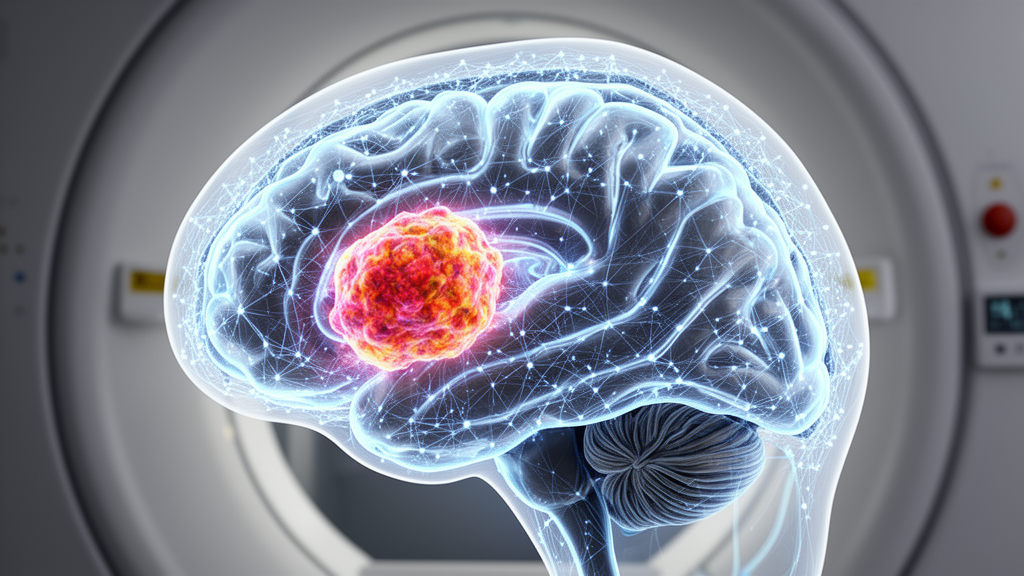
Image Credits: AI Generated
DOI: 10.1007/s00521-026-12560-8
Keywords: Enhancing, clinical, trust, brain, tumor, meta-analysis, classification, segmentation, explainability, scientific research
News Source: Nathaniel Bowman. (October 24, 2026). AI Brain Tumor MRI Models Hit 96.8% Accuracy, but Transparency Lags. Scienmag.