“This work suggests that preservation of microglia and Sirt1 binding activity and patterns, as well as the directionality of pathways regulated by Sirt1, are prognostic of long-living.”
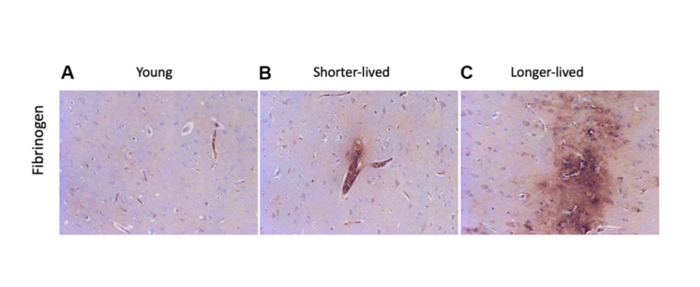
Credit: 2022 Basova et al.
“This work suggests that preservation of microglia and Sirt1 binding activity and patterns, as well as the directionality of pathways regulated by Sirt1, are prognostic of long-living.”
BUFFALO, NY- November 10, 2022 – A new research paper was published in Aging (listed as “Aging (Albany NY)” by MEDLINE/PubMed and “Aging-US” by Web of Science) Volume 14, Issue 20, entitled, “Age-associated changes in microglia activation and Sirtuin-1- chromatin binding patterns.”
The aging process is associated with changes in mechanisms maintaining physiology, influenced by genetics and lifestyle, and impacting late life quality and longevity. Brain health is critical in healthy aging. Sirtuin 1 (Sirt1), a histone deacetylase with silencing properties, is one of the molecular determinants experimentally linked to health and longevity.
In this new study, researchers Liana V. Basova, Nikki Bortell, Bruno Conti, Howard S. Fox, Richard Milner, and Maria Cecilia Garibaldi Marcondes from San Diego Biomedical Research Institute, University of Nebraska Medical Center and Oncovalent Therapeutics compared brain pathogenesis and Sirt1-chromatin binding dynamics in brain pre-frontal cortex from 2 groups of elder rhesus macaques (rhesus monkeys), divided by age of necropsy: shorter-lived animals (18-20 years old (yo)), equivalent to 60-70 human yo; and longer-lived animals (23-29 yo), corresponding to 80-100 human yo and modeling successful aging. These were compared with young adult brains (4-7 yo).
“Our findings indicated drastic differences in the microglia marker Iba1, along with factors influencing Sirt1 levels and activity, such as CD38 (an enzyme limiting NAD that controls Sirt1 activity) and mir142 (a microRNA targeting Sirt1 transcription) between the elder groups.”
Iba1 was lower in shorter-lived animals than in the other groups, while CD38 was higher in both aging groups compared to young. mir142 and Sirt1 levels were inversely correlated in longer-lived brains (>23yo), but not in shorter-lived brains (18-20 yo). They also found that Sirt1 binding showed signs of better efficiency in longer-lived animals compared to shorter-lived ones, in genes associated with nuclear activity and senescence.
“Overall, differences in neuroinflammation and Sirt1 interactions with chromatin distinguished shorter- and longer-lived animals, suggesting the importance of preserving microglia and Sirt1 functional efficiency for longevity.”
DOI: https://doi.org/10.18632/aging.204329
Corresponding Author: Maria Cecilia Garibaldi Marcondes
Corresponding Email: [email protected]
Keywords: aging, brain, rhesus macaques, microglia, Sirtuin-1
Sign up for free Altmetric alerts about this article: https://aging.altmetric.com/details/email_updates?id=10.18632%2Faging.204329
About Aging-US:
Launched in 2009, Aging (Aging-US) publishes papers of general interest and biological significance in all fields of aging research and age-related diseases, including cancer—and now, with a special focus on COVID-19 vulnerability as an age-dependent syndrome. Topics in Aging go beyond traditional gerontology, including, but not limited to, cellular and molecular biology, human age-related diseases, pathology in model organisms, signal transduction pathways (e.g., p53, sirtuins, and PI-3K/AKT/mTOR, among others), and approaches to modulating these signaling pathways.
Please visit our website at www.Aging-US.com and connect with us:
- SoundCloud – https://soundcloud.com/Aging-Us
- Facebook – https://www.facebook.com/AgingUS/
- Twitter – https://twitter.com/AgingJrnl
- Instagram – https://www.instagram.com/agingjrnl/
- YouTube – https://www.youtube.com/agingus
- LinkedIn – https://www.linkedin.com/company/aging/
- Reddit – https://www.reddit.com/user/AgingUS
- Pinterest – https://www.pinterest.com/AgingUS/
For media inquiries, please contact [email protected].
Aging (Aging-US) Journal Office
6666 E. Quaker Str., Suite 1B
Orchard Park, NY 14127
Phone: 1-800-922-0957, option 1
###
Journal
Aging-US
DOI
10.18632/aging.204329
Method of Research
Observational study
Subject of Research
Animals
Article Title
Age-associated changes in microglia activation and Sirtuin-1- chromatin binding patterns
Article Publication Date
10-Oct-2022