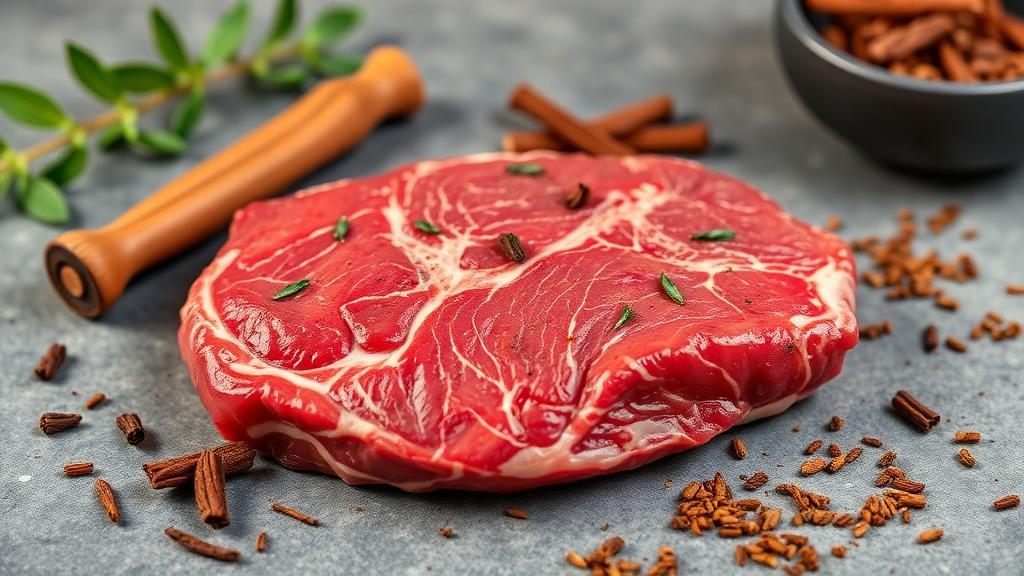
Frozen beef may look inert, but inside every cut stored at −18 °C a quiet chemical war is underway. Ice crystals tear through cell membranes, releasing enzymes, free fatty acids and haem iron that together drive oxidation, rancidity and the slow decay of flavour and nutrition. A new study from Nigerian researchers, published in BMC Agriculture, suggests that three traditional African spices can hold the line better than one of the food industry’s most widely used synthetic preservatives.
The research team, led by Uduenevwo Francis Evuen of Western Delta University, Oghara, tested methanol extracts of Xylopia aethiopica (African pepper), Rhaphiostylis beninensis, and Piper guineense (Ashanti pepper) on fresh beef tenderloin from White Fulani cattle. Samples were immersed in 5, 10 and 15 percent spice formulations, in combined 1:1:1 blends, and in butylated hydroxytoluene (BHT), the synthetic antioxidant that serves as the commercial benchmark. A control group received only distilled water. All samples then spent 28 days in a freezer at −18 °C, with biochemical measurements taken at four-day intervals.
The results were striking. Beef treated with a 10 percent Piper guineense extract finished the storage period with a free fatty acid level of just 0.06 grams of oleic acid per 100 grams of fat, well below the BHT-treated sample at 0.08 and the untreated control, which had climbed to 2.14. Acid values, a parallel marker of hydrolytic rancidity, followed the same pattern: 0.08 for the 10 percent Piper guineense treatment against 0.11 for BHT and 3.04 for the control. In other words, the spice beat the industry standard at its own game.
Free fatty acids and acid values matter because they track the breakdown of triglycerides and membrane phospholipids by lipolytic enzymes and by auto-oxidation. The authors attribute the spice’s protective effect to bioactive compounds that inhibit lipolytic microbes and enzymes, and possibly to reduced solubilisation of myofibrillar protein. Freezing alone, the control samples demonstrated, cannot stop these processes; without antioxidant reinforcement, lipolysis proceeded unchecked over the four-week window.
Haem iron, the pigment at the heart of myoglobin, told a complementary story. Haem iron gives meat its colour, and its dissociation from myoglobin dulls the appearance of stored cuts. By day 28, beef treated with the 10 percent combined spice formulation retained 3.06 milligrams of haem iron per kilogram, close to the BHT sample’s 3.20 and far above the control’s 0.46. Early in storage, all treated samples showed a dip in haem iron, likely because the extracts had not yet fully permeated the tissue. By the end of the month, however, the spice-treated samples had stabilised, suggesting the extracts prevented oxidative cleavage of porphyrin rings and the release of free iron.
The most technically revealing measurements concerned the meat’s own antioxidant enzyme arsenal. Peroxidase, superoxide dismutase (SOD) and catalase are endogenous enzymes that convert hydrogen peroxide, superoxide anions and hydroperoxides into harmless molecules, forestalling the accumulation of secondary peroxidation products. In control samples, these enzyme activities declined steadily as storage progressed, consistent with prior studies on frozen duck, fish and chicken muscle. In spice-treated samples, the opposite occurred.
A 10 percent Xylopia aethiopica extract produced the strongest enzyme response, lifting peroxidase activity to 11.30 × 10⁻⁴ units per milligram of tissue, SOD to 14.90 × 10⁻⁴ and catalase to 8.90 × 10⁻⁴, approaching the BHT reference values of 12.50, 16.17 and 9.32 × 10⁻⁴ respectively. The control samples languished at 2.57, 4.04 and 2.86 × 10⁻⁴. The authors point to catechin, reported as the most abundant antioxidant compound in X. aethiopica, and to the spice’s comparatively high phenolic content as plausible drivers of this sustained enzymatic defence.
One curious detail emerged from the enzyme data: catalase consistently recorded the lowest activity of the three enzymes at the end of storage. Because catalase is itself a haem-containing protein, the researchers suggest it may have undergone oxidative degradation into carbonyl derivatives as it was consumed protecting cells from post-slaughter auto-oxidation, a reminder that antioxidant defences are finite resources even in fortified tissue.
Synergy also played a role. The combined 1:1:1 spice blend at 10 percent delivered the best haem iron preservation, echoing earlier findings that mixtures of citrus peel and nutmeg extracts protect frozen meatballs more effectively than individual extracts at equivalent concentrations. This aligns with a growing body of evidence that complex phytochemical cocktails can outperform single compounds, a principle long exploited in traditional West African cooking where these spices are staple ingredients.
The implications reach beyond the laboratory. Synthetic antioxidants such as BHT face mounting scrutiny over reported toxicological effects, and consumer demand for clean-label preservation is reshaping the meat industry. This study affirms that freezing alone cannot prevent oxidative deterioration of beef, and that readily available culinary spices offer a sustainable, culturally grounded alternative. The authors caution that further work is needed on how the spices affect water-holding capacity during frozen storage and on how chemical composition varies across different plant parts, but the central message is clear: the future of meat preservation may already be sitting in the spice rack.
Subject of Research: Use of African spice extracts to preserve oxidative stability and endogenous antioxidant enzyme activity in frozen beef
Article Title: Bio-modulation of specific biochemical markers linked with oxidative stability in frozen beef
Article References: Evuen, U. F., Okolie, N. P., Apiamu, A., Etaware, P. M., & Kpomah, E. D. (2025). Bio-modulation of specific biochemical markers linked with oxidative stability in frozen beef. BMC Agriculture, 1(1), Article 1. https://doi.org/10.1186/s44399-024-00001-7
Image Credits: AI Generated
DOI: 10.1186/s44399-024-00001-7
Keywords: frozen beef, antioxidant spices, Xylopia aethiopica, Piper guineense, Rhaphiostylis beninensis, lipid oxidation, butylated hydroxytoluene, haem iron, catalase, superoxide dismutase, peroxidase, food preservation
News Source: Alan Morgan. (October 4, 2026). African spices outperform synthetic antioxidant in protecting frozen beef. Scienmag.