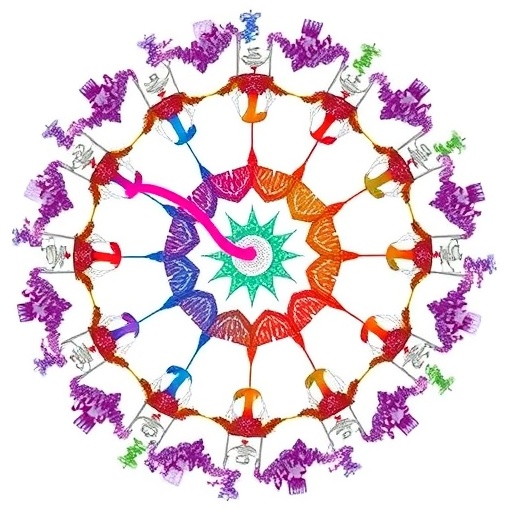
For decades, the terminal ends of chromosomes known as telomeres have intrigued scientists aiming to unlock the biological secrets of aging and cellular lifespan. Much like the plastic tips capping shoelaces to prevent fraying, telomeres serve as protective buffers for chromosomes, safeguarding genetic integrity during cell division. However, each time a cell divides, these telomeres shorten incrementally, gradually eroding their protective function. When telomeres reach a critically diminished length, cells lose their capacity to divide further, precipitating the decline of tissue renewal and organ functionality — processes fundamentally tied to aging and degenerative diseases. In individuals afflicted with telomere biology disorders (TBDs) such as dyskeratosis congenita, this shortening transpires at an accelerated pace, intensifying clinical symptoms and shortening lifespans.
Harnessing the intriguing potential of telomeres as both markers and modulators of aging, researchers at Boston Children’s Hospital have recently propelled the field forward with innovative biochemical strategies aimed at restoring telomere length. For over ten years, Dr. Suneet Agarwal, a physician-scientist and co-leader of the Hematopoietic Stem Cell Transplant Program, has devoted extensive effort to the question of whether it is possible to reverse telomere attrition and thereby rewind the cellular aging clock. Central to this venture is telomerase, an enzyme complex famed for its role in elongating telomeres by adding repetitive DNA sequences. Telomerase’s RNA component, known as TERC, is essential in guiding this extension, yet its intricate structure has posed formidable challenges for therapeutic engineering—an obstacle recently met with cutting-edge biochemical innovation.
Agarwal and his colleague Neha Nagpal, PhD, have leveraged advances in synthetic RNA chemistry paired with enzymatic stabilization techniques to engineer a novel form of TERC, aptly named engineered TERC (eTERC). This bespoke molecule overcomes the size and folding complexities that historically limited RNA-based telomerase therapies. When introduced into human stem cells, eTERC demonstrated a remarkable ability to extend telomeres with a single administration, sustaining telomere elongation for nearly 69 days—equivalent to several human years at the cellular level. Importantly, this intervention neither compromised nor interfered with the cells’ intrinsic regulatory mechanisms, imparting a transient yet targeted rejuvenation effect that complements normal cellular physiology.
.adsslot_m9gk2fquJZ{width:728px !important;height:90px !important;}
@media(max-width:1199px){ .adsslot_m9gk2fquJZ{width:468px !important;height:60px !important;}
}
@media(max-width:767px){ .adsslot_m9gk2fquJZ{width:320px !important;height:50px !important;}
}
ADVERTISEMENT
This breakthrough marks an unprecedented “one and done” approach to telomere extension, a stark contrast to treatments that require repeated dosing or risk systemic disruption. Dr. Agarwal emphasizes the elegance of this strategy: “We can give telomeres a temporary boost that does not disrupt other natural cell processes. It has one specific effect in cells and then it’s gone.” Such specificity not only reduces the risk of unwanted side effects but also redefines therapeutic paradigms for TBDs and potentially other age-related diseases linked to telomere dysfunction.
However, translating these laboratory successes into clinical therapies presents its own set of challenges. Delivering eTERC beyond controlled cell cultures to affected tissues in living organisms will necessitate sophisticated delivery platforms. Agarwal anticipates a future synthesis of nanotechnology-based carriers and small molecule agents capable of safely transporting and releasing eTERC into target cells, a domain ripe for multidisciplinary collaboration. The promise of these emerging delivery modalities fuels optimism that effective, minimally invasive treatments for TBDs will become a reality in the foreseeable future.
Parallel to therapeutic innovations, genetic investigations at Boston Children’s have deepened understanding of the complex inheritance patterns and phenotype variability underpinning telomere biology disorders. While mutations in telomere-regulating genes have been recognized as causal factors in TBDs, observed clinical outcomes remain strikingly heterogeneous. Some individuals with pathogenic variants succumb early to bone marrow failure syndromes, whereas others develop organ-specific manifestations such as pulmonary fibrosis or liver disease later in life. Intriguingly, many relatives harboring the same genetic mutation display markedly different symptom profiles and disease severities.
To explore these discrepancies, a team led by Dr. Vijay Sankaran and MD-PhD student Michael Poeschla conducted comprehensive analyses integrating rare genetic mutations with polygenic background — the aggregate effect of numerous common genetic variants influencing telomere length within the general population. Utilizing extensive datasets from the UK Biobank, they derived polygenic risk scores capturing the cumulative impact of these small-effect variants. Their findings revealed that both high-impact rare mutations and pervasive common variants independently contribute to TBD risk and phenotypic diversity. Specifically, individuals with early-onset severe TBD frequently carried polygenic profiles predisposed to shorter telomeres, indicating that the interplay between rare and common genetic factors shapes disease penetrance and expressivity.
This nuanced genetic architecture provides a compelling explanation for the variable clinical presentations observed even amongst family members sharing the same mutation. It underscores that TBD pathogenesis cannot be solely attributed to singular gene defects but rather emerges from the complex orchestration of multiple genetic modifiers. While clinical application remains premature, Sankaran envisions that polygenic scoring could augment genetic counseling by refining prognostic assessments, ultimately empowering families affected by TBDs with more personalized information about disease risk and progression.
The expanding insights into telomere biology thus span a translational continuum — from molecular engineering of telomerase RNA components to large-scale genetic epidemiology — all converging toward innovative strategies to combat otherwise devastating disorders. These advances reflect a new era of telomere research where therapeutic rejuvenation and predictive genomics intertwine, fueling hope that diseases once considered inexorable may soon be mitigated or prevented.
At its core, this work exemplifies the power of precision medicine: understanding and manipulating biological processes at a granular level to yield targeted interventions. The progress spearheaded at Boston Children’s Hospital heralds fertile ground for further discovery, including identifying additional genetic modifiers, optimizing delivery systems for RNA therapeutics, and unraveling telomere dynamics in aging and disease contexts beyond TBDs. Researchers remain motivated by the tangible possibility of restoring cellular vitality and extending healthspan through telomere modulation.
As research accelerates, communities affected by telomere biology disorders—including patients, clinicians, and families—stand to benefit profoundly from these scientific breakthroughs. According to Agarwal, “At Boston Children’s, we will develop and test every one of these strategies until we have effective treatments for TBDs.” Likewise, Sankaran’s genetic studies signal a pathway toward demystifying the complex genetic landscapes influencing these disorders, guiding future diagnostics and therapeutic development.
The journey from understanding telomere structure to engineering lasting, safe telomere extension represents a monumental stride in molecular medicine. With promising early data and a clear vision for clinical translation, the future of telomere research is poised to redefine our approach to aging, stem cell biology, and inherited disease, potentially transforming patient outcomes on a global scale.
Subject of Research: Telomere biology, telomerase RNA engineering, telomere biology disorders (TBDs), genetic modifiers of telomere length
Article Title: Polygenic modifiers impact penetrance and expressivity in telomere biology disorders
News Publication Date: 15-Aug-2025
Web References:
– https://www.childrenshospital.org/conditions/dyskeratosis-congenita
– https://www.childrenshospital.org/directory/suneet-agarwal
– https://www.childrenshospital.org/programs/hematopoietic-stem-cell-transplant-program
– https://www.nature.com/articles/s41551-025-01429-1
– https://discoveries.childrenshospital.org/telomere-diseases-drug-treatment
– https://www.childrenshospital.org/directory/vijay-sankaran
– https://www.bloodgenes.org/
– https://www.jci.org/articles/view/191107/sd/2
– http://dx.doi.org/10.1172/JCI191107
References:
Journal of Clinical Investigation, 10.1172/JCI191107 (2025)
Keywords: Telomeres, Telomerase, Genetic variation, RNA, Polygenic modifiers, Telomere biology disorders, Dyskeratosis congenita, Synthetic RNA therapeutics
Tags: aging and degenerative diseasesbiochemical strategies for telomere restorationcellular aging mechanismsdyskeratosis congenita researchgenetic integrity during cell divisionpolygenic score developmentrejuvenation of cellular lifespanstem cell research in agingsynthetic telomerase RNAtelomere biologytelomere biology disorderstelomere shortening