• HOME
  • NEWS
  • EXPLORE
    • CAREER
      • Companies
      • Jobs
    • EVENTS
    • iGEM
      • News
      • Team
    • PHOTOS
    • VIDEO
    • WIKI
  • BLOG
  • COMMUNITY
    • FACEBOOK
    • INSTAGRAM
    • TWITTER
Friday, May 22, 2026
BIOENGINEER.ORG
No Result
View All Result
  • Login
  • HOME
  • NEWS
  • EXPLORE
    • CAREER
      • Companies
      • Jobs
        • Lecturer
        • PhD Studentship
        • Postdoc
        • Research Assistant
    • EVENTS
    • iGEM
      • News
      • Team
    • PHOTOS
    • VIDEO
    • WIKI
  • BLOG
  • COMMUNITY
    • FACEBOOK
    • INSTAGRAM
    • TWITTER
  • HOME
  • NEWS
  • EXPLORE
    • CAREER
      • Companies
      • Jobs
        • Lecturer
        • PhD Studentship
        • Postdoc
        • Research Assistant
    • EVENTS
    • iGEM
      • News
      • Team
    • PHOTOS
    • VIDEO
    • WIKI
  • BLOG
  • COMMUNITY
    • FACEBOOK
    • INSTAGRAM
    • TWITTER
No Result
View All Result
Bioengineer.org
No Result
View All Result
Home NEWS Science News Chemistry

Advances in computer modeling, protein development propel cellular engineering

Bioengineer by Bioengineer
March 3, 2020
in Chemistry
Reading Time: 3 mins read
0
IMAGE
Share on FacebookShare on TwitterShare on LinkedinShare on RedditShare on Telegram

Groundbreaking multidisciplinary work with proteins and modeling highlights challenges as the field looks to develop high-resolution, high-throughput organs on a chip
IMAGE

Credit: Ali Khademhosseini


WASHINGTON, March 3, 2020 — Recent advances in bioengineering and computational modeling have given researchers the ability to examine complex biological processes with molecular-level detail.

A review of recent work in biophysics highlights efforts in cellular engineering, ranging from proteins to cellular components to tissues grown on next-generation chips. Author Ngan Huang said the fast pace of development prompted her and her colleagues to take stock of promising areas in the field as well as hurdles researchers can expect in coming years. They discuss their work in this week’s APL Bioengineering, from AIP Publishing.

“What excites me most is the multidisciplinary nature of the field. It brings together researchers of diverse expertise, including biophysics, biomaterials, molecular biology, chemical and systems biology, computational biology and developmental biology,” she said. “As more diverse expertise is applied to this field in the future, we anticipate even more advancements will be made.”

Advances in understanding the cellular microenvironment led to new mechanical properties for researchers to explore. Viscoelasticity and viscoplasticity describe how materials deform when a stress is applied to them and how well they keep their shape, an understanding that has shown how cells respond when they encounter one another and how they move through tight spaces.

At the molecular level, new techniques, such as fluorescence resonance energy transfer, make it possible for researchers to see and better study the effects intrinsically disordered proteins (IDPs) have on physical properties of cells. IDPs lack a rigid shape and have been recently found to control cellular function by altering phase transitions within cells.

Engineered synthetic proteins also emerged as a hotbed of bioengineering research in recent years, finding use in tracking enzymes bound to cell membranes and making up a key component of many emerging cancer immunotherapies.

Development of increasingly powerful computational tools to better model molecular behaviors has allowed researchers to better predict how IDPs change shape and how synthetic proteins are likely to fold. These tools have already helped researchers create easy-to-use chips that replicate how specific biological tissues behave.

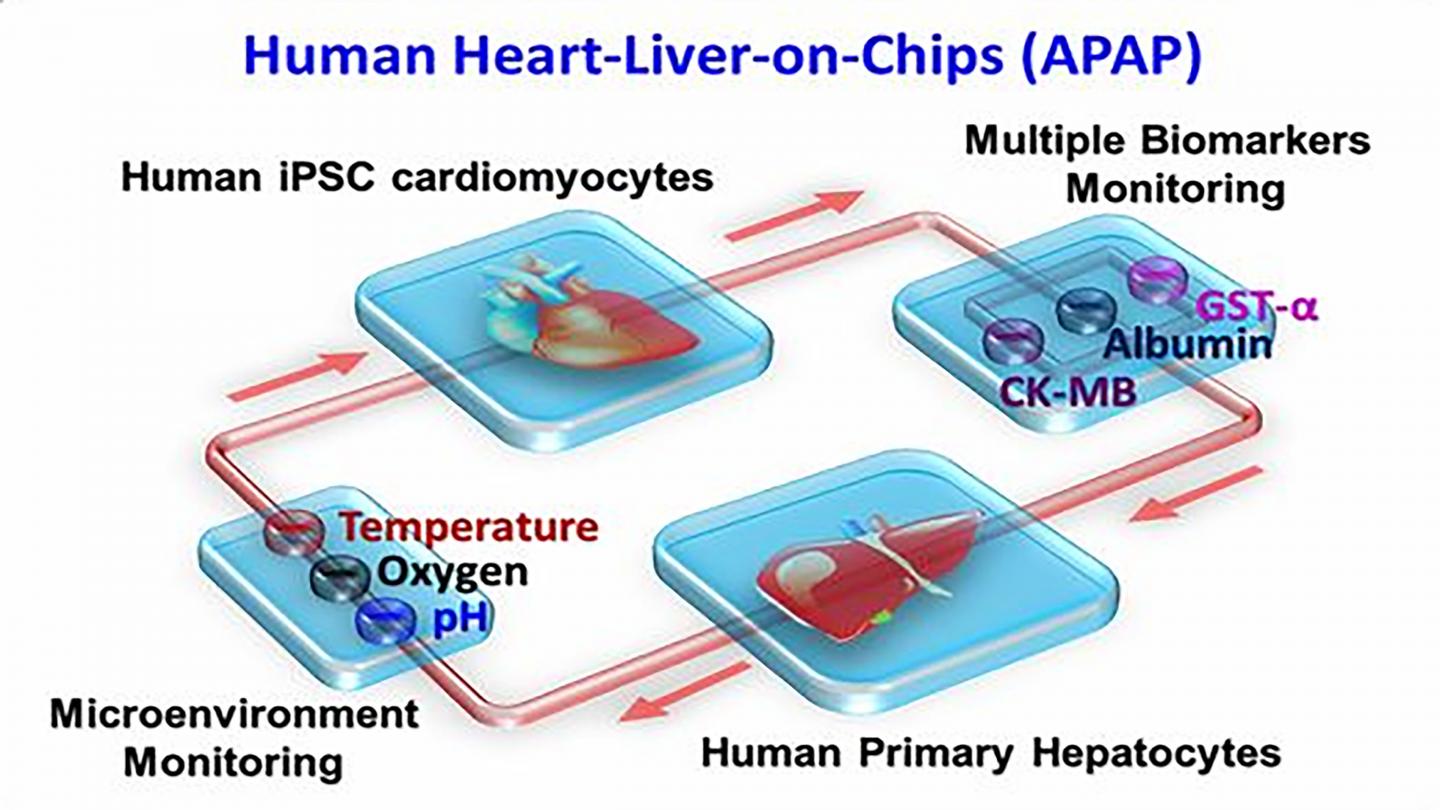
Organ-on-a-chip technology looks to provide a high-resolution, high-throughput method for researchers to investigate how tissues respond to conditions like exposure to experimental drugs. Such approaches might offer faster findings without the use of animal testing.

“In the area of multi-cellular systems, one challenge is the development of organs on a chip that incorporate complex spatial geometries and cell types to allow us to study how different cells interact with one another, while providing high-resolution imaging and high-throughput analysis,” Huang said.

She said she hopes the paper inspires students from more disciplines to participate in the field.

###

The article, “Multi-scale cellular engineering: From molecules to organ-on-a-chip,” is authored by Ngan F. Huang, Ovijit Chaudhuri, Patrick Cahan, Aijun Wang, Adam Engler, Yingxiao Wang, Sanjay Kumar, Ali Khademhosseini and Song Li. The article will appear in APL Bioengineering on March 3, 2020 (DOI: 10.1063/1.5129788). After that date, it can be accessed at https://aip.scitation.org/doi/10.1063/1.5129788.

ABOUT THE JOURNAL

APL Bioengineering is an open access journal publishing significant discoveries specific to the understanding and advancement of physics and engineering of biological systems. See http://aip.scitation.org/journal/apb.

Media Contact
Larry Frum
[email protected]
301-209-3090

Related Journal Article

http://dx.doi.org/10.1063/1.5129788

Tags: BiologyBiomechanics/BiophysicsCell BiologyChemistry/Physics/Materials SciencesMolecular Biology
Share12Tweet8Share2ShareShareShare2

Related Posts

Scientists Achieve Breakthrough in Molecular ‘Sandwich’ Assembly — Chemistry

Scientists Achieve Breakthrough in Molecular ‘Sandwich’ Assembly

May 21, 2026
Advancing In Vivo and In Situ Monitoring: Science Bulletin Highlights Host-Based Antifouling Gold Nanotube Sensor for Selective Detection of Mechanically Sensitive Serotonin Release in Intestinal Mucosa — Chemistry

Advancing In Vivo and In Situ Monitoring: Science Bulletin Highlights Host-Based Antifouling Gold Nanotube Sensor for Selective Detection of Mechanically Sensitive Serotonin Release in Intestinal Mucosa

May 20, 2026

How Magnetic Orientation Could Influence the Building Blocks of Life

May 20, 2026

Breaking a 200-Year-Old Belief: Novel Surface Design Achieves Two Distinct Wetting States on One Substrate

May 20, 2026
Please login to join discussion

POPULAR NEWS

  • blank

    New Study Reveals Plants Can Detect the Sound of Rain

    733 shares
    Share 292 Tweet 183
  • ESMO 2025: mRNA COVID Vaccines Enhance Efficacy of Cancer Immunotherapy

    304 shares
    Share 122 Tweet 76
  • Research Indicates Potential Connection Between Prenatal Medication Exposure and Elevated Autism Risk

    846 shares
    Share 338 Tweet 212
  • Breastmilk Balances E. coli and Beneficial Bacteria in Infant Gut Microbiomes

    58 shares
    Share 23 Tweet 15

About

We bring you the latest biotechnology news from best research centers and universities around the world. Check our website.

Follow us

Recent News

Innovative Reusable Brick Walls Revolutionize Construction Industry

Nonlinear Atomic Tunneling Enhanced by Bright Squeezed Vacuum

Label-Free Super-Resolution Imaging of Live Cells

Subscribe to Blog via Email

Success! An email was just sent to confirm your subscription. Please find the email now and click 'Confirm' to start subscribing.

Join 82 other subscribers
  • Contact Us

Bioengineer.org © Copyright 2023 All Rights Reserved.

Welcome Back!

Login to your account below

Forgotten Password?

Retrieve your password

Please enter your username or email address to reset your password.

Log In
No Result
View All Result
  • Homepages
    • Home Page 1
    • Home Page 2
  • News
  • National
  • Business
  • Health
  • Lifestyle
  • Science

Bioengineer.org © Copyright 2023 All Rights Reserved.