• HOME
  • NEWS
  • EXPLORE
    • CAREER
      • Companies
      • Jobs
    • EVENTS
    • iGEM
      • News
      • Team
    • PHOTOS
    • VIDEO
    • WIKI
  • BLOG
  • COMMUNITY
    • FACEBOOK
    • INSTAGRAM
    • TWITTER
Saturday, February 7, 2026
BIOENGINEER.ORG
No Result
View All Result
  • Login
  • HOME
  • NEWS
  • EXPLORE
    • CAREER
      • Companies
      • Jobs
        • Lecturer
        • PhD Studentship
        • Postdoc
        • Research Assistant
    • EVENTS
    • iGEM
      • News
      • Team
    • PHOTOS
    • VIDEO
    • WIKI
  • BLOG
  • COMMUNITY
    • FACEBOOK
    • INSTAGRAM
    • TWITTER
  • HOME
  • NEWS
  • EXPLORE
    • CAREER
      • Companies
      • Jobs
        • Lecturer
        • PhD Studentship
        • Postdoc
        • Research Assistant
    • EVENTS
    • iGEM
      • News
      • Team
    • PHOTOS
    • VIDEO
    • WIKI
  • BLOG
  • COMMUNITY
    • FACEBOOK
    • INSTAGRAM
    • TWITTER
No Result
View All Result
Bioengineer.org
No Result
View All Result
Home NEWS Science News Health

A quick path to antimalarial resistance

Bioengineer by Bioengineer
March 4, 2019
in Health
Reading Time: 2 mins read
0
IMAGE
Share on FacebookShare on TwitterShare on LinkedinShare on RedditShare on Telegram

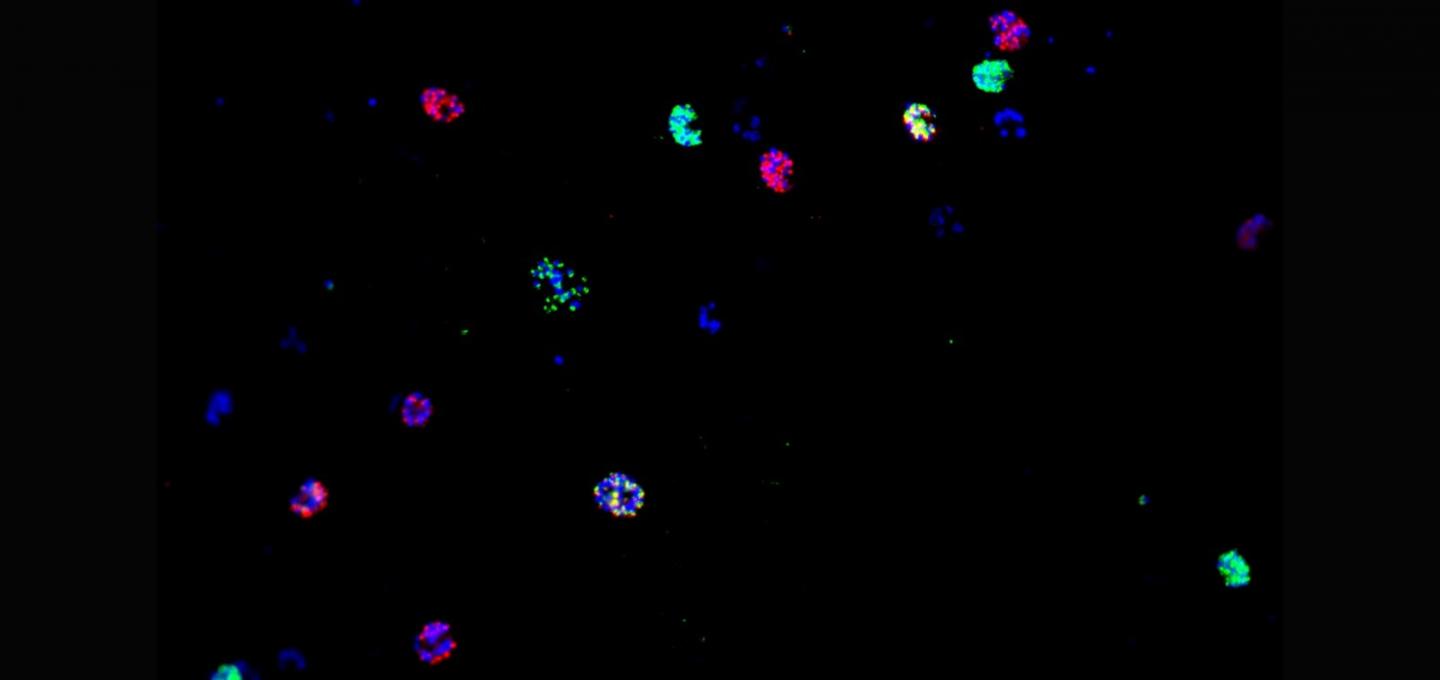
P. falciparum parasites can develop drug resistance by epigenetic changes in clag3 gene expression
IMAGE

Credit: Mira et al, 2019

Resistance to antimalarial drugs is thought to result mainly from changes in the parasite’s genome. However, P. falciparum can also develop resistance to some antimalarial compounds by epigenetic changes, according to a new study led by ISGlobal, an institution supported by “la Caixa”, and the Institute of Tropical Medicine (ITM), Antwerp. This is of concern because resistance acquired at the epigenetic level can arise quickly, even during the course of a single infection.

P. falciparum, the most deadly malaria parasite, has developed resistance to all antimalarial drugs, including artemisinin combination therapies (ACTs), which are the current frontline treatment. Most of the known mechanisms by which P. falciparum parasites develop resistance to antimalarial drugs are due to changes in the genome. However, a team led by Alfred Cortés (ISGlobal) and Anna Rosanas-Urgell (ITM) explored the role of epigenetics (i.e. changes in gene expression that do not involve alterations in DNA sequence) in antimalarial drug resistance. Particularly, they looked at two parasite genes – clag3.1 and clag3.2 – whose expression is regulated by epigenetic mechanisms and that determine the activity of a channel called Plasmodial Surface Anion Channel (PSAC), which regulates the entry of nutrients and other molecules into red blood cells infected by the parasite. Previously, Cortés and his team had found that switches in the expression of clag3 led to changes in PSAC permeability and resistance to compounds toxic for the parasite.

In this study, the researchers investigated whether other antimalarial drugs require clag3 to reach their intracellular target and could consequently be prone to parasite resistance by epigenetic mechanisms. They found that certain compounds such as bis-thiazolium salts T3 and T16 require the product of clag3 genes to enter infected erythrocytes. Furthermore, P. falciparum populations could develop resistance to these compounds through the selection of parasites with reduced expression of both genes. In contrast, other compounds predicted to use transport pathways to enter infected erythrocytes, such as doxycycline, azithromycin or lumefantrine, did not require expression of clag3 genes for their anti-malarial activity.

“These results show that P. falciparum can develop resistance to certain antimalarial compounds by epigenetic changes in the expression of clag3 genes,” explains Sofia Mira, co-first author of the study together with Anastasia Pickford and Nuria Rovira. “These results are of relevance to drug development efforts, since resistance by epigenetic mechanisms can arise quickly, even during the course of a single infection,” adds Cortés. “It is also easily reversible, providing the parasite with an extraordinary level of plasticity.”

###

Media Contact
Adelaida Sarukhan
[email protected]

Original Source

https://www.isglobal.org/en/-/una-via-rapida-para-desarrollar-resistencia-a-antimalaricos

Related Journal Article

http://dx.doi.org/10.1128/AAC.00052-19

Tags: BiologyDisease in the Developing WorldInfectious/Emerging DiseasesParasitology
Share13Tweet8Share2ShareShareShare2

Related Posts

Decoding Prostate Cancer Origins via snFLARE-seq, mxFRIZNGRND

February 7, 2026

Digital Health Perspectives from Baltic Sea Experts

February 7, 2026

Exploring Decision-Making in Dementia Caregivers’ Mobility

February 7, 2026

Succinate Receptor 1 Limits Blood Cell Formation, Leukemia

February 7, 2026
Please login to join discussion

POPULAR NEWS

  • Robotic Ureteral Reconstruction: A Novel Approach

    Robotic Ureteral Reconstruction: A Novel Approach

    82 shares
    Share 33 Tweet 21
  • Digital Privacy: Health Data Control in Incarceration

    63 shares
    Share 25 Tweet 16
  • Study Reveals Lipid Accumulation in ME/CFS Cells

    57 shares
    Share 23 Tweet 14
  • Breakthrough in RNA Research Accelerates Medical Innovations Timeline

    53 shares
    Share 21 Tweet 13

About

We bring you the latest biotechnology news from best research centers and universities around the world. Check our website.

Follow us

Recent News

Decoding Prostate Cancer Origins via snFLARE-seq, mxFRIZNGRND

Digital Health Perspectives from Baltic Sea Experts

Florida Cane Toad: Complex Spread and Selective Evolution

Subscribe to Blog via Email

Enter your email address to subscribe to this blog and receive notifications of new posts by email.

Join 73 other subscribers
  • Contact Us

Bioengineer.org © Copyright 2023 All Rights Reserved.

Welcome Back!

Login to your account below

Forgotten Password?

Retrieve your password

Please enter your username or email address to reset your password.

Log In
No Result
View All Result
  • Homepages
    • Home Page 1
    • Home Page 2
  • News
  • National
  • Business
  • Health
  • Lifestyle
  • Science

Bioengineer.org © Copyright 2023 All Rights Reserved.