• HOME
  • NEWS
  • EXPLORE
    • CAREER
      • Companies
      • Jobs
    • EVENTS
    • iGEM
      • News
      • Team
    • PHOTOS
    • VIDEO
    • WIKI
  • BLOG
  • COMMUNITY
    • FACEBOOK
    • INSTAGRAM
    • TWITTER
Thursday, May 21, 2026
BIOENGINEER.ORG
No Result
View All Result
  • Login
  • HOME
  • NEWS
  • EXPLORE
    • CAREER
      • Companies
      • Jobs
        • Lecturer
        • PhD Studentship
        • Postdoc
        • Research Assistant
    • EVENTS
    • iGEM
      • News
      • Team
    • PHOTOS
    • VIDEO
    • WIKI
  • BLOG
  • COMMUNITY
    • FACEBOOK
    • INSTAGRAM
    • TWITTER
  • HOME
  • NEWS
  • EXPLORE
    • CAREER
      • Companies
      • Jobs
        • Lecturer
        • PhD Studentship
        • Postdoc
        • Research Assistant
    • EVENTS
    • iGEM
      • News
      • Team
    • PHOTOS
    • VIDEO
    • WIKI
  • BLOG
  • COMMUNITY
    • FACEBOOK
    • INSTAGRAM
    • TWITTER
No Result
View All Result
Bioengineer.org
No Result
View All Result
Home NEWS Science News Chemistry

A pigment from ancient Egypt to modern microscopy

Bioengineer by Bioengineer
March 20, 2020
in Chemistry
Reading Time: 3 mins read
0
IMAGE
Share on FacebookShare on TwitterShare on LinkedinShare on RedditShare on Telegram

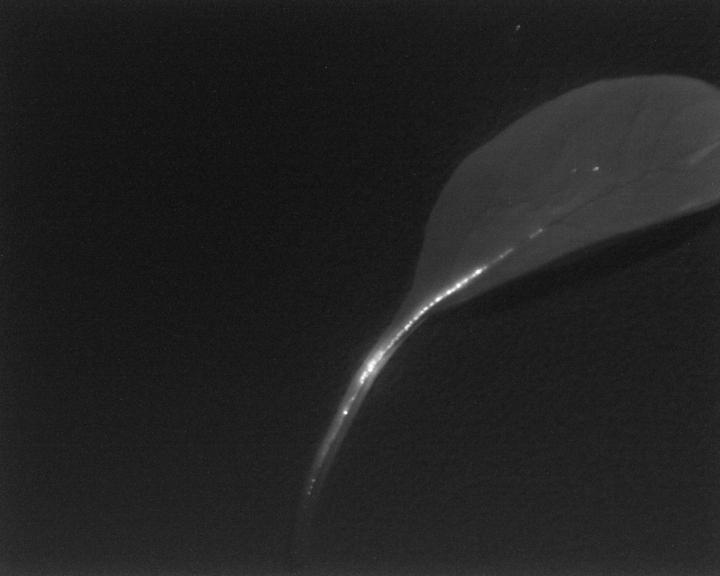
Göttingen research team produces new nanosheets for near infrared imaging
IMAGE

Credit: University of Goettingen


Egyptian blue is one of the oldest manmade colour pigments. It adorns, for instance, the crown of the world famous bust of Nefertiti. But the pigment can do even more. An international research team led by Dr Sebastian Kruss from the Institute of Physical Chemistry at the University of Göttingen has produced a new nanomaterial based on the Egyptian blue pigment, which is ideally suited for applications in imaging using near infrared spectroscopy and microscopy. The results have been published in the journal Nature Communications.

Microscopy and optical imaging are important tools in basic research and biomedicine. They use substances that can release light when excited. Known as “fluorophores”, these substances are used to stain very small structures in samples, enabling clear resolution using modern microscopes. Most fluorophores shine in the range of light visible to humans. When using light in the near infrared spectrum, with a wavelength starting at 800 nanometres, light penetrates even deeper into tissue and there are fewer distortions to the image. So far, however, there are only a few known fluorophores that work in the near infrared spectrum.

The research team has now succeeded in exfoliating extremely thin layers from grains of calcium copper silicate, also known as Egyptian blue. These nanosheets are 100,000 times thinner than a human hair and fluoresce in the near infrared range. “We were able to show that even the smallest nanosheets are extremely stable, shine brightly and do not bleach,” says Dr Sebastian Kruss, “making them ideal for optical imaging.”

The scientists tested their idea for microscopy in animals and plants. For example, they followed the movement of individual nanosheets in order to visualise mechanical processes and the structure of the tissue around cell nuclei in the fruit fly. In addition, they integrated the nanosheets into plants and were able to identify them even without a microscope, which promises future applications in the agricultural industry. “The potential for state-of-the-art microscopy from this material means that new findings in biomedical research can be expected in the future,” says Kruss.

###

The study involved scientists from the Institute of Physical Chemistry, the Third Institute of Physics, the Department of Developmental Biochemistry and the Institute of Geology as well as the Department of Dermatology, Venereology and Allergology of the University Medical Center Göttingen and the University of California Riverside.

Original publication: Selvaggio et al. “Exfoliated near infrared fluorescent silicate nanosheets for (bio)photonics”. Nature Communications, DOI: 10.1038/s41467-020-15299-5

See also – https://www.nature.com/articles/s41467-020-15299-5

Contact:

Dr Sebastian Kruss

University of Göttingen

Faculty of Chemistry

Institute for Physical Chemistry

Tammannstraße 6, 37077 Göttingen, Germany

Tel: +49 (0)551 39-20936

Twitter: @KrussLab

Email: [email protected]

http://www.uni-goettingen.de/en/499131.html

Media Contact
Melissa Sollich
[email protected]
49-055-139-26228

Original Source

https://www.uni-goettingen.de/en/3240.html?id=5849

Related Journal Article

http://dx.doi.org/10.1038/s41467-020-15299-5

Tags: Chemistry/Physics/Materials SciencesMaterialsNanotechnology/MicromachinesOpticsTechnology/Engineering/Computer Science
Share12Tweet8Share2ShareShareShare2

Related Posts

Advancing In Vivo and In Situ Monitoring: Science Bulletin Highlights Host-Based Antifouling Gold Nanotube Sensor for Selective Detection of Mechanically Sensitive Serotonin Release in Intestinal Mucosa — Chemistry

Advancing In Vivo and In Situ Monitoring: Science Bulletin Highlights Host-Based Antifouling Gold Nanotube Sensor for Selective Detection of Mechanically Sensitive Serotonin Release in Intestinal Mucosa

May 20, 2026
How Magnetic Orientation Could Influence the Building Blocks of Life — Chemistry

How Magnetic Orientation Could Influence the Building Blocks of Life

May 20, 2026

Breaking a 200-Year-Old Belief: Novel Surface Design Achieves Two Distinct Wetting States on One Substrate

May 20, 2026

Unveiling Sound Waves: Scientists Discover Hidden Behaviors in Acoustic Phenomena

May 20, 2026
Please login to join discussion

POPULAR NEWS

  • blank

    New Study Reveals Plants Can Detect the Sound of Rain

    733 shares
    Share 292 Tweet 183
  • ESMO 2025: mRNA COVID Vaccines Enhance Efficacy of Cancer Immunotherapy

    301 shares
    Share 120 Tweet 75
  • Research Indicates Potential Connection Between Prenatal Medication Exposure and Elevated Autism Risk

    846 shares
    Share 338 Tweet 212
  • Breastmilk Balances E. coli and Beneficial Bacteria in Infant Gut Microbiomes

    58 shares
    Share 23 Tweet 15

About

We bring you the latest biotechnology news from best research centers and universities around the world. Check our website.

Follow us

Recent News

Experts Warn of a Moral Crisis in Healthcare

Common Food Preservatives Associated with Elevated Blood Pressure and Increased Heart Disease Risk

Study Finds Reusable Catheters a Safe Option That Could Save the NHS Millions

Subscribe to Blog via Email

Enter your email address to subscribe to this blog and receive notifications of new posts by email.

Join 82 other subscribers
  • Contact Us

Bioengineer.org © Copyright 2023 All Rights Reserved.

Welcome Back!

Login to your account below

Forgotten Password?

Retrieve your password

Please enter your username or email address to reset your password.

Log In
No Result
View All Result
  • Homepages
    • Home Page 1
    • Home Page 2
  • News
  • National
  • Business
  • Health
  • Lifestyle
  • Science

Bioengineer.org © Copyright 2023 All Rights Reserved.