• HOME
  • NEWS
  • EXPLORE
    • CAREER
      • Companies
      • Jobs
    • EVENTS
    • iGEM
      • News
      • Team
    • PHOTOS
    • VIDEO
    • WIKI
  • BLOG
  • COMMUNITY
    • FACEBOOK
    • INSTAGRAM
    • TWITTER
Monday, May 11, 2026
BIOENGINEER.ORG
No Result
View All Result
  • Login
  • HOME
  • NEWS
  • EXPLORE
    • CAREER
      • Companies
      • Jobs
        • Lecturer
        • PhD Studentship
        • Postdoc
        • Research Assistant
    • EVENTS
    • iGEM
      • News
      • Team
    • PHOTOS
    • VIDEO
    • WIKI
  • BLOG
  • COMMUNITY
    • FACEBOOK
    • INSTAGRAM
    • TWITTER
  • HOME
  • NEWS
  • EXPLORE
    • CAREER
      • Companies
      • Jobs
        • Lecturer
        • PhD Studentship
        • Postdoc
        • Research Assistant
    • EVENTS
    • iGEM
      • News
      • Team
    • PHOTOS
    • VIDEO
    • WIKI
  • BLOG
  • COMMUNITY
    • FACEBOOK
    • INSTAGRAM
    • TWITTER
No Result
View All Result
Bioengineer.org
No Result
View All Result
Home NEWS Science News Biology

A new way to monitor cancer radiation therapy doses

Bioengineer by Bioengineer
February 18, 2020
in Biology
Reading Time: 2 mins read
0
IMAGE
Share on FacebookShare on TwitterShare on LinkedinShare on RedditShare on Telegram

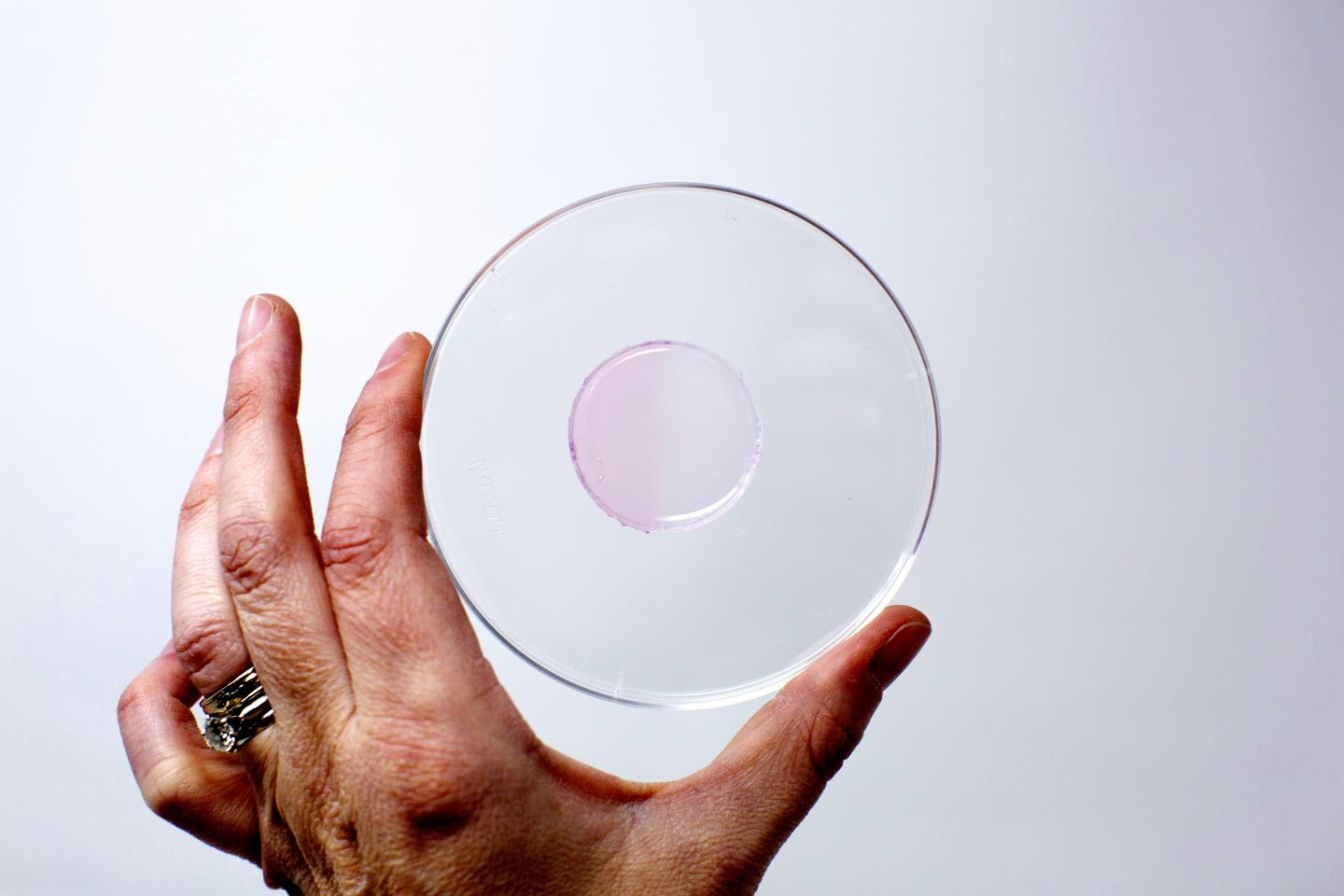
A new gel-based nanosensor for radiation dose monitoring can be used on skin and is relatively inexpensive
IMAGE

Credit: Image credit Subhadeep Dutta.


SAN DIEGO, CA – More than half of all cancer patients undergo radiation therapy and the dose is critical. Too much and the surrounding tissue gets damaged, too little and the cancer cells survive. Subhadeep Dutta and Karthik Pushpavanam, graduate students working in the lab of Kaushal Rege, Professor at Arizona State University in Tempe, and collaborators at Banner-M.D. Anderson in Gilbert, Arizona, developed a new way to monitor radiation doses that is cost-effective and easy to read. Dutta will present their research on Tuesday, February 18 at the 64th Annual Meeting of the Biophysical Society in San Diego, California.

Radiation therapy directs high energy beams to destroy the genetic material inside cells and prevent them from growing. Typically, a radiation therapy team decides the total dose of radiation, and then divides that total dose over several sessions. The machines and calculations involved are usually spot-on as far as dosages, but sometimes variations, perhaps due to patient movement such as breathing, or in rare instances due to issues with the machine or software, can be causes for error. Monitoring the dose is critical as both overdosing and underdosing can compromise patient safety–too much healthy tissue or too little tumor can be destroyed in the process.

Dutta, Pushpavanam, Rege, and colleagues made a hydrogel that can be applied directly to a patient’s skin in order to easily measure radiation doses. Mixed into the hydrogel are gold salts and a few amino acids. Without radiation, the gel is colorless, but as it is exposed to radiation it becomes pink. The color intensity is directly correlated to the amount of radiation. At the end of a treatment, it is painlessly peeled off the skin and the color is measured with a common and relatively inexpensive lab instrument, an absorption spectrometer.

Some dose monitors are currently available for patients. “One looks like a sheet of paper (Radiochromic Films), but it is sensitive to light and heat, so it must be carefully handled, and requires long processing times. Another is a tiny sensor (NanoDot®), which is expensive and requires multiple arrays to cover an area of the skin. Ours can be used directly onto the skin and is relatively inexpensive,” Dutta says.

The gel has performed well in testing and was recently used on canine cancer patients undergoing radiotherapy. “Our next plan is to convert it to an app-based system, where you can take a picture of a gel and that can predict the dose based on programming in the app. It’s just measuring color, which is easy to do,” says Dutta. The team is hopeful that future studies will lead to translation of this technology for use with human patients in the clinic.

###

Media Contact
Leann Fox
[email protected]
202-256-1417

Original Source

https://www.biophysics.org/news-room?ArtMID=802&ArticleID=9149&preview=true

Tags: Biomechanics/BiophysicsBiotechnologycancerHealth CareMedicine/HealthResearchers/Scientists/Awards
Share12Tweet8Share2ShareShareShare2

Related Posts

From Complexity to Clarity: Unraveling the “Topological Laws” Governing Cell Death — Biology

From Complexity to Clarity: Unraveling the “Topological Laws” Governing Cell Death

May 11, 2026
New Classification Framework Identifies Tumor-Associated Bacterial Effectors as Crucial Drivers of Tumor Biology and Immune Response — Biology

New Classification Framework Identifies Tumor-Associated Bacterial Effectors as Crucial Drivers of Tumor Biology and Immune Response

May 11, 2026

HIV-1 Strains Reveal Varied Paths to Antibody Escape

May 11, 2026

CRISPRi Screening Identifies Fungal-Specific Drug Targets

May 11, 2026
Please login to join discussion

POPULAR NEWS

  • Research Indicates Potential Connection Between Prenatal Medication Exposure and Elevated Autism Risk

    841 shares
    Share 336 Tweet 210
  • New Study Reveals Plants Can Detect the Sound of Rain

    728 shares
    Share 290 Tweet 182
  • Salmonella Haem Blocks Macrophages, Boosts Infection

    62 shares
    Share 25 Tweet 16
  • Breastmilk Balances E. coli and Beneficial Bacteria in Infant Gut Microbiomes

    57 shares
    Share 23 Tweet 14

About

We bring you the latest biotechnology news from best research centers and universities around the world. Check our website.

Follow us

Recent News

Innovative Dense Eutectic Zr-Ta-O/YSZ Core-Shell Double-Layer Coating Boosts CMAS Resistance Through Dynamic Sealing and Self-Removal

BESSY II Reveals How Intrinsic Oxygen Reduces the Lifespan of Solid-State Batteries

Unveiling Dark Matter Through Molecular Insights

Subscribe to Blog via Email

Enter your email address to subscribe to this blog and receive notifications of new posts by email.

Join 82 other subscribers
  • Contact Us

Bioengineer.org © Copyright 2023 All Rights Reserved.

Welcome Back!

Login to your account below

Forgotten Password?

Retrieve your password

Please enter your username or email address to reset your password.

Log In
No Result
View All Result
  • Homepages
    • Home Page 1
    • Home Page 2
  • News
  • National
  • Business
  • Health
  • Lifestyle
  • Science

Bioengineer.org © Copyright 2023 All Rights Reserved.