• HOME
  • NEWS
  • EXPLORE
    • CAREER
      • Companies
      • Jobs
    • EVENTS
    • iGEM
      • News
      • Team
    • PHOTOS
    • VIDEO
    • WIKI
  • BLOG
  • COMMUNITY
    • FACEBOOK
    • INSTAGRAM
    • TWITTER
Tuesday, July 7, 2026
BIOENGINEER.ORG
No Result
View All Result
  • Login
  • HOME
  • NEWS
  • EXPLORE
    • CAREER
      • Companies
      • Jobs
        • Lecturer
        • PhD Studentship
        • Postdoc
        • Research Assistant
    • EVENTS
    • iGEM
      • News
      • Team
    • PHOTOS
    • VIDEO
    • WIKI
  • BLOG
  • COMMUNITY
    • FACEBOOK
    • INSTAGRAM
    • TWITTER
  • HOME
  • NEWS
  • EXPLORE
    • CAREER
      • Companies
      • Jobs
        • Lecturer
        • PhD Studentship
        • Postdoc
        • Research Assistant
    • EVENTS
    • iGEM
      • News
      • Team
    • PHOTOS
    • VIDEO
    • WIKI
  • BLOG
  • COMMUNITY
    • FACEBOOK
    • INSTAGRAM
    • TWITTER
No Result
View All Result
Bioengineer.org
No Result
View All Result
Home NEWS Science News Biology

A molecule for proper neural wiring in the cerebellum

Bioengineer by Bioengineer
July 28, 2017
in Biology
Reading Time: 2 mins read
0
Share on FacebookShare on TwitterShare on LinkedinShare on RedditShare on Telegram
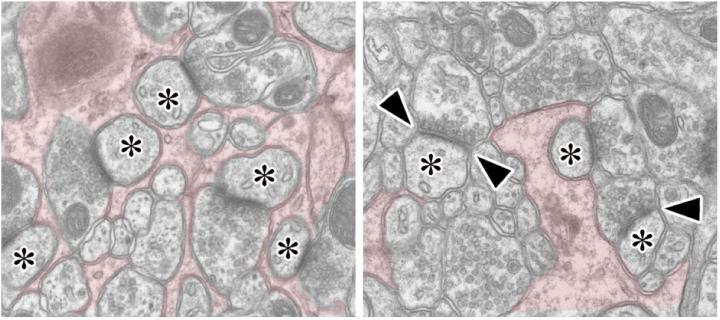
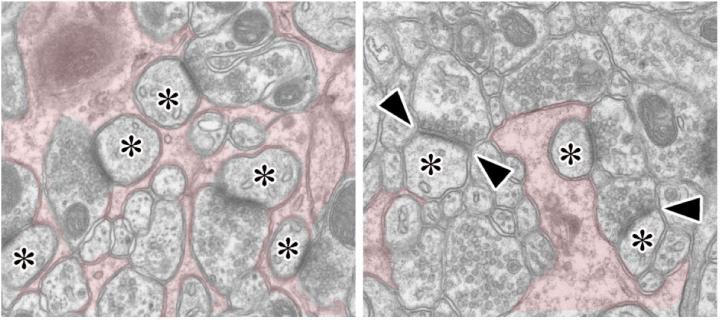
IMAGE

Credit: Miyazaki T. et al., Proceedings of the National Academy of Sciences of the United States of America, June 27, 2017.

A molecule produced by insulating glial cells facilitates the functional wiring of brain cells involved in motor coordination.

Researchers at Hokkaido University have found that the molecule "L-gutamate/L-aspartate transporter" (GLAST) plays an essential role in establishing and maintaining proper neural wiring of Purkinje cells in the cerebellum.

Purkinje cells are among the largest nerve cells in the brain. They are present in the cerebellum, a small structure in the back of the brain influencing motor coordination. They are mainly hooked up to the nervous system by means of two distinct types of nerve fibers, "parallel fibers" and "climbing fibers." Those fibers connect to different part of Purkinje cell dendrites, or the branches projecting from the cell body, segregating their territories.

GLAST is a molecule produced by specialized insulating cells, called Bergmann glia, that wrap around Purkinje cell synapses (a synapse is the structure connecting one nerve cell to another). GLAST's role is to remove excess glutamate, a neurotransmitter used by parallel and climbing fibers to send signals to Purkinje cells. This facilitates a "high-fidelity" signal, by allowing the right amount of glutamate to reach the targeted nerve cell without spilling over onto its neighbors. However, little is known about GLAST's role in the development of neural circuits.

Professor Masahiko Watanabe of Hokkaido University and his colleagues in Japan compared the wiring of Purkinje cells in normal mice and mutant mice lacking GLAST. The wiring of Purkinje cells in the mutant mice was laden with abnormalities.

Each Purkinje cell is normally innervated by a single climbing fiber as a result of competition between the fibers during development. However, in the mutant mice, Purkinje cells were innervated by multiple climbing fibers, which apparently caused the Purkinje cells to be atypically excited.

Parallel fibers were also affected. They robustly increased the number of connections with Purkinje cells, impairing the territorial segregation between climbing fibers and parallel fibers. Furthermore, in the knockout mice, Bergmann glial cells were improperly wrapped around the Purkinje cells, exposing them to the external environment.

In a different experiment, they also found that functional blockade of GLAST in normal adult mice results in similar abnormalities as seen in the knockout mice.

"We have shown that the glutamate transporter, GLAST, plays important roles in establishing and maintaining proper nerve wiring and insulation in the cerebellum. Further investigation should reveal how GLAST's function is related to the plasticity of the neural network," says Masahiko Watanabe.

###

Media Contact

Naoki Namba
81-117-062-185
@hokkaido_uni

https://www.global.hokudai.ac.jp/
Share13Tweet8Share2ShareShareShare2

Related Posts

Here are a few rewritten headlines for a science magazine post, each with a slightly different tone: Intriguing & poetic: How do organs sculpt themselves? Sea stars hold the secret Direct & research-focused: Sea stars reveal the hidden rules of organ formation Metaphorical & inviting: Tiny architects beneath the waves: What sea stars teach us about building organs Short & punchy: Star-shaped clues to how our organs take shape Question-led: Could a sea star show us how organs form? Elegant & feature-style: The body’s blueprint, glimpsed in a sea star’s arm

July 6, 2026
Bacteria evolve faster with unconventional gene copies — Biology

Bacteria evolve faster with unconventional gene copies

July 6, 2026

Neighbours rewire soil feedback via root microbiome shifts

July 6, 2026

Evolution-Inspired Biosensors Revolutionize Lipid Tracking in Real Time

July 2, 2026
Please login to join discussion

POPULAR NEWS

  • Detection of EDCs in Breast Milk and Infant Urine Up to Six Months Highlights Early Exposure Risks

    77 shares
    Share 31 Tweet 19
  • New Drug Candidate Developed at McMaster Shows Potential for Treating Brain Cancer

    58 shares
    Share 23 Tweet 15
  • Saying Goodbye to PGY-6: Pediatric Fellowship Realities

    103 shares
    Share 41 Tweet 26
  • KTU Researchers Explore Ultrasound’s Role in Enhancing Blood Flow Beyond Diagnostics

    53 shares
    Share 21 Tweet 13

About

We bring you the latest biotechnology news from best research centers and universities around the world. Check our website.

Follow us

Recent News

Flame retardant BDE-209 targets molecularly linked to ulcerative colitis

Ultra-high frequency particle impacts mimic rockbursts to shatter hard rock

Kidney transplant outcomes in older adults studied by German researchers

Subscribe to Blog via Email

Success! An email was just sent to confirm your subscription. Please find the email now and click 'Confirm' to start subscribing.

Join 83 other subscribers
  • Contact Us

Bioengineer.org © Copyright 2023 All Rights Reserved.

Welcome Back!

Login to your account below

Forgotten Password?

Retrieve your password

Please enter your username or email address to reset your password.

Log In
No Result
View All Result
  • Homepages
    • Home Page 1
    • Home Page 2
  • News
  • National
  • Business
  • Health
  • Lifestyle
  • Science

Bioengineer.org © Copyright 2023 All Rights Reserved.