• HOME
  • NEWS
  • EXPLORE
    • CAREER
      • Companies
      • Jobs
    • EVENTS
    • iGEM
      • News
      • Team
    • PHOTOS
    • VIDEO
    • WIKI
  • BLOG
  • COMMUNITY
    • FACEBOOK
    • INSTAGRAM
    • TWITTER
Saturday, May 16, 2026
BIOENGINEER.ORG
No Result
View All Result
  • Login
  • HOME
  • NEWS
  • EXPLORE
    • CAREER
      • Companies
      • Jobs
        • Lecturer
        • PhD Studentship
        • Postdoc
        • Research Assistant
    • EVENTS
    • iGEM
      • News
      • Team
    • PHOTOS
    • VIDEO
    • WIKI
  • BLOG
  • COMMUNITY
    • FACEBOOK
    • INSTAGRAM
    • TWITTER
  • HOME
  • NEWS
  • EXPLORE
    • CAREER
      • Companies
      • Jobs
        • Lecturer
        • PhD Studentship
        • Postdoc
        • Research Assistant
    • EVENTS
    • iGEM
      • News
      • Team
    • PHOTOS
    • VIDEO
    • WIKI
  • BLOG
  • COMMUNITY
    • FACEBOOK
    • INSTAGRAM
    • TWITTER
No Result
View All Result
Bioengineer.org
No Result
View All Result
Home NEWS Science News Biology

A disease trigger for pancreatitis has been identified

Bioengineer by Bioengineer
May 13, 2020
in Biology
Reading Time: 3 mins read
0
IMAGE
Share on FacebookShare on TwitterShare on LinkedinShare on RedditShare on Telegram

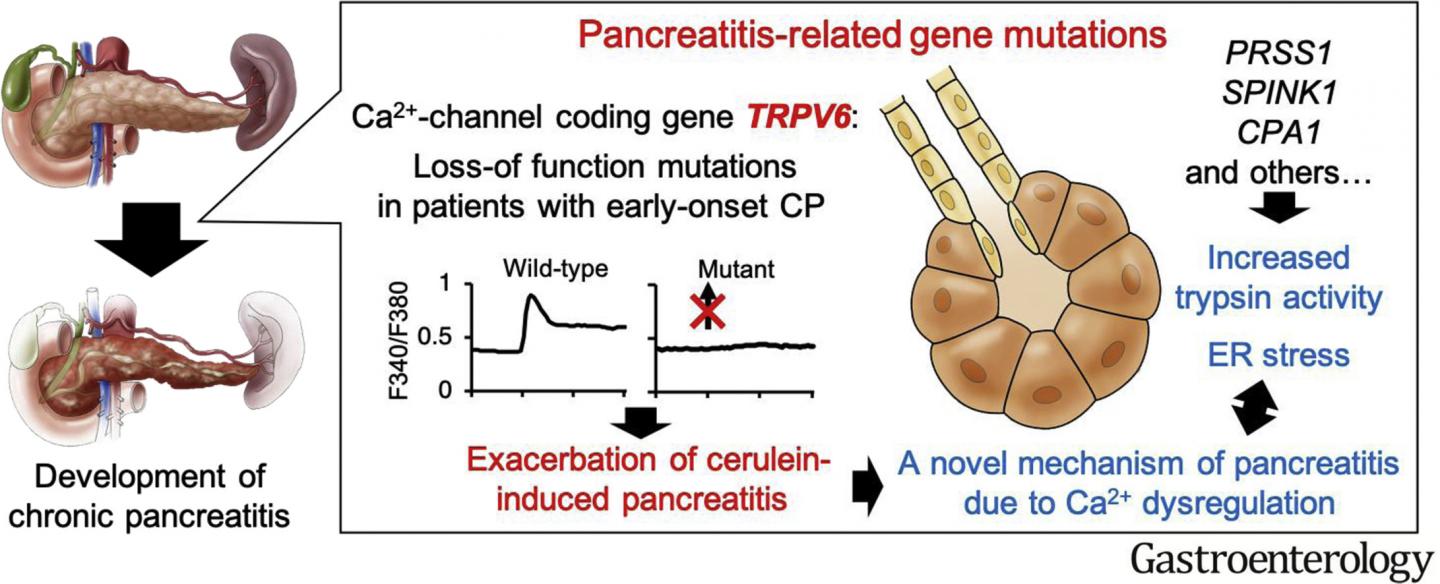
A Calcium channel is involved in the development of pancreatitis
IMAGE

Credit: Prof. Dr. Heiko Witt

Patients suffering from chronic pancreatitis experience an either recurring or permanent inflammation of their pancreas. “In many cases, people develop this disease because they are drinking too much alcohol or they are smoking too much. Certain medication or high levels of lipids or calcium in a patient’s blood can be another cause of pancreatitis,” explained Heiko Witt, one of the two heads of the study and Professor for Pediatric Nutritional Medicine at the Else Kröner-Fresenius-Zentrum (EKFZ) at TUM.

The main focus of previous research was on the so-called acinus cells of the pancreas; these are responsible for creating digestive enzymes. Many patients suffering from genetically caused pancreatitis show mutations in digestive enzymes or in molecules inhibiting the enzymes’ effectiveness.

Calcium channel disorder leads to pancreatitis

In the course of the current study, that was performed with European and Japanese patients suffering from pancreatitis not associated with alcohol consumption, the researchers discovered that genetic defects which were heavily limiting the functionality of calcium channel TRPV6 caused early-onset chronic pancreatitis.

“A substantial TRPV6 defect is a globally occurring and serious risk factor for developing chronic pancreatitis,” said Professor Witt and added: “By identifying alterations of the calcium channel, we are now also considering duct cells as part of the concept covering the origins of this disease.” Duct cells serve as coating in the channels that transport digestive enzymes from the point of origin into the intestines.

Using a mouse model, the scientists were able to show that the absence of the corresponding gene would, in most cases, lead to inflammation and the occurrence of fibrotic changes in the pancreas, which is typical for chronic inflammation.

This new discovery offers opportunities for pharmacologic therapy approaches

The discovery that a calcium channel malfunction can contribute to the development of pancreatitis offers a new course of action for therapeutic intervention. Furthermore, the research findings will become part of the standard diagnostics for genetically caused pancreatitis.

These insights also pave the way for a new area of research covering the investigation of causes of pancreatitis – no longer focused on acinus cells and digestive enzymes but rather on duct cells and channels as well as calcium metabolism.

The identification of mutations in a calcium channel as a (contributing) cause of disease leads to new factors – other calcium channels and proteins that are relevant for calcium metabolism – moving into the scientific focus. “Currently we are investigating these genes for genetic alterations and we have a European patient collective comprising 1100 people with pancreatitis to gather our data,” reported Professor Witt.

He further explained: “Deciphering the genetic backgrounds of pancreatitis will substantially affect our understanding of these types of genetically caused pancreatitis, as well as our understanding of alcohol-related pancreatitis. It will enable new research approaches which may lead to new treatment possibilities in the future.”

###

Media Contact
Dr. Heiko Witt
[email protected]

Original Source

https://www.tum.de/nc/en/about-tum/news/press-releases/details/36036/

Related Journal Article

http://dx.doi.org/10.1053/j.gastro.2020.01.005

Tags: BiologyGeneticsMedicine/HealthMetabolism/Metabolic DiseasesNutrition/Nutrients
Share12Tweet8Share2ShareShareShare2

Related Posts

Uncovering C. elegans Immunity via Genetic Screens — Biology

Uncovering C. elegans Immunity via Genetic Screens

May 16, 2026
Single mother must adapt swiftly — the survival of her colony depends on it — Biology

Single mother must adapt swiftly — the survival of her colony depends on it

May 15, 2026

Why Are Nearly Everyone Right-Handed? It Might Be Linked to How We Learned to Walk

May 15, 2026

Excessive Neuronal Activity Initiates Severe Autoimmune Brain Disorder

May 15, 2026
Please login to join discussion

POPULAR NEWS

  • Research Indicates Potential Connection Between Prenatal Medication Exposure and Elevated Autism Risk

    844 shares
    Share 338 Tweet 211
  • New Study Reveals Plants Can Detect the Sound of Rain

    730 shares
    Share 291 Tweet 182
  • Salmonella Haem Blocks Macrophages, Boosts Infection

    62 shares
    Share 25 Tweet 16
  • Breastmilk Balances E. coli and Beneficial Bacteria in Infant Gut Microbiomes

    58 shares
    Share 23 Tweet 15

About

We bring you the latest biotechnology news from best research centers and universities around the world. Check our website.

Follow us

Recent News

Transitional Care Boosts Heart Failure Outcomes in Elders

Low-Power Enhanced I2C Controller: RTL to GDSII

Gymnopilus Mushrooms Yield Antibacterial Gymnopilin A10, Gymnoprenol B13

Subscribe to Blog via Email

Enter your email address to subscribe to this blog and receive notifications of new posts by email.

Join 82 other subscribers
  • Contact Us

Bioengineer.org © Copyright 2023 All Rights Reserved.

Welcome Back!

Login to your account below

Forgotten Password?

Retrieve your password

Please enter your username or email address to reset your password.

Log In
No Result
View All Result
  • Homepages
    • Home Page 1
    • Home Page 2
  • News
  • National
  • Business
  • Health
  • Lifestyle
  • Science

Bioengineer.org © Copyright 2023 All Rights Reserved.