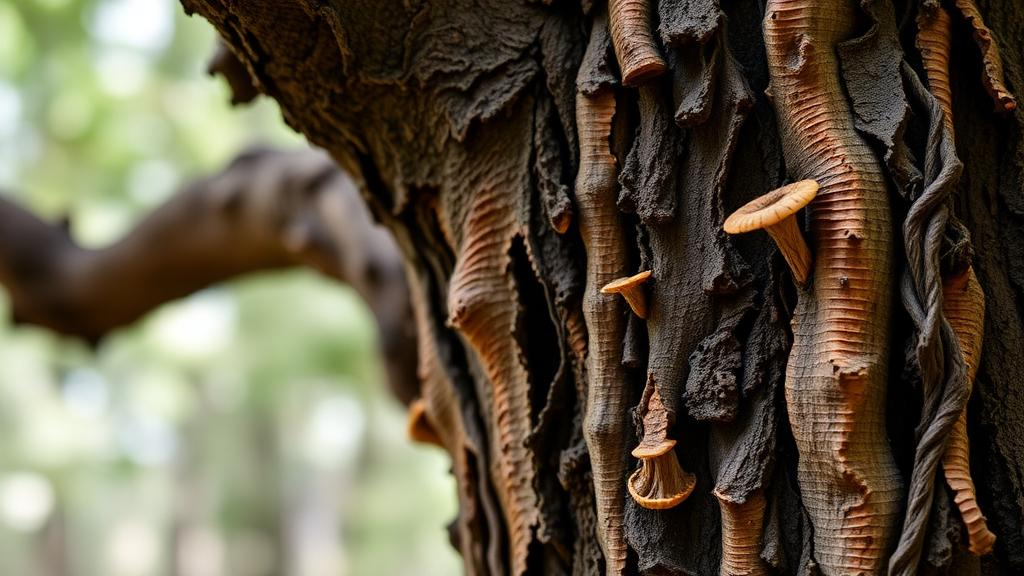
In the forested hills around Beijing, the smoke tree (Cotinus coggygria) paints autumn landscapes in brilliant reds, but a devastating wilt disease has been killing these iconic ornamentals at an alarming rate. The culprit long blamed for the damage is Verticillium dahliae, a soilborne fungus that invades the water-conducting vessels of more than 200 plant species. Yet field surveys revealed a puzzling pattern: many infected trees showed wilting or dieback on a single branch while neighboring branches on the same tree remained perfectly healthy. If a single pathogen were solely responsible, why would the damage be so patchy? A new study published in Stress Biology suggests the answer lies not in one microbe acting alone, but in a hidden partnership between the vascular invader and a quiet resident of the tree’s own bark.
A research team led by Ruifeng Guo and Yonglin Wang of Beijing Forestry University, together with colleagues at the Beijing Academy of Agriculture and Forestry Sciences and the United States Department of Agriculture, set out to map the microbial communities living inside smoke tree branches. The researchers sampled twelve trees, six healthy and six diseased, separating each branch into two distinct compartments: the outer epidermis, or bark, and the inner xylem, the vascular tissue that transports water. From each tree they collected branches in three health states: branches from completely healthy trees, symptomless branches from diseased trees, and the visibly diseased branches themselves. Using amplicon sequencing of bacterial 16S rRNA and fungal ITS regions, they generated a detailed census of the endophytic microbiota inhabiting each tissue type.
The sequencing data revealed that Verticillium wilt profoundly reshapes the internal microbial world of the tree. Bacterial communities in diseased xylem actually showed higher Shannon diversity than in healthy xylem, suggesting that infected trees may recruit additional microorganisms as a defensive response. Fungal communities told the opposite story: diversity dropped significantly in the epidermis and xylem of diseased branches. Principal coordinate analysis and permutational multivariate analysis of variance confirmed that disease status significantly altered community composition in nearly every compartment. Critically, when the researchers re-ran their analyses after excluding V. dahliae sequences, the pattern held, meaning the pathogen’s influence on the fungal community extended well beyond its own abundance. Quantitatively, disease explained roughly 40 percent of the variation in fungal communities but only about 11 percent in bacterial communities, indicating that fungi are far more sensitive to the wilt epidemic than bacteria.
To probe the stability of these communities, the team constructed co-occurrence networks linking microbial taxa based on correlated abundances. The fungal networks in diseased branches had fewer connections, fewer negative correlations, and markedly lower robustness when nodes were removed in simulations of species extinction. Both diseased and symptomless branches from infected trees showed elevated vulnerability, meaning the loss of a single taxon could disproportionately collapse network efficiency. Fungal networks proved consistently more fragile than bacterial ones, echoing earlier findings in pepper stems and olive roots where disease also destabilized fungal assemblages. This loss of connectivity, a form of microbial dysbiosis, suggested that wilt disease does not merely add a pathogen to an otherwise intact community; it actively dismantles the ecological architecture that keeps endophytes in check.
Within this destabilized landscape, one genus stood out. Differential abundance analysis and random forest classification both identified Botryosphaeria as a top biomarker of diseased branches, enriched alongside Verticillium itself. Linear correlation analysis showed that the relative abundance of Verticillium was positively and significantly associated with Botryosphaeria, with an R-squared of 0.47, while it was negatively correlated with Alternaria and Cladosporium. The team isolated a strain of Botryosphaeria dothidea from infected branches and found that it showed no antagonistic activity against V. dahliae in culture, ruling out simple competition. Spatially, the two fungi occupied different niches: B. dothidea concentrated in the bark while V. dahliae dominated the xylem. Field collections from four Beijing districts reinforced the association, with both fungi recovered together from 37 percent of 76 diseased branch samples and V. dahliae alone from 63 percent.
The decisive test came in the greenhouse. When smoke tree seedlings were inoculated with B. dothidea alone, nothing happened; the trees stayed healthy. When they were inoculated with V. dahliae alone, characteristic wilt symptoms appeared. But when seedlings received V. dahliae first and B. dothidea second, wilting was dramatically more severe than with either pathogen alone. Quantitative PCR revealed the mechanism behind this synergy: V. dahliae biomass was unchanged by the presence of its partner, but B. dothidea biomass surged in co-inoculated plants. In other words, the vascular pathogen was not simply teaming up with an equal partner; it was unlocking the door for a latent endophyte to multiply and inflict damage it could never achieve on its own.
Physiological and histochemical assays traced how the trees lost their ability to resist the second invader. Catalase and peroxidase, the antioxidant enzymes that scavenge reactive oxygen species during immune responses, were most active in plants challenged with V. dahliae alone and lowest in co-inoculated plants. Malondialdehyde content and relative conductivity, both markers of cell membrane damage, peaked in co-inoculated seedlings. DAB staining showed that V. dahliae infection drove substantial hydrogen peroxide accumulation, while trypan blue staining revealed extensive cell death, and microscopy documented solid blockage of xylem vessels. Together these results indicated that the first infection had already crippled the tree’s defense system before the second fungus even arrived.
Transcriptome sequencing provided the molecular explanation. In V. dahliae-infected branches, 2,800 predicted genes were significantly downregulated and 1,871 were upregulated compared with controls. Among the downregulated set, 394 genes in a single expression cluster were tied to plant defense, including disease resistance genes, protein kinases, jasmonic acid-responsive factors, chitinase-binding proteins, terpenoid synthases, cellulose synthases, protease inhibitors, redox regulators, and transcription factors. KEGG enrichment showed that hormone signal transduction, phenylpropanoid biosynthesis, MAPK signaling, brassinosteroid and monoterpenoid biosynthesis, and benzoxazinoid production were all significantly suppressed. Gene ontology analysis likewise flagged reduced transmembrane receptor kinase activity and compromised cell wall and cytoskeleton components. B. dothidea-infected branches showed a strikingly similar transcriptional signature, with the same defense and hormone pathways downregulated, confirming that both fungi exploit overlapping vulnerabilities in the host.
The study reframes B. dothidea, long recognized as a worldwide latent pathogen of woody plants that waits for drought, wounds, or stress before striking, as an opportunistic accomplice whose pathogenicity is triggered by another microbe rather than by abiotic stress alone. It also adds smoke tree wilt to a growing list of plant diseases, from grafted grapevine decline to soybean root rot, in which co-infection produces symptoms far worse than the sum of the parts. For forest managers, the practical implications are significant: because the two fungi occupy different tissues, control strategies may need to pair fungicides with measures that boost overall host vigor, keeping the latent bark dweller in its harmless endophytic state. The researchers are already testing plant immune activators in smoke tree plots to see whether shoring up the tree’s own defenses can break the deadly synergy, offering hope that the red hills of Beijing can be protected not by attacking one pathogen, but by managing the entire microbial community within the tree.
Subject of Research: Synergistic co-infection of smoke trees by Verticillium dahliae and the latent bark fungus Botryosphaeria dothidea
Article Title: The bark latent fungus Botryosphaeria dothidea exacerbates branch dieback following the infection with Verticillium dahliae
Article References: Guo, R., Li, Y., Tang, C., Zhao, Y., Wang, M., Qiao, G., Klosterman, S. J., & Wang, Y. (2026). The bark latent fungus Botryosphaeria dothidea exacerbates branch dieback following the infection with Verticillium dahliae. Stress Biology, 6(1), Article 13. https://doi.org/10.1007/s44154-026-00288-3
Image Credits: AI Generated
DOI: 10.1007/s44154-026-00288-3
Keywords: Verticillium dahliae, Botryosphaeria dothidea, smoke tree, Cotinus coggygria, Verticillium wilt, plant microbiome, endophytes, co-infection, branch dieback, xylem, RNA-seq, forest pathology
News Source: Kristina Jarvis. (October 5, 2026). Hidden Bark Fungus Turns Deadly Accomplice in Smoke Tree Wilt Epidemic. Scienmag.