• HOME
  • NEWS
  • EXPLORE
    • CAREER
      • Companies
      • Jobs
    • EVENTS
    • iGEM
      • News
      • Team
    • PHOTOS
    • VIDEO
    • WIKI
  • BLOG
  • COMMUNITY
    • FACEBOOK
    • INSTAGRAM
    • TWITTER
Saturday, February 7, 2026
BIOENGINEER.ORG
No Result
View All Result
  • Login
  • HOME
  • NEWS
  • EXPLORE
    • CAREER
      • Companies
      • Jobs
        • Lecturer
        • PhD Studentship
        • Postdoc
        • Research Assistant
    • EVENTS
    • iGEM
      • News
      • Team
    • PHOTOS
    • VIDEO
    • WIKI
  • BLOG
  • COMMUNITY
    • FACEBOOK
    • INSTAGRAM
    • TWITTER
  • HOME
  • NEWS
  • EXPLORE
    • CAREER
      • Companies
      • Jobs
        • Lecturer
        • PhD Studentship
        • Postdoc
        • Research Assistant
    • EVENTS
    • iGEM
      • News
      • Team
    • PHOTOS
    • VIDEO
    • WIKI
  • BLOG
  • COMMUNITY
    • FACEBOOK
    • INSTAGRAM
    • TWITTER
No Result
View All Result
Bioengineer.org
No Result
View All Result
Home NEWS Science News Biology

Warning over deep-sea 'gold rush'

Bioengineer by Bioengineer
December 17, 2018
in Biology
Reading Time: 3 mins read
0
IMAGE
Share on FacebookShare on TwitterShare on LinkedinShare on RedditShare on Telegram

IMAGE

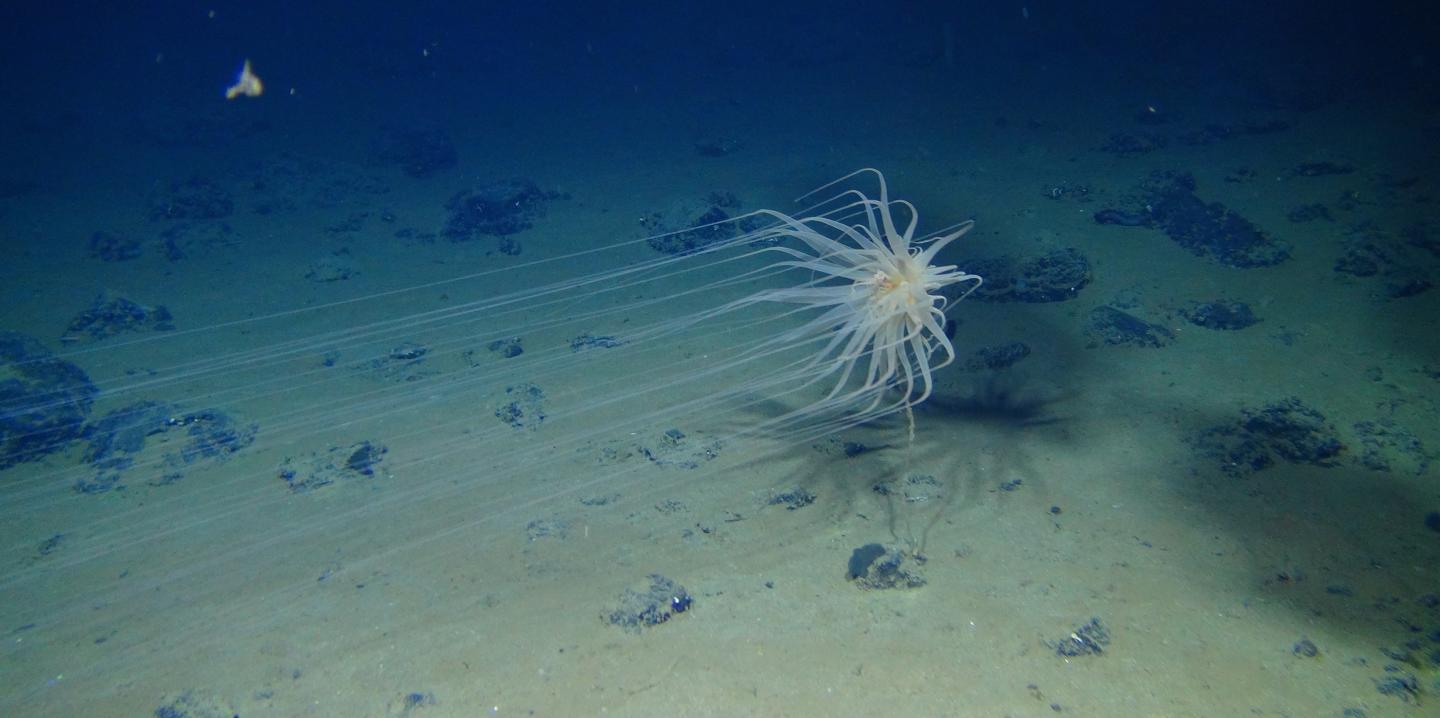
Credit: DJ Amon & CR Smith

A “gold rush” of seabed mining could lead to unprecedented damage to fragile deep-sea ecosystems, researchers have warned.

With major decisions on the future of seabed mining expected in 2019-20, scientists and policy experts from the University of Exeter and Greenpeace have recommended a range of measures to prevent environmental damage.

They say deep-sea ecosystems currently need more protection, rather than new threats.

They also argue that mining in the deep sea (depths below 200m) could be avoided altogether if humanity moved towards a “circular economy” that focuses on reuse and recycling of metals, reduces overconsumption and limits built-in obsolescence of technology.

“This ‘gold rush’ is being driven by our ever-growing demand for minerals,” said Dr David Santillo, a marine biologist and senior Greenpeace scientist based at the University of Exeter.

“Should we allow seabed mining – with the risk it poses to deep-sea ecosystems – or should we focus instead on reducing this demand for virgin minerals?”

The scientists also call for an improved network of Marine Protected Areas, strict regulations and monitoring of all human activities on the seabed, and far greater transparency on the costs and benefits of any proposed mining.

“The deep sea is beyond the jurisdiction of any single state and we need more joined-up global governance to prevent biodiversity loss from human activities”, said Dr Kirsten Thompson, a marine biologist at the University of Exeter and co-author on the study.

“Some areas targeted for seabed mining are known to be hotspots for biodiversity, including habitat for endemic corals and nursery grounds for sharks.”

The paper, published in the journal Frontiers in Marine Science, gives an overview of the current state of regulations and their likely effectiveness, with the aim to stimulate wider discussion before the International Seabed Authority reaches any decisions to allow commercial mining of the seafloor.

“Many marine scientists are concerned that, once the first commercial contract for mining is issued, there will be no going back,” said Kathryn Miller, a co-author on the study.

“Before that happens, we should be absolutely certain that we have looked carefully at all the other options for a more sustainable future.”

The study recommends:

  • Sustainability: Create a “circular economy” based on reuse and recycling, extending product lifespans and discouraging overconsumption.
  • Monitoring: Robust monitoring and research of deep-sea ecosystems through an international ocean agency.
  • Protection: Establish a coherent network of Marine Protected Areas.
  • Transparency: Inform the global community, including all indigenous groups and small-island states, of the costs and benefits of proposed activity according to the United Nations convention stipulation that activities in the deep sea must be carried out for “the benefit of mankind”.
  • Legislation: Strict regulations to prevent harm to ecosystems must be enforced by the regulatory body and be independently verified.

The study follows a previous paper that suggested seabed mining could do irreversible damage to deep-sea ecosystems.

###

The paper is entitled: “Seabed mining and approaches to governance of the deep seabed.” The paper is open-access and is available at https://doi.org/10.3389/fmars.2018.00480

Media Contact
Alex Morrison
[email protected]
44-013-927-24828

Related Journal Article

http://dx.doi.org/10.3389/fmars.2018.00480

Tags: BiodiversityBiologyEcology/EnvironmentMarine/Freshwater BiologyPolicy/EthicsTechnology/Engineering/Computer ScienceZoology/Veterinary Science
Share12Tweet8Share2ShareShareShare2

Related Posts

Florida Cane Toad: Complex Spread and Selective Evolution

Florida Cane Toad: Complex Spread and Selective Evolution

February 7, 2026
New Study Uncovers Mechanism Behind Burn Pit Particulate Matter–Induced Lung Inflammation

New Study Uncovers Mechanism Behind Burn Pit Particulate Matter–Induced Lung Inflammation

February 6, 2026

DeepBlastoid: Advancing Automated and Efficient Evaluation of Human Blastoids with Deep Learning

February 6, 2026

Navigating the Gut: The Role of Formic Acid in the Microbiome

February 6, 2026
Please login to join discussion

POPULAR NEWS

  • Robotic Ureteral Reconstruction: A Novel Approach

    Robotic Ureteral Reconstruction: A Novel Approach

    82 shares
    Share 33 Tweet 21
  • Digital Privacy: Health Data Control in Incarceration

    63 shares
    Share 25 Tweet 16
  • Study Reveals Lipid Accumulation in ME/CFS Cells

    57 shares
    Share 23 Tweet 14
  • Breakthrough in RNA Research Accelerates Medical Innovations Timeline

    53 shares
    Share 21 Tweet 13

About

We bring you the latest biotechnology news from best research centers and universities around the world. Check our website.

Follow us

Recent News

Phage-Antibiotic Combo Beats Resistant Peritoneal Infection

Boosting Remote Healthcare: Stepped-Wedge Trial Insights

Barriers and Boosters of Seniors’ Physical Activity in Karachi

Subscribe to Blog via Email

Enter your email address to subscribe to this blog and receive notifications of new posts by email.

Join 73 other subscribers
  • Contact Us

Bioengineer.org © Copyright 2023 All Rights Reserved.

Welcome Back!

Login to your account below

Forgotten Password?

Retrieve your password

Please enter your username or email address to reset your password.

Log In
No Result
View All Result
  • Homepages
    • Home Page 1
    • Home Page 2
  • News
  • National
  • Business
  • Health
  • Lifestyle
  • Science

Bioengineer.org © Copyright 2023 All Rights Reserved.