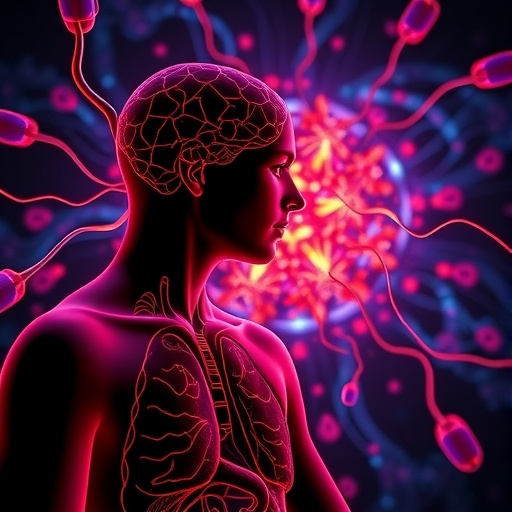
A new editorial in Intelligent Medicine is proposing an unconventional way to understand critical illness: not only as a failure of individual organs, but as a breakdown in the body’s ability to coordinate disorder across multiple physiological systems. The Entropic Critical Illness Theory, or ECIT, applies concepts from thermodynamics, information theory and systems biology to conditions such as sepsis, shock, acute respiratory distress syndrome and progressive multi-organ dysfunction.
The idea draws on a longstanding scientific problem: how interactions among countless microscopic components produce large-scale behavior. In physics, the collective motion of colliding particles can be described by statistical laws such as the Boltzmann equation. The authors of the editorial argue that a similar systems-level perspective may help explain why critically ill patients can deteriorate even when individual clinical measurements appear temporarily acceptable.
According to ECIT, the human body is an open, non-equilibrium system. It constantly exchanges energy and matter with its environment while maintaining internal organization. Metabolism, immune signaling, blood flow, hormonal regulation and cellular energy production are all dynamic processes that generate and dissipate entropy, a measure associated with disorder or the loss of usable organization. The theory does not suggest that entropy itself is harmful. Instead, it proposes that illness may emerge when entropy production is no longer regulated in a coordinated and adaptive way.
The framework identifies two linked, hidden physiological states that may help describe this loss of coordination. The first, host response entropy, or HRE, refers to increasing disorder in the networks that control inflammation, immunity, coagulation, metabolism and neuroendocrine activity. HRE is not simply a measurement of how much inflammation is present. A powerful immune response can remain structured and beneficial, while a less intense response may become disorganized and damaging if its timing, signaling or interaction with other systems breaks down.
The second proposed state is hemodynamic entropy, or HDE, which describes a loss of organization in circulation and oxygen delivery. Conventional bedside measurements, including arterial blood pressure, can provide an incomplete picture of tissue perfusion. A patient may have an apparently adequate global pressure while blood flow through the microcirculation remains uneven, impaired or poorly matched to cellular demand. At the level of small vessels, oxygen may fail to reach tissues efficiently even when larger circulation appears relatively stable.
ECIT proposes that HRE and HDE can amplify one another in a self-reinforcing cycle. An uncontrolled host response may injure the vascular endothelium, the thin cellular lining that regulates vessel tone, permeability and blood flow. Damage to this system can disrupt microvascular control and oxygen distribution. In turn, tissue hypoxia and impaired perfusion can increase cellular stress, alter mitochondrial function and intensify inflammatory dysregulation. This feedback may help explain how an initial infection, injury or other insult progresses into widespread organ dysfunction.
The theory places particular emphasis on what the authors call the “critical unit,” a functional connection between the microcirculation and mitochondria. Mitochondria produce much of the energy required by cells, but their performance depends on a reliable supply of oxygen and nutrients. If microvascular flow becomes heterogeneous, some cells may be exposed to inadequate oxygen even when average blood oxygen values appear acceptable. The resulting mismatch between oxygen delivery and energy production could contribute to the failure of tissues and organs to recover.
This perspective also challenges treatment strategies that focus primarily on normalizing isolated numbers. Raising blood pressure with vasopressors may improve a monitor reading without restoring capillary-level perfusion. Similarly, reducing a circulating inflammatory marker may not re-establish coordination among immune, metabolic and vascular systems. The editorial therefore argues that critical care should continue addressing the original cause of illness while also seeking to restore organized host responses and improve the distribution of blood flow and oxygen according to cellular needs.
The proposed framework could also influence the development of artificial intelligence for intensive care, although the authors stress that HRE and HDE are not currently measurable as single thermodynamic quantities. Future systems would need to infer these states from changing relationships among physiological waveforms, heart-rate and blood-pressure variability, inflammatory and metabolic markers, lactate trends, vasopressor requirements, organ-support intensity and, where available, direct measures of microcirculation. Rather than producing one universal “entropy score,” an AI model might estimate whether a patient’s physiology is becoming more coordinated or more disordered over time, detect transitions from adaptive to maladaptive responses and evaluate whether an intervention is restoring system-wide organization.
ECIT remains a conceptual theory rather than a clinically validated tool. The editorial, published online on July 14, 2026, calls for studies to determine whether its proposed latent states can be measured reliably, whether they add information beyond established indicators and whether they can guide treatments that improve outcomes. Its central question is whether the deterioration of critical illness can be recognized earlier by tracking the breakdown of physiological relationships rather than waiting for organ failure to become unmistakable. If supported by future research, the approach could shift attention from isolated abnormalities toward the evolving coherence of the living system as a whole.
Subject of Research: Not applicable
Article Title: The entropic critical illness theory: Rethinking from first principles
News Publication Date: 14 July 2026
Web References: https://doi.org/10.1016/j.imed.2026.07.003
References: 10.1016/j.imed.2026.07.003
Image Credits: wmschupbach from Openverse
Keywords: critical illness, entropy, intensive care, sepsis, systems biology, host response, microcirculation, mitochondrial function, hemodynamics, artificial intelligence, physiological regulation, multi-organ dysfunction
Tags: Critical illnessdynamic processes in critical careentropy and disorder in critical illnessentropy theoryinformation theory in medicinemetabolic and immune signalingmulti-organ dysfunctionnew perspectives on organ failureopen non-equilibrium biological systemsphysiological system coordinationsystems biology in medicinethermodynamics in healthcare