Credit: ATS
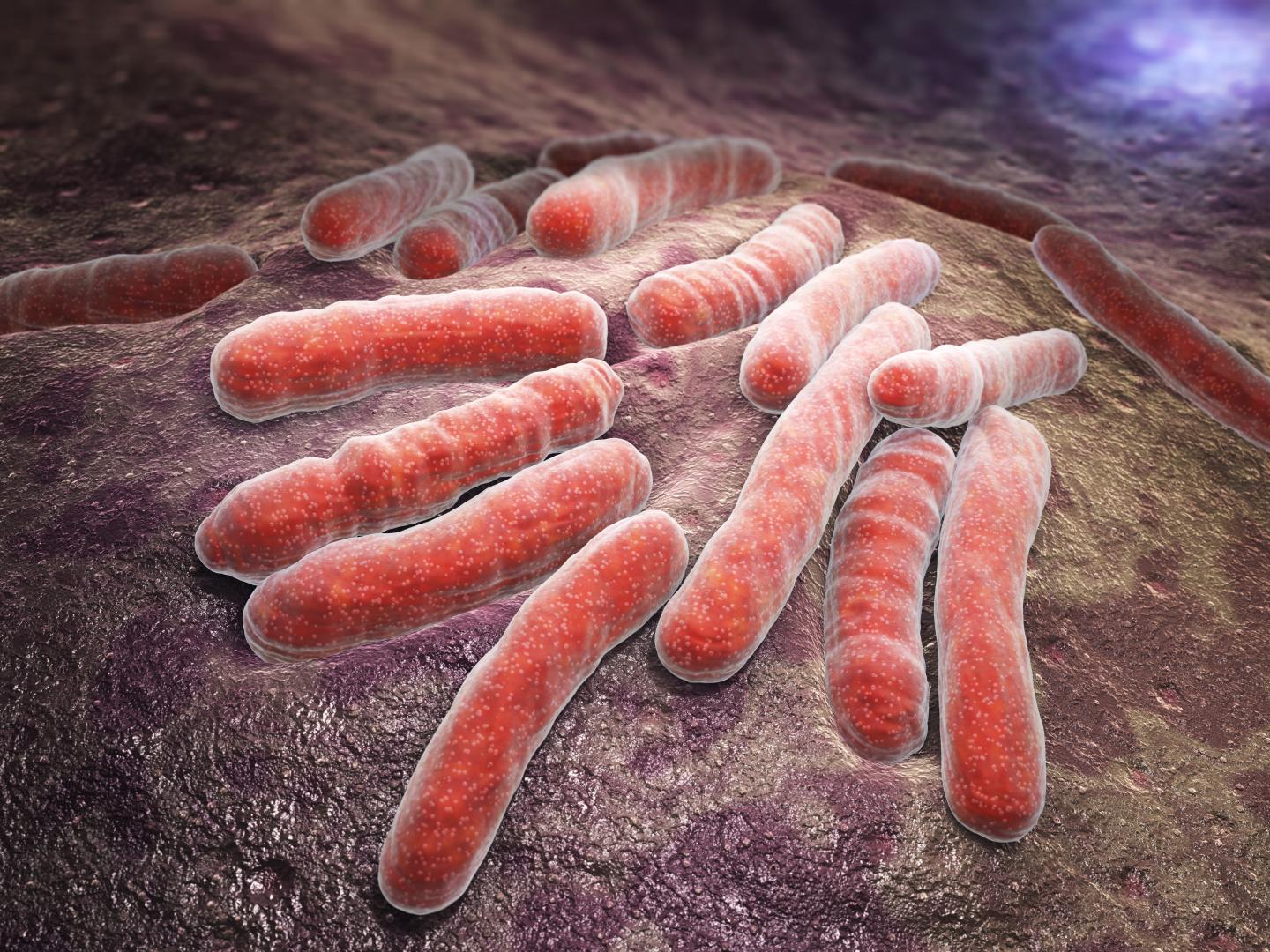
June 29, 2018–Higher daily doses of rifampin, a cornerstone of tuberculosis treatment, killed more TB bacteria in sputum cultures, and the higher doses did so without increasing the adverse effects of treatment, according to a randomized controlled trial published online in the American Thoracic Society's American Journal of Respiratory and Critical Care Medicine.
In "Efficacy and Safety of High-Dose Rifampin in Pulmonary Tuberculosis: A Randomized Controlled Trial," Gustavo E. Velásquez, MD, MPH, associate physician in the Division of Infectious Diseases at Brigham and Women's Hospital in Boston, and co-authors report on a phase 2 trial conducted in Lima, Peru, with 180 adults with new, drug-susceptible TB. Previous studies looking at whether intermittent delivery of higher doses of rifampin were effective in killing the TB bacterium found intermittent higher doses were more toxic than lower doses.
The authors of the current trial said that the findings were particularly encouraging because they suggest that at a high enough dose of daily rifampin, a treatment period of less than the standard six months may be possible.
"Six months of treatment with four drugs–often delivered with support and supervision–represents a substantial burden on the health care system, as well as on the patient," Dr. Velásquez said. "Patients who cannot complete the full regimen may not be cured, which permits ongoing transmission and the development of drug-resistant TB."
The authors wrote that optimization of rifampin dosing is a priority because it has the most potent sterilizing effect of the four first-line agents, is available throughout the world, and costs only pennies per capsule.
Trial participants were randomized equally to receive a standard dose of 10 mg/kg/day of rifampin or higher doses of 15 and 20 mg/kg/day, along with standard doses of the other first-line anti-TB drugs (isoniazid, pyrazinamide, ethambutol), during the first eight weeks of intensive therapy. After that, participants in all three trial arms received standard doses of rifampin and isoniazid during four months of continuation therapy.
The trial found that each five mg/kg/day increase in rifampin increased the elimination rate of TB bacteria from sputum. The trial also looked at rifampin concentrations in plasma and found that elimination rates of TB bacteria were significantly related to higher rifampin concentrations. All findings were true even after adjusting for age, sex and extent of disease.
Importantly, the increased efficacy of higher doses did not appear to result in more grade two or higher rifampin-related adverse events. Two commonly reported adverse events of rifampin are liver toxicity and flu-like syndrome. Flu-like syndrome was not observed in this trial.
The trial did not find that rates of culture conversion, a milestone in TB therapy indicating that bacteria are no longer detectable in culture, differed among the three trial arms after the eight-week intensive treatment phase. The authors said the trial was not powered to make that determination.
"The difference was too modest at the tested doses for successful treatment shortening," Dr. Velásquez said. "However, these results, taken together with other recently published reports, support efforts to increase doses of rifampin to 35 mg/kg/day and possibly higher until the maximum tolerable dose is identified."
###
About the American Journal of Respiratory and Critical Care Medicine (AJRCCM):
The AJRCCM is a peer-reviewed journal published by the American Thoracic Society. The Journal takes pride in publishing the most innovative science and the highest quality reviews, practice guidelines and statements in pulmonary, critical care and sleep medicine. With an impact factor of 12.996, it is the highest ranked journal in pulmonology. Editor: Jadwiga Wedzicha, MD, professor of respiratory medicine at the National Heart and Lung Institute (Royal Brompton Campus), Imperial College London, UK.
About the American Thoracic Society:
Founded in 1905, the American Thoracic Society is the world's leading medical association dedicated to advancing pulmonary, critical care and sleep medicine. The Society's more than 16,000 members prevent and fight respiratory disease around the globe through research, education, patient care and advocacy. The ATS publishes three journals, the American Journal of Respiratory and Critical Care Medicine, the American Journal of Respiratory Cell and Molecular Biology and the Annals of the American Thoracic Society.
The ATS will hold its 2019 International Conference, May 17-22, in Dallas, Texas, where world-renowned experts will share the latest scientific research and clinical advances in pulmonary, critical care and sleep medicine.
Media Contact
Dacia Morris
[email protected]
212-315-8620
@atscommunity
http://www.thoracic.org