

• HOME
  • NEWS
  • EXPLORE
    • CAREER
      • Companies
      • Jobs
    • EVENTS
    • iGEM
      • News
      • Team
    • PHOTOS
    • VIDEO
    • WIKI
  • BLOG
  • COMMUNITY
    • FACEBOOK
    • INSTAGRAM
    • TWITTER
Saturday, February 7, 2026
BIOENGINEER.ORG
No Result
View All Result
  • Login
  • HOME
  • NEWS
  • EXPLORE
    • CAREER
      • Companies
      • Jobs
        • Lecturer
        • PhD Studentship
        • Postdoc
        • Research Assistant
    • EVENTS
    • iGEM
      • News
      • Team
    • PHOTOS
    • VIDEO
    • WIKI
  • BLOG
  • COMMUNITY
    • FACEBOOK
    • INSTAGRAM
    • TWITTER
  • HOME
  • NEWS
  • EXPLORE
    • CAREER
      • Companies
      • Jobs
        • Lecturer
        • PhD Studentship
        • Postdoc
        • Research Assistant
    • EVENTS
    • iGEM
      • News
      • Team
    • PHOTOS
    • VIDEO
    • WIKI
  • BLOG
  • COMMUNITY
    • FACEBOOK
    • INSTAGRAM
    • TWITTER
No Result
View All Result
Bioengineer.org
No Result
View All Result
Home NEWS Science News Biology

Will global warming change the summer rainfall patterns over Eastern China?

Bioengineer by Bioengineer
June 28, 2018
in Biology
Reading Time: 2 mins read
0
Share on FacebookShare on TwitterShare on LinkedinShare on RedditShare on Telegram
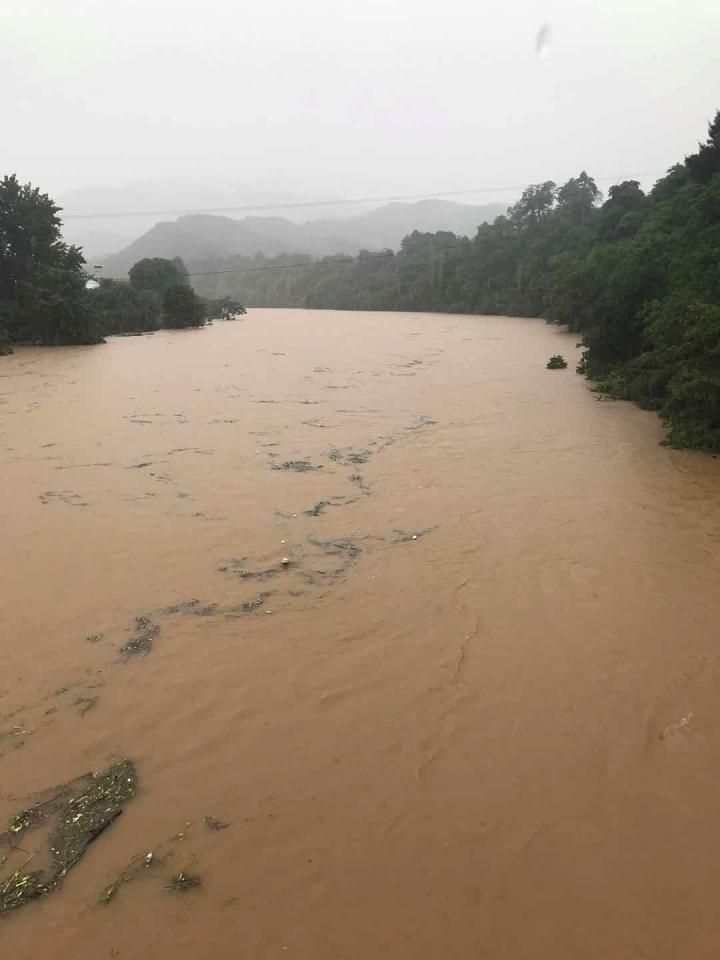
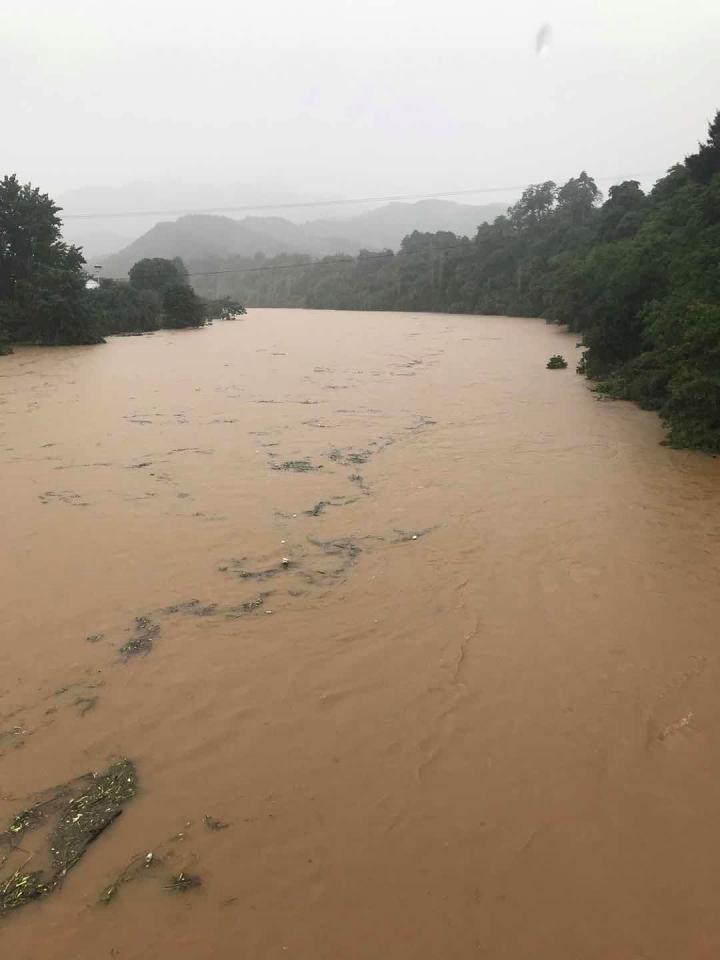
IMAGE

Credit: DUAN Xinping

Global warming is changing the Earth's climate. Heat waves, heavy rainfall, droughts and floods occur frequently in different parts of the world. Under these circumstances, how regional rainfall changes is of great concern.

For eastern China, an important feature of its summer rainfall is the meridionally banded structure, fluctuating on interannual and interdecadal timescales. In addition to long-term trends, how these patterns may change under global warming has important implications for agricultural planning and water resources management over this densely populated area.

Recently, researchers from the Institute of Atmospheric Physics, Chinese Academy of Sciences, and the UK Met Office Hadley Centre, cooperated on this issue using the latest climate model from the Hadley Centre, HadGEM3-GC2. "An interesting finding of our study is the big difference in the responses of rainfall modes to increased CO2 forcing at different timescales", says Dr. DUAN Yawen, the first author of this study.

By comparing the leading rainfall modes between an instantly quadrupled CO2 simulation (4×CO2) and the model's pre-industrial control simulation, the study shows that, although the rainfall modes on interannual and interdecadal timescales are similar in this model's internal variability, they respond very differently under 4×CO2 forcing. On interannual timescales, increased CO2 forcing does not change the spatial distribution of the dominant modes, but mainly affects their frequency. Specifically, in the 4×CO2 experiment, the dipole mode becomes more dominant. This might be due to an enhanced relationship between the dipole mode and ENSO events in the previous winter and through an increased role of the Indian Ocean under CO2 forcing. On interdecadal timescales, CO2 forcing plays a bigger role. Under 4×CO2, the first EOF looks very different from the control simulation, showing a dipole mode of more east-west contrast with enhanced influence from high latitudes.

This work was recently published in a special issue of Advances in Atmospheric Sciences based on the CSSP (Climate Science for Service Partnership China) project.

###

Media Contact

Zheng Lin
[email protected]
86-108-299-5053
@aasjournal

http://english.iap.cas.cn/

Original Source

http://english.iap.cas.cn/RE/201806/t20180628_194560.html http://dx.doi.org/10.1007/s00376-018-7264-x


Share12Tweet8Share2ShareShareShare2

Related Posts

Florida Cane Toad: Complex Spread and Selective Evolution

Florida Cane Toad: Complex Spread and Selective Evolution

February 7, 2026
New Study Uncovers Mechanism Behind Burn Pit Particulate Matter–Induced Lung Inflammation

New Study Uncovers Mechanism Behind Burn Pit Particulate Matter–Induced Lung Inflammation

February 6, 2026

DeepBlastoid: Advancing Automated and Efficient Evaluation of Human Blastoids with Deep Learning

February 6, 2026

Navigating the Gut: The Role of Formic Acid in the Microbiome

February 6, 2026
Please login to join discussion

POPULAR NEWS

  • Robotic Ureteral Reconstruction: A Novel Approach

    Robotic Ureteral Reconstruction: A Novel Approach

    82 shares
    Share 33 Tweet 21
  • Digital Privacy: Health Data Control in Incarceration

    63 shares
    Share 25 Tweet 16
  • Study Reveals Lipid Accumulation in ME/CFS Cells

    57 shares
    Share 23 Tweet 14
  • Breakthrough in RNA Research Accelerates Medical Innovations Timeline

    53 shares
    Share 21 Tweet 13

About

We bring you the latest biotechnology news from best research centers and universities around the world. Check our website.

Follow us

Recent News

Evaluating Pediatric Emergency Care Quality in Ethiopia

TPMT Expression Predictions Linked to Azathioprine Side Effects

Improving Dementia Care with Enhanced Activity Kits

Subscribe to Blog via Email

Success! An email was just sent to confirm your subscription. Please find the email now and click 'Confirm' to start subscribing.

Join 73 other subscribers
  • Contact Us

Bioengineer.org © Copyright 2023 All Rights Reserved.

Welcome Back!

Login to your account below

Forgotten Password?

Retrieve your password

Please enter your username or email address to reset your password.

Log In
No Result
View All Result
  • Homepages
    • Home Page 1
    • Home Page 2
  • News
  • National
  • Business
  • Health
  • Lifestyle
  • Science

Bioengineer.org © Copyright 2023 All Rights Reserved.