• HOME
  • NEWS
  • EXPLORE
    • CAREER
      • Companies
      • Jobs
    • EVENTS
    • iGEM
      • News
      • Team
    • PHOTOS
    • VIDEO
    • WIKI
  • BLOG
  • COMMUNITY
    • FACEBOOK
    • INSTAGRAM
    • TWITTER
Monday, June 22, 2026
BIOENGINEER.ORG
No Result
View All Result
  • Login
  • HOME
  • NEWS
  • EXPLORE
    • CAREER
      • Companies
      • Jobs
        • Lecturer
        • PhD Studentship
        • Postdoc
        • Research Assistant
    • EVENTS
    • iGEM
      • News
      • Team
    • PHOTOS
    • VIDEO
    • WIKI
  • BLOG
  • COMMUNITY
    • FACEBOOK
    • INSTAGRAM
    • TWITTER
  • HOME
  • NEWS
  • EXPLORE
    • CAREER
      • Companies
      • Jobs
        • Lecturer
        • PhD Studentship
        • Postdoc
        • Research Assistant
    • EVENTS
    • iGEM
      • News
      • Team
    • PHOTOS
    • VIDEO
    • WIKI
  • BLOG
  • COMMUNITY
    • FACEBOOK
    • INSTAGRAM
    • TWITTER
No Result
View All Result
Bioengineer.org
No Result
View All Result
Home NEWS Bioengineering

Bacteria use traffic-cop-like mechanism to infect gut

Bioengineer by Bioengineer
May 3, 2016
in Bioengineering
Reading Time: 2 mins read
0
Share on FacebookShare on TwitterShare on LinkedinShare on RedditShare on Telegram
IMAGE

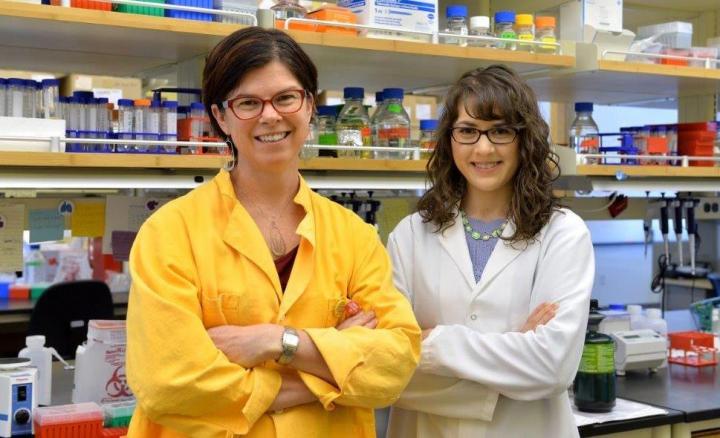
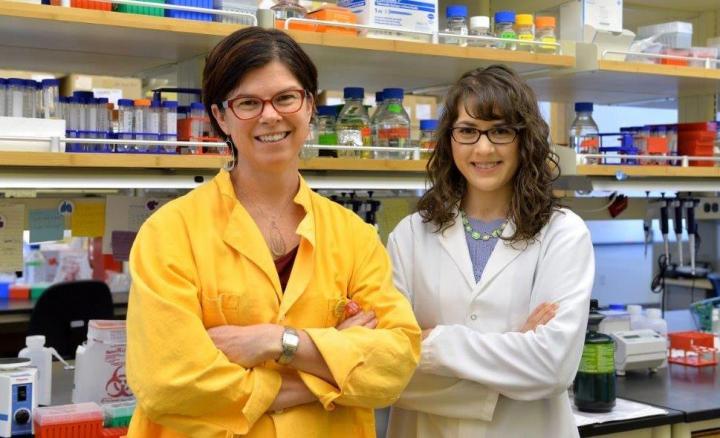
Credit: Shelly Hanks, WSU Photo Services

A study has found that a syringe-like device used to invade intestinal cells also acts as a traffic cop — directing bacteria where to go and thereby enabling them to efficiently carry out infection.

The findings by researchers at Washington State University and Harvard University appear in the Proceedings of the National Academy of Sciences. (Go to: http://www.pnas.org/content/113/17/4794.long)

The discovery is significant in that it reveals a mechanism that is critical to a pathogen's success and increases the possibility that scientists can one day thwart the ability of intestinal germs to cause gastrointestinal disease.

Among these germs, which sicken an estimated 2-billion people each year with severe diarrhea, are salmonella, shigella and E. coli. Increasing numbers of strains have become resistant to antibiotics, making their diseases more challenging to treat.

These bacteria often take up residence inside cells lining the intestine, but they employ different methods of doing so.

"Until now, it wasn't known how these pathogens decide to remain trapped inside a chamber-like vacuole or to move freely in the cellular fluid," said microbiologist Leigh Knodler of WSU's Paul G. Allen School for Global Animal Health, who co-led the study with Cammie Lesser of Harvard. "Clearly, it wasn't a random process. Even so, when we discovered the mechanism that calls the shots, it was a surprise."

That mechanism is a miniscule protein tip of a needle-like structure docked on the bacterial surface. Coined the "type III secretion system" in 1993, the device injects bacterial proteins through a tiny hole made in the intestinal cell membrane, tricking the host cell to engulf the bacteria.

But the researchers uncovered something more — that the business end of the syringe device serves a critical role in directing bacterial traffic, thus controlling whether the bacteria become "chronic dwellers" inside the membrane-bound vacuole or break out into the cell fluid. Their destiny determines whether the bacteria go on to kill the host cell, are excreted from the body or travel through the bloodstream to other sites.

Remarkably, researchers pinpointed the protein tip as a type of traffic warden after they replaced it with a protein tip from salmonella's cousin, shigella, another highly contagious bacterium that causes severe diarrhea.

"By removing the tip and replacing it with one from shigella, the salmonella didn't dwell inside the vacuoles. They moved out to the host cell contents, like shigella does," said Knodler.

Meaning that, the traffic cop had issued a new order — to leave town.

It's possible that this new-found knowledge could be used to develop novel approaches to prevent salmonella and other infections triggered by the type III secretion system, including black plague and certain pneumonia types, said Knodler.

###

Media Contact

Leigh Knodler
[email protected]
509-335-4046
@WSUNews

Washington State University

The post Bacteria use traffic-cop-like mechanism to infect gut appeared first on Scienmag.

Share40Tweet8Share2ShareShareShare2

Related Posts

Why is the first Turkish bioengineering promotion website, Biyomuhendislik.com, so important?

February 4, 2023

Robo-fish

September 19, 2016

Mice born from ‘tricked’ eggs

September 17, 2016

UCLA researchers use stem cells to grow 3-D lung-in-a-dish

September 16, 2016
Please login to join discussion

POPULAR NEWS

  • Saying Goodbye to PGY-6: Pediatric Fellowship Realities

    103 shares
    Share 41 Tweet 26
  • Multi-Hospital Study Reveals Long Covid Burden Is Twice as High as Current Estimates

    92 shares
    Share 36 Tweet 23
  • Detection of EDCs in Breast Milk and Infant Urine Up to Six Months Highlights Early Exposure Risks

    77 shares
    Share 31 Tweet 19
  • New Drug Candidate Developed at McMaster Shows Potential for Treating Brain Cancer

    58 shares
    Share 23 Tweet 15

About

We bring you the latest biotechnology news from best research centers and universities around the world. Check our website.

Follow us

Recent News

CFTR Modulator Therapy’s Impact on Children’s Lipids

Does Initial Surgery Impact SIP? Kaplan-Meier Insights

SECmeres Surpass EVs as Alzheimer’s RNA Biomarkers

Subscribe to Blog via Email

Enter your email address to subscribe to this blog and receive notifications of new posts by email.

Join 82 other subscribers
  • Contact Us

Bioengineer.org © Copyright 2023 All Rights Reserved.

Welcome Back!

Login to your account below

Forgotten Password?

Retrieve your password

Please enter your username or email address to reset your password.

Log In
No Result
View All Result
  • Homepages
    • Home Page 1
    • Home Page 2
  • News
  • National
  • Business
  • Health
  • Lifestyle
  • Science

Bioengineer.org © Copyright 2023 All Rights Reserved.