• HOME
  • NEWS
  • EXPLORE
    • CAREER
      • Companies
      • Jobs
    • EVENTS
    • iGEM
      • News
      • Team
    • PHOTOS
    • VIDEO
    • WIKI
  • BLOG
  • COMMUNITY
    • FACEBOOK
    • INSTAGRAM
    • TWITTER
Tuesday, July 28, 2026
BIOENGINEER.ORG
No Result
View All Result
  • Login
  • HOME
  • NEWS
  • EXPLORE
    • CAREER
      • Companies
      • Jobs
        • Lecturer
        • PhD Studentship
        • Postdoc
        • Research Assistant
    • EVENTS
    • iGEM
      • News
      • Team
    • PHOTOS
    • VIDEO
    • WIKI
  • BLOG
  • COMMUNITY
    • FACEBOOK
    • INSTAGRAM
    • TWITTER
  • HOME
  • NEWS
  • EXPLORE
    • CAREER
      • Companies
      • Jobs
        • Lecturer
        • PhD Studentship
        • Postdoc
        • Research Assistant
    • EVENTS
    • iGEM
      • News
      • Team
    • PHOTOS
    • VIDEO
    • WIKI
  • BLOG
  • COMMUNITY
    • FACEBOOK
    • INSTAGRAM
    • TWITTER
No Result
View All Result
Bioengineer.org
No Result
View All Result
Home NEWS Science News Biology

Efforts to restore imperiled Pando show promise says USU ecologist

Bioengineer by Bioengineer
February 13, 2018
in Biology
Reading Time: 2 mins read
0
Share on FacebookShare on TwitterShare on LinkedinShare on RedditShare on Telegram
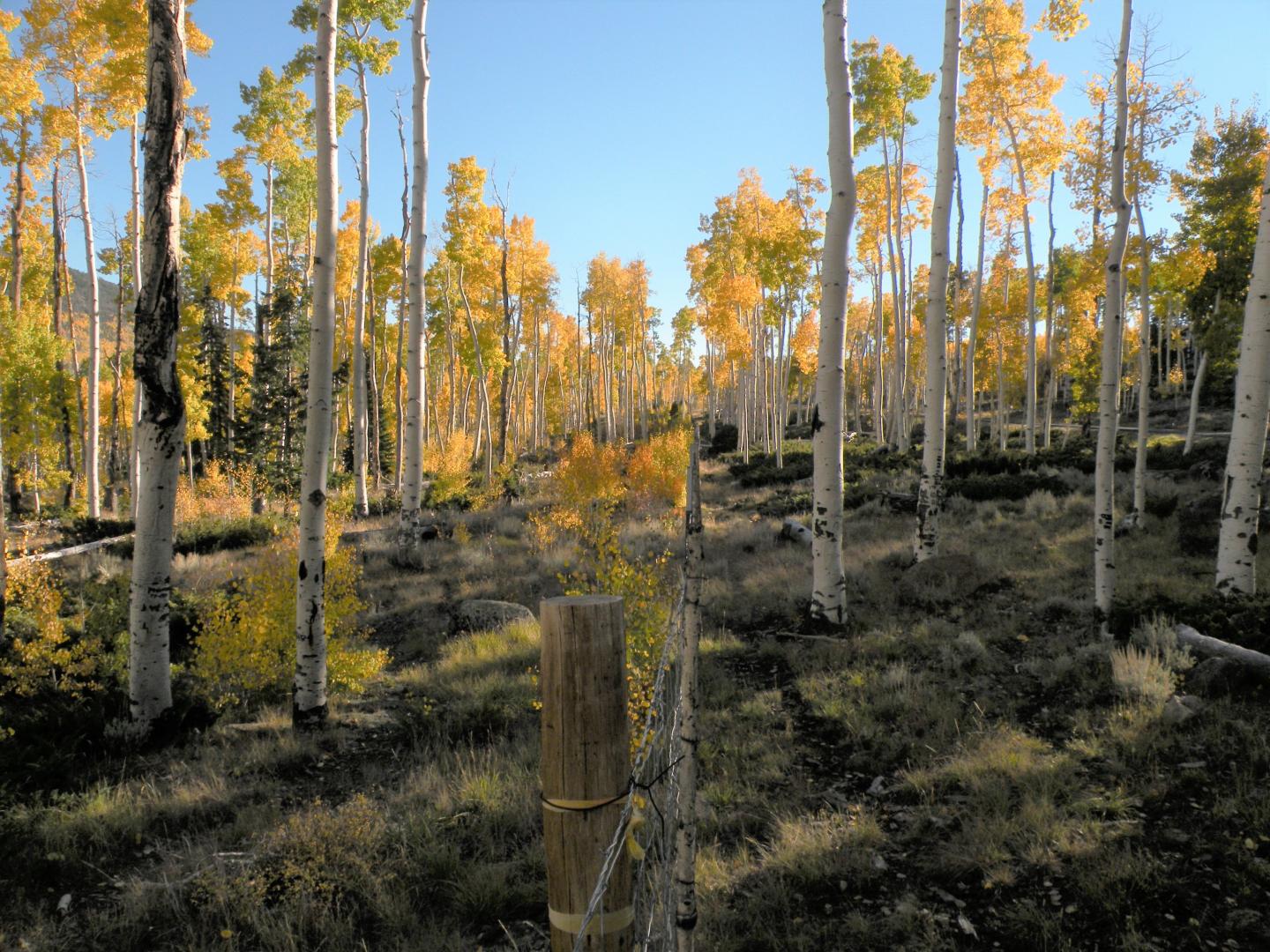
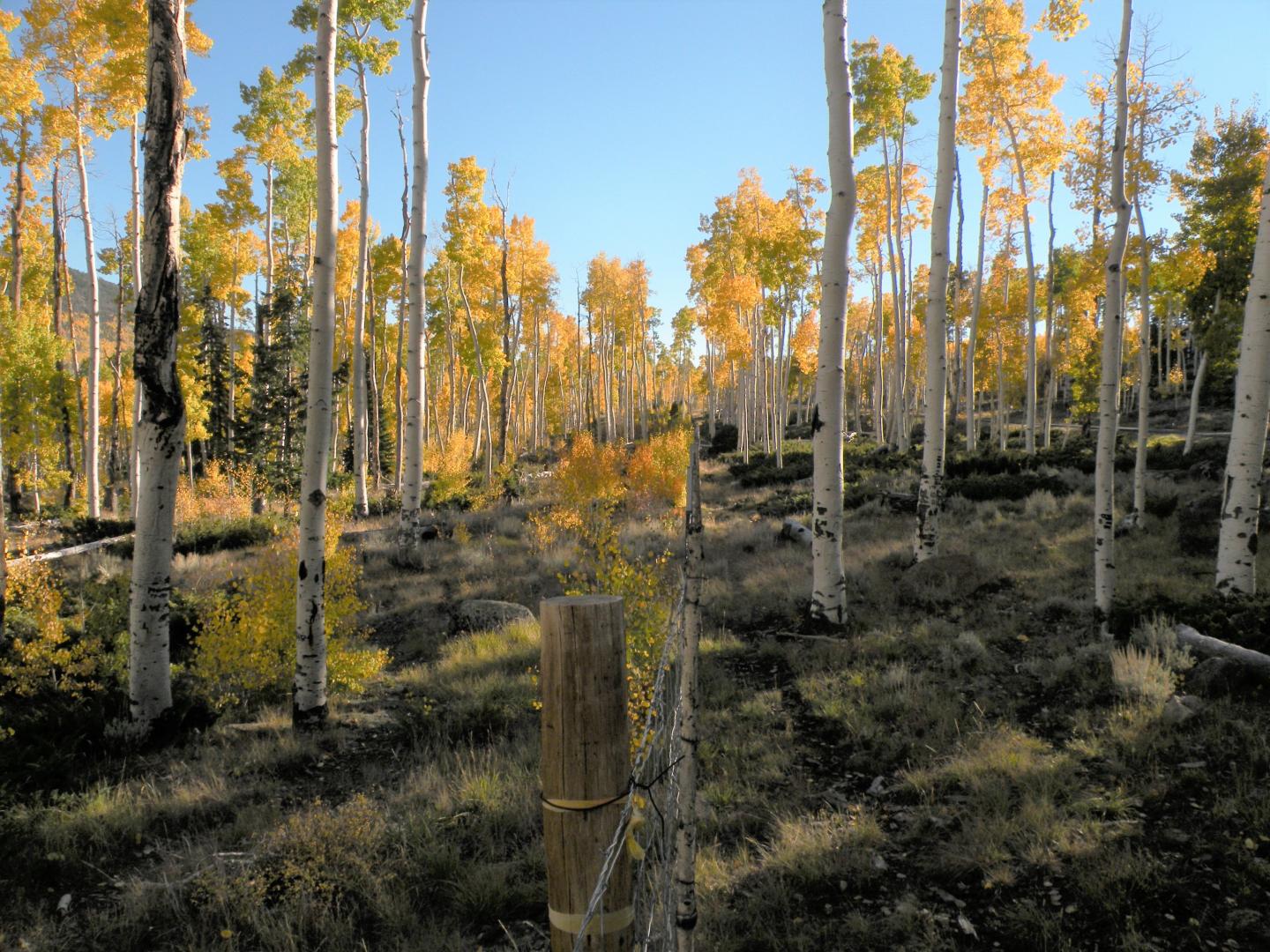
IMAGE

Credit: Paul Rogers/Utah State University

LOGAN, UTAH, USA — If you're depending on a room filled with 90-year-olds to repopulate and save the human race, you may be setting your hopes a little too high.

That's an analogy Utah State University researcher Paul Rogers uses to explain the challenges before Pando, a massive aspen clone in south central Utah thought to be the largest living organism on Earth.

"Pando is an iconic example of an aspen community undergoing rapid decline due to overstory mortality and chronic recruitment failure," says Rogers, director of the USU-based Western Aspen Alliance and adjunct associate professor in the Department of Wildland Resources and USU Ecology Center.

Yet, restoration treatments by the USU scientist and colleagues may be working. Rogers and Jody Gale of USU Extension Sevier County publish findings indicating evidence of Pando's recovery in the Jan. 19, 2017 issue of 'Ecosphere.'

The USU scientists' research was supported by the U.S. Forest Service, the Secure Rural Schools program, the Utah Forest Restoration Working Group, USU Extension and WAA's Pando Fund.

"Quaking aspen across the American West are stressed by a combination of sources, including drought, hungry herbivores, fire suppression, development and past management practices," Rogers says. "As part of a larger project to restore Pando, we fenced, treated and monitored a portion of this famous grove with the intent of documenting regeneration responses and using such practices at larger scales."

He and his team placed 27 randomly stratified monitoring plots across the 43-ha aspen community to monitor herbivory and regeneration responses to distinct treatment categories. Treatments included plots left unprotected and protected by fencing, passive (fenced only) treatment and active treatments such as burning, shrub removal and selective overstory cutting.

"At each site, we made extensive measurements of treatment responses," Rogers says. "Our results confirmed a positive regeneration response to limiting access to munching deer and other herbivores with fences, whereas non-fenced areas showed no improvement."

He notes both active and passive treatments produced regeneration levels sufficient to protect young aspen suckers, until they grow beyond the reach of ravenous browsers.

"Our results support a growing body of research, which suggests if managers invest in continuous protection from herbivory, they'll give Pando, as well as other western aspen communities, a fighting chance," Rogers says.

###

Referenced journal article:

Rogers, P.C. and J.A. Gale. 2017. Restoration of the inconic Pando aspen clone: emerging evidence of recovery. Ecosphere 8(1):e01661. 10.1002/ecs2.1661

Media Contact

Paul Rogers
[email protected]
435-797-0194

http://www.usu.edu
Share12Tweet8Share2ShareShareShare2

Related Posts

TIE1 suppresses fertilization-independent endosperm development by recruiting PRC2

TIE1 suppresses fertilization-independent endosperm development by recruiting PRC2

July 28, 2026
Forces of Push and Pull Shape How Blood Flows Through Vessels

Forces of Push and Pull Shape How Blood Flows Through Vessels

July 28, 2026

How the body’s natural recycling system may reduce inflammation

July 28, 2026

Bubble streams help sperm whales sleep deeply underwater

July 28, 2026
Please login to join discussion

POPULAR NEWS

  • TIE1 suppresses fertilization-independent endosperm development by recruiting PRC2

    29 shares
    Share 12 Tweet 7
  • Ultrathin Multi-Gate Organic Electrochemical Transistors Enable Wearable Multi-Analyte Sensing

    29 shares
    Share 12 Tweet 7
  • Hanyang University Researchers Find Hidden Battery Flaw That May Shorten EV Lifespans

    29 shares
    Share 12 Tweet 7
  • High-Efficiency HEPA Filters Aim to Prevent Winter Respiratory Infections in Care Homes

    29 shares
    Share 12 Tweet 7

About

We bring you the latest biotechnology news from best research centers and universities around the world. Check our website.

Follow us

Recent News

TIE1 suppresses fertilization-independent endosperm development by recruiting PRC2

Ultrathin Multi-Gate Organic Electrochemical Transistors Enable Wearable Multi-Analyte Sensing

Hanyang University Researchers Find Hidden Battery Flaw That May Shorten EV Lifespans

Subscribe to Blog via Email

Enter your email address to subscribe to this blog and receive notifications of new posts by email.

Join 85 other subscribers
  • Contact Us

Bioengineer.org © Copyright 2023 All Rights Reserved.

Welcome Back!

Login to your account below

Forgotten Password?

Retrieve your password

Please enter your username or email address to reset your password.

Log In
No Result
View All Result
  • Homepages
    • Home Page 1
    • Home Page 2
  • News
  • National
  • Business
  • Health
  • Lifestyle
  • Science

Bioengineer.org © Copyright 2023 All Rights Reserved.