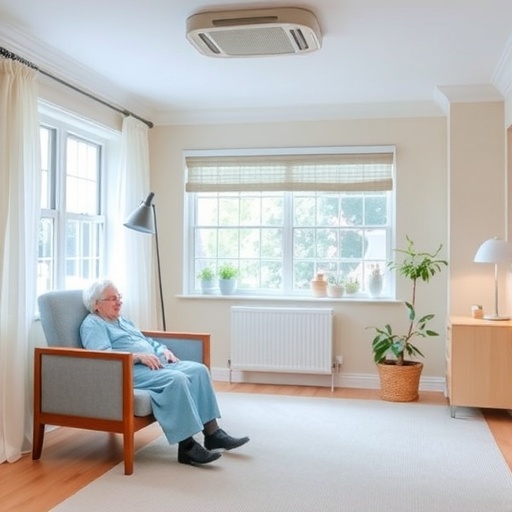
Winter respiratory infections remain a major threat to older adults living in care homes, prompting renewed interest in engineering-based infection control. A new cluster randomized clinical trial tested whether adding portable high-efficiency particulate air (HEPA) filters to communal areas and bedrooms could reduce infection rates during the winter season. The study was designed to evaluate a practical intervention that could complement—rather than replace—ongoing prevention efforts.
Researchers enrolled 91 care homes across England, collectively housing more than 1,100 residents. Because the intervention was delivered at the care-home level, the trial used cluster randomization to reduce the risk of contamination between study arms and to reflect real-world implementation. Homes assigned to the HEPA strategy installed portable units in shared spaces and residents’ bedrooms.
The primary outcome focused on winter respiratory infection rates, calculated per resident. Investigators compared those rates between care homes using HEPA filters and homes that continued standard prevention measures without the added air-cleaning technology. This approach allowed the trial to capture both direct effects on resident exposure and any indirect effects through improved indoor air conditions.
To interpret the findings, the study also considered the inherent variability of winter respiratory illness patterns across locations, care-home operations, and resident health status. Statistical analysis assessed whether observed differences could plausibly be attributed to the HEPA intervention rather than chance.
Results showed no significant difference in respiratory infection rates per resident between the HEPA-filter homes and the control homes. In other words, the trial did not find evidence that portable HEPA air cleaning, as implemented in this setting, meaningfully lowered winter respiratory infection burden compared with usual preventive strategies.
The trial’s negative finding is still informative for public health planning, especially as care homes weigh costs, logistics, and maintenance requirements against uncertain benefits. It suggests that, at least under the conditions tested, supplemental air filtration alone may not be sufficient to change winter respiratory outcomes.
The study was led by corresponding author Alastair D. Hay, MD, from the University of Bristol. The work appears in JAMA Internal Medicine (doi: 10.1001/jamainternmed.2026.2199).
Subject of Research: Respiratory infections in older adults in care homes
Article Title:
News Publication Date:
Web References:
References: doi: 10.1001/jamainternmed.2026.2199
Image Credits:
Keywords: HEPA filters, care homes, cluster randomized trial, winter respiratory infections, older adults, indoor air filtration
Tags: cluster randomized clinical trials in healthcare settingsengineering-based infection prevention strategiesHEPA air filtration for infection controlimpact of air purifiers on respiratory infection ratesindoor air hygiene in elderly careindoor air quality improvement in care homesportable HEPA filters in elderly care facilitiesprevention of respiratory illnesses among older adultspublic health measures for winter respiratory infectionsreal-world implementation of HEPA filter interventionsseasonal variations in respiratory disease transmissionwinter respiratory infections in care homes