LA JOLLA, CA – August 17, 2016 – The eye's lacrimal gland is small but mighty. This gland produces moisture needed to heal eye injuries and clear out harmful dust, bacteria and other invaders.
If the lacrimal gland is injured or damaged by aging, pollution or even certain pharmaceutical drugs, a person can experience a debilitating condition called aqueous deficiency dry eye (ADDE)–sometimes called "painful blindness."
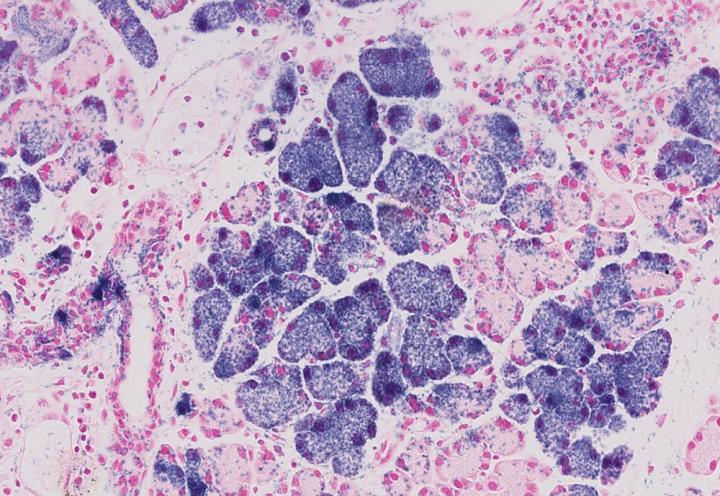
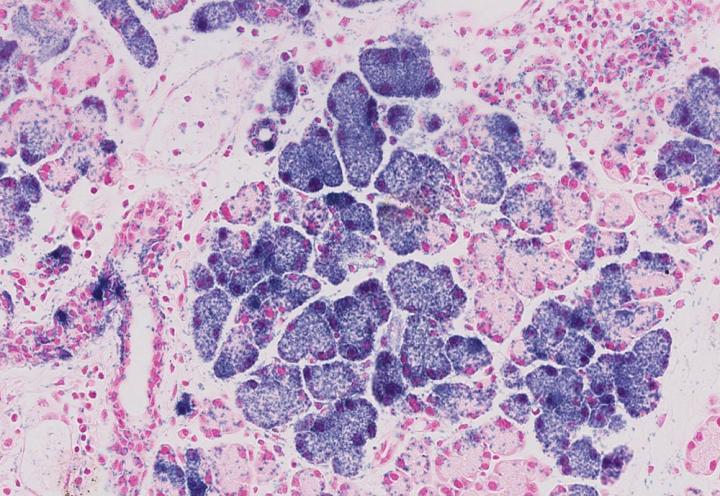
Now a new study in animal models, led by scientists at The Scripps Research Institute (TSRI), suggests that lacrimal glands can be repaired by injecting a kind of regenerative "progenitor" cell.
"This is the first step in developing future therapies for the lacrimal gland," said TSRI biologist Helen Makarenkova, who led the study.
The findings were published this week in the online Early Edition of the journal Stem Cells Translational Medicine.
Up for the Challenge
If injured, a healthy lacrimal gland naturally regenerates itself in about seven days. When diseased and chronically inflamed, however, regeneration stops–and scientists are not sure why.
In the new study, Makarenkova and her colleagues looked at whether they could kick start regeneration by injecting progenitor cells into the lobes that make up the lacrimal gland. Progenitor cells are similar to stem cells in their ability to differentiate into different kinds of tissue. In this study, the researchers used progenitor cells that were poised to become epithelial tissue, a key component of the lacrimal gland.
The researchers knew they faced a major challenge: sorting and separating "sticky" epithelial cell progenitors without destroying them.
"We had to figure out how to dissociate the tissue into single cells without completely obliterating everything," said Anastasia Gromova, the study's first author, now a graduate student at the University of California, San Diego, who spearheaded the project while interning at TSRI during her undergraduate years.
The researchers solved this problem by developing markers to label the cells of interest and then testing different enzymes and other reagents to draw them out of tissues.
Restoring Eye Health
With these cells in hand, the researchers injected them into the lacrimal glands of mouse models of Sjogren's syndrome, an autoimmune disease that results in ADDE, dry mouth and other symptoms. The team used only older, female mice because ADDE most commonly strikes that demographic in humans.
The treated mice showed a significant increase in tear production, indicating–for the first time–that epithelial cell progenitors could repair the lacrimal gland. Further tests suggested that epithelial cell progenitors helped by restoring the connection between cells called myoepithelial contractile cells and the lacrimal gland's secretory cells, which produce tears.
The next step in this research will be to study how long the improvement in the lacrimal gland lasts after progenitor cell injections. Makarenkova said the eventual goal is to develop therapies to boost a patient's own regenerative abilities.
###
In addition to Makarenkova and Gromova, authors of the study, "Lacrimal Gland Repair Using Progenitor Cells," were Dmitry A. Voronov of TSRI, the Russian Academy of Sciences and the A.N. Belozersky Institute of Physico-Chemical Biology of the Lomonosov Moscow State University; Miya Yoshida and Suharika Thotakura of TSRI; Robyn Meech of Flinders University; and Darlene A. Dartt of the Schepens Eye Research Institute/Massachusetts Eye and Ear, Harvard Medical School.
The research was supported by the National Institutes of Health's National Eye Institute (grant EY021292), the Russian Foundation for Basic Research (grant 12-04-01621-a) and an Australian Research Council (ARC) Future Fellowship.
About The Scripps Research Institute
The Scripps Research Institute (TSRI) is one of the world's largest independent, not-for-profit organizations focusing on research in the biomedical sciences. TSRI is internationally recognized for its contributions to science and health, including its role in laying the foundation for new treatments for cancer, rheumatoid arthritis, hemophilia, and other diseases. An institution that evolved from the Scripps Metabolic Clinic founded by philanthropist Ellen Browning Scripps in 1924, the institute now employs more than 2,500 people on its campuses in La Jolla, CA, and Jupiter, FL, where its renowned scientists–including two Nobel laureates and 20 members of the National Academy of Science, Engineering or Medicine–work toward their next discoveries. The institute's graduate program, which awards PhD degrees in biology and chemistry, ranks among the top ten of its kind in the nation. For more information, see http://www.scripps.edu.
Media Contact
Madeline McCurry-Schmidt
[email protected]
858-784-9254
@scrippsresearch
http://www.scripps.edu