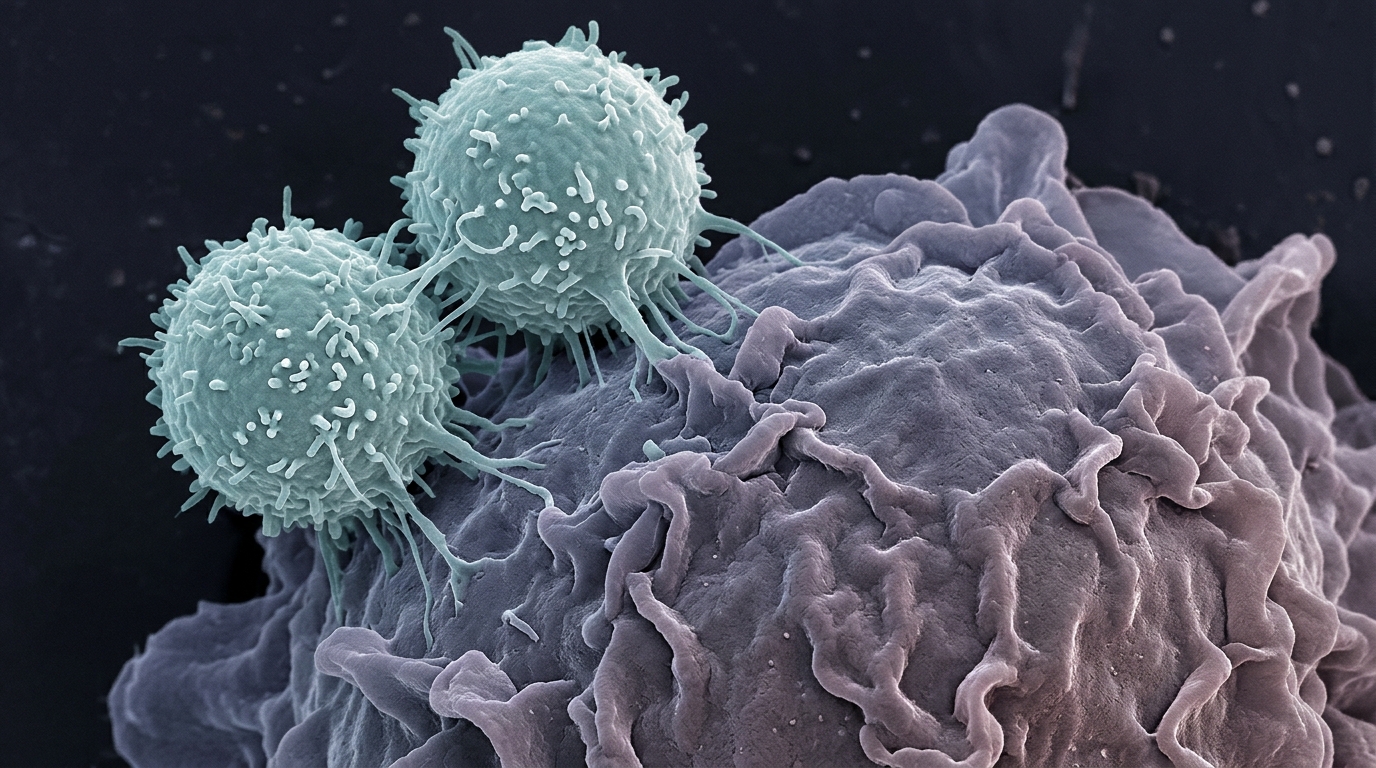
In a review published in Nature Reviews Cancer, researchers evaluate how embedding Boolean computation directly into chimeric antigen receptor (CAR) T cells can help overcome major clinical constraints in oncology. Although CAR T cell therapies have transformed cancer immunotherapy, their clinical performance remains limited by systemic toxicity and poor effectiveness against solid tumours. To resolve these challenges, synthetic biology strategies are incorporating Boolean computation—a mathematical principle that relies on binary inputs to govern decision-making—directly into engineered immune cells to guide cellular responses.
Traditional CAR T cell approaches typically target a single antigen, but logic-gated circuits are designed to integrate multiple input cues originating from tumour cells and their surrounding microenvironment. By processing these combined signals, the logic-gated circuits provide context-dependent regulation over critical cellular functions, specifically governing immune cell cytotoxicity, cell persistence, and the localized delivery of therapeutic payloads.
The review defines the emerging design principles governing these technologies across multiple structural scales, detailing receptor-level configurations, transcriptional control circuits, and genome-integrated architectures. In examining these engineered systems, the authors evaluate how Boolean logic architectures alter the fundamental trade-offs between treatment efficacy and patient safety. In particular, these logic-gated strategies are deployed to mitigate on-target, off-tumour toxicity, while emerging directions point toward the development of complex multicellular logic networks.
Alongside the therapeutic potential of programmable immunity, the authors outline substantial translational barriers that currently impede clinical implementation. Critical hurdles highlighted in the analysis include technical challenges in cell manufacturing, potential host immunogenicity against synthetic components, and maintaining circuit stability inside the body. The review notes that advances in synthetic biology are enabling increasingly autonomous cellular control, establishing a foundation for programmable immune therapies designed to treat cancer and other complex diseases.
Subject of Research: Logic-gated CAR T cell engineering in cancer immunotherapy
Article Title: Programmable immunity: Logic-gated CAR T cells for precision cancer therapy
Article References: Foisey, M. G., Wyman, S., & Roybal, K. T. (2026). Programmable immunity: Logic-gated CAR T cells for precision cancer therapy. Nature Reviews Cancer. https://doi.org/10.1038/s41568-026-00994-0
Image Credits: AI Generated
DOI: 10.1038/s41568-026-00994-0
Keywords: chimeric antigen receptor, CAR T cells, Boolean computation, logic-gated circuits, cancer immunotherapy, solid tumours, systemic toxicity, on-target off-tumour toxicity, synthetic biology, receptor-level architectures, transcriptional circuits, genome-integrated architectures, cell manufacturing, immunogenicity, circuit stability, multicellular logic networks, cytotoxicity control, therapeutic payload delivery
News Source: Nathaniel Bowman. (November 27, 2026). Logic-Gated CAR T Cells Use Boolean Computation to Target Solid Tumours. Scienmag.