Bladder cancer ranks among the most prevalent urinary tract malignancies, causing over 600,000 new cases and 200,000 deaths annually worldwide. The disease is clinically dichotomized into non-muscle-invasive and muscle-invasive forms, fundamentally dictating treatment selection and prognosis. Approximately 70 to 75 percent of patients present with non-muscle-invasive disease, managed by transurethral resection followed by intravesical Bacillus Calmette-Guérin immunotherapy. However, recurrence and progression remain frequent, exacerbated by global Bacillus Calmette-Guérin shortages. For muscle-invasive disease, radical cystectomy with cisplatin chemotherapy represents standard care, yet five-year overall survival remains near 50 percent, and nearly half of patients are cisplatin-ineligible due to age or renal impairment. While immune checkpoint inhibitors have reshaped advanced management, objective response rates remain below 25 percent due to a cold tumor microenvironment lacking cytotoxic T cells. Inducing immunogenic cell death to heat up these quiescent tumors has therefore emerged as an urgent therapeutic goal.
To address this challenge, researchers developed a multi-omics and computational pharmacology framework to examine the immunogenic cell death landscape in bladder cancer and nominate candidate therapeutic agents. The study proceeded in four phases: transcriptomic profiling and consensus subtyping using public cohorts; machine-learning prognostic risk modeling; computational drug screening via gene connectivity mapping; and in silico target docking and pharmacokinetic evaluation. Bioinformatic workflows were executed in R and Python using records from The Cancer Genome Atlas cohort of 412 patients, alongside Gene Expression Omnibus cohorts GSE13507 with 165 samples and GSE3167 with 93 samples. Cohort batch effects were removed using the ComBat function. The investigation analyzed 52 immunogenic cell death genes curated from published literature and GeneCards. Transcripts per million and robust multi-array average normalizations provided standardized inputs across datasets for subsequent subtyping and drug identification.
Unsupervised consensus clustering on the 52 immunogenic cell death genes stratified the 412 training patients into two distinct subtypes, termed immunogenic cell death-high and immunogenic cell death-low. Principal component analysis confirmed clear transcriptomic separation. Kaplan-Meier curves revealed that patients in the high subtype experienced significantly longer overall survival than those in the low subtype (log-rank P = 0.008). To uncover core regulatory genes, weighted gene co-expression network analysis was applied to the merged Gene Expression Omnibus matrix. Selecting a soft-thresholding power of five approximated scale-free topology (fit index = 0.90), identifying eight modules. The turquoise module exhibited the strongest positive correlation with bladder cancer status (R = 0.74, P < 1 × 10⁻²⁰⁰). Intersecting turquoise module genes with 32 differentially expressed genes and the 52 cell death genes yielded 23 candidates. LASSO Cox regression refined these to three core hub genes—SRPX, FAM107A, and COL16A1—with SRPX and FAM107A demonstrating significant prognostic value.
To construct a quantitative prognostic classifier, univariate Cox regression on the 52 cell death genes identified eight candidates significantly associated with overall survival. Subsequent LASSO regression established an eight-gene signature comprising CASP8, CD8A, EIF2AK3, IFNG, HSP90AA1, TLR4, P2RX7, and BAX. The formula assigned coefficients of 0.215 to CASP8, negative 0.178 to CD8A, 0.146 to EIF2AK3, negative 0.209 to IFNG, 0.112 to HSP90AA1, 0.094 to TLR4, 0.131 to P2RX7, and 0.087 to BAX. Stratifying patients by the median risk score showed that high-risk individuals experienced significantly worse overall survival in the training cohort (log-rank P < 0.001), with receiver operating characteristic area under the curve metrics of 0.632, 0.651, and 0.668 at one, three, and five years. Validation in the independent Gene Expression Omnibus cohort confirmed shorter survival in high-risk patients (log-rank P = 0.012; area under the curve values: 0.729, 0.696, 0.708). Multivariable Cox modeling confirmed the signature as an independent prognostic factor (HR = 2.14, 95% CI 1.56–2.93, P < 0.001).
Biologically, the signature genes govern critical steps of immunogenic cell death execution and immune surveillance. Caspase-8 initiates extrinsic apoptosis, whereas EIF2AK3 phosphorylates eIF2alpha during endoplasmic reticulum stress, directing calreticulin exposure on dying cells. The adaptive response is captured by interferon-gamma and CD8A, which coordinate cytotoxic lymphocyte recruitment. Correlation analyses demonstrated that signature genes CASP8, CD8A, EIF2AK3, and IFNG significantly correlated with core hub genes SRPX and FAM107A (|R| > 0.20, P < 0.05). Both SRPX and FAM107A were significantly downregulated in malignant bladder tissues compared to healthy urothelium while showing high diagnostic accuracy in receiver operating characteristic analyses.
Differential gene expression and pathway enrichment analyses delineated transcriptional alterations associated with cell death immunogenicity. Comparing high and low subtypes in the training cohort identified 232 differentially expressed genes, while validation cohort comparisons yielded 305 genes. Gene Ontology enrichment for immunogenic cell death genes revealed pronounced representation of immune components, including major histocompatibility complex class II complexes, immunoglobulin complexes, and peptide antigen binding. Kyoto Encyclopedia of Genes and Genomes mapping highlighted allograft rejection, intestinal immune networks for immunoglobulin A production, and viral protein-cytokine receptor interactions. Gene set enrichment analysis confirmed that tumors with high immunogenic signatures upregulated programs for antigen processing, antigen presentation, cell adhesion molecules, and cytokine receptor interactions. Conversely, the low subtype downregulated cytochrome P450 drug metabolism and steroid hormone biosynthesis. These combined enrichment patterns establish that immunogenic cell death programs in bladder cancer are predominantly immune-focused, linking elevated cellular immunogenicity to active antigen presentation.
To investigate regulatory networks downstream of the messenger RNA signature, researchers evaluated long non-coding RNA profiles from The Cancer Genome Atlas. Pearson correlation testing between the eight signature genes and long non-coding transcripts identified 47 non-coding RNAs displaying significant correlation (|R| > 0.40, P < 0.001). Sequential univariate Cox screening, LASSO regression, and multivariable modeling identified three core non-coding RNAs—AC104825.1, ETV7-AS1, and UBR5-AS1—forming a secondary prognostic model. Stratification by this signature separated survival outcomes across cohorts (validation log-rank P = 0.008; receiver operating characteristic area under the curve values: 0.676, 0.654, 0.658). Differential expression analysis between risk groups identified 250 dysregulated genes. Pathway analyses showed that these genes were strongly enriched in epithelial differentiation processes, specifically keratinization, cornified envelope formation, keratinocyte differentiation, and antimicrobial humoral responses. These findings indicate that downstream non-coding RNA regulation connects immunogenic cell death to epithelial differentiation pathways and innate antimicrobial defenses.
Tumor microenvironment profiling highlighted distinct immunological characteristics across subtypes and risk strata. Single-sample gene set enrichment analysis showed that immunogenic cell death-high tumors had significantly elevated enrichment for activated CD8 positive T cells, activated CD4 positive memory T cells, and follicular helper T cells, alongside lower regulatory T-cell infiltration. ESTIMATE calculations revealed higher ImmuneScore, StromalScore, and overall ESTIMATEScore values in the high subtype, corresponding to lower tumor purity. CIBERSORT analysis demonstrated that low-risk tumors contained higher fractions of CD8 positive T cells and anti-tumorigenic M1 macrophages, whereas high-risk tumors were enriched for M0 and M2 macrophages. Concurrently, immune checkpoint molecules (PD-1, PD-L1, CTLA-4, LAG3, TIGIT) and human leukocyte antigen genes were significantly upregulated in immunogenic cell death-high and low-risk tumors. Paradoxically, immunophenoscore modeling predicted that low-risk patients would derive greater benefit from anti-PD-1 or combined anti-PD-1 and anti-CTLA-4 immunotherapy, indicating that high-risk tumors harbor exhausted or dysfunctional tumor-infiltrating lymphocytes.
Genomic mutation analyses revealed important connections between tumor mutational burden and transcriptomic risk stratification. Frequently mutated genes across cohorts included TP53, TTN, KMT2D, MUC16, and ARID1A. Tumor mutational burden was significantly higher in the immunogenic cell death-high subtype compared to the low subtype (P < 0.05), and elevated in the low-risk group compared to the high-risk group (P = 0.008). Across the cohort, elevated mutational burden was significantly associated with extended overall survival (log-rank P < 0.001). Patients in the low-risk, high-mutational-burden subgroup exhibited the most favorable survival, whereas those in the high-risk, low-mutational-burden subgroup had the poorest outcomes. Within the high-risk group, patients with elevated mutational burden survived significantly longer, demonstrating that genomic instability partially mitigates the adverse prognosis of high transcriptomic risk. Furthermore, TTN and MUC16 mutations occurred more frequently in low-risk long non-coding RNA patients, reinforcing mutational burden as an independent modifier of patient prognosis.
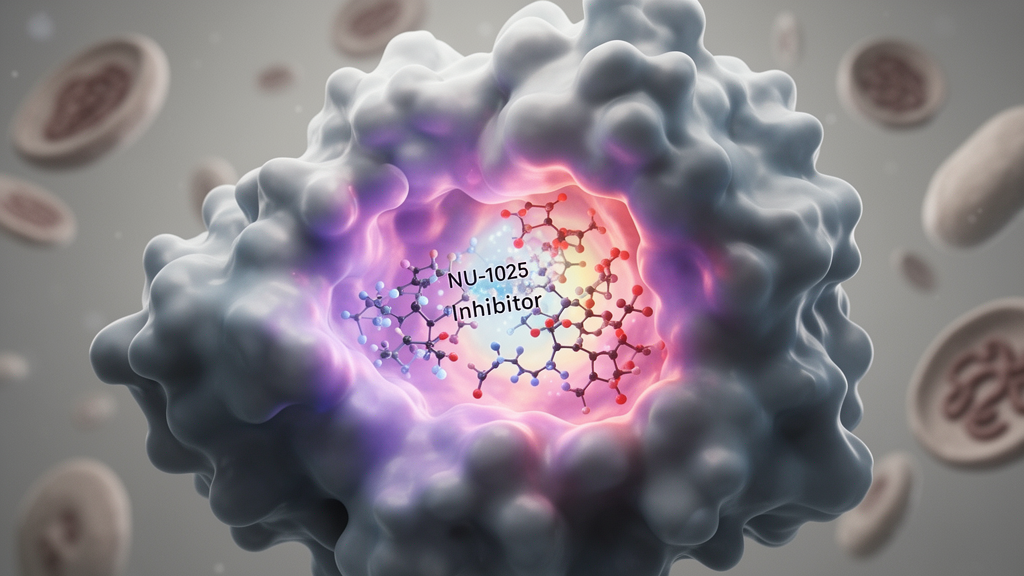
To identify therapeutic candidates capable of reversing the high-risk gene expression signature, researchers performed computational drug screening using Connectivity Map and the extreme Sum algorithm. Querying differentially expressed genes between risk groups ranked compounds by connectivity scores, with negative scores indicating reversal of the disease phenotype. The poly(ADP-ribose) polymerase inhibitor NU-1025 emerged as the top-ranked candidate with the strongest negative connectivity score. Protein interactome analysis identified CD8A, CD19, CD5, PTPRC, and LCK as hub nodes. In molecular docking simulations, NU-1025 bound stably to all five targets, displaying LibDock scores from 65.12 to 83.58 and CDOCKER energies from negative 9.73 to negative 25.40 kilocalories per mole, forming hydrogen bonds with phenylalanine-52 in CD8A and aspartate-382 in LCK. Furthermore, docking against PD-L1 demonstrated stable binding with a LibDock score of 84.67, a CDOCKER energy of negative 23.71 kilocalories per mole, and hydrogen bonds with glutamate-158 and lysine-136, suggesting dual functionality as an immunogenic cell death modulator and checkpoint inhibitor.
Pharmacokinetic and toxicological evaluations using SwissADME and TOPKAT supported the safety profile of NU-1025, demonstrating high gastrointestinal absorption, no blood-brain barrier permeability, zero Lipinski violations, and a bioavailability score of 0.55. Toxicological modeling predicted a rat oral median lethal dose of 2.78 grams per kilogram, a chronic lowest observed adverse effect level of 0.362 grams per kilogram, and negative alerts for developmental toxicity and mutagenicity. Contextualizing these findings clinically, computed tomography urography in four patients illustrated advanced lesions, while immunohistochemistry in ten high-grade urothelial specimens showed that eight patients had a PD-L1 tumor proportion score below one percent despite a median Ki-67 index of 40 percent. The authors emphasized essential limitations: all primary conclusions derive from computational analyses and retrospective datasets, necessitating future in vitro and in vivo experiments to confirm the immunomodulatory actions of NU-1025. Furthermore, long non-coding RNA mechanisms remain experimentally unverified, and clinical immunohistochemical observations were limited by a small sample size.
Subject of Research: Computational multi-omics identification of immunogenic cell death signatures and candidate immunomodulators in bladder cancer
Article Title: NU-1025 modulates immunogenic cell death in bladder cancer: A multi-omics insight
Article References: Li, Y., Zuo, L., Dong, X., Sun, R., & Liu, H. (2026). NU-1025 modulates immunogenic cell death in bladder cancer: A multi-omics insight. SLAS Technology, 43, Article 100476. https://doi.org/10.1016/j.slast.2026.100476
Image Credits: AI Generated
DOI: 10.1016/j.slast.2026.100476
Keywords: bladder cancer, immunogenic cell death, NU-1025, multi-omics, PARP inhibitor, prognostic risk model, tumor microenvironment, immune checkpoint inhibitor, PD-L1, tumor mutational burden, WGCNA, Connectivity Map, molecular docking, TCGA-BLCA, long non-coding RNA, CASP8, EIF2AK3, chemotherapy resistance
News Source: Nathaniel Bowman. (November 26, 2026). Computational Analysis Nominates NU-1025 as Potential Bladder Cancer Immunomodulator. Scienmag.