Credit: Elephants Without Borders
AMHERST, Mass. – As lead researchers in Africa's recent Great Elephant Census, wildlife ecologists Curtice Griffin and Scott Schlossberg at the University of Massachusetts Amherst also evaluated elephant counting methods in the wild. In a paper this month in PLOS ONE, authors suggest that the two main census methods now in use may be undercounting elephants and that population estimates from both are biased low.
"Because factors such as observer and habitat affected detectability of elephants, comparisons of elephant populations across time or space may be confounded," they write. They encourage survey teams to incorporate "detectability analysis" in all aerial surveys for mammals and suggest that researchers "should assume that their results are biased low by at least 10-15 percent and possibly more." More study is needed to determine the amount of undercounting for other species and factors affecting their detectability, they add.
Griffin, Schlossberg and Chase used the most accurate, up-to-date survey and statistical methods to analyze data for the two-year, $8 million African census funded by philanthropist Paul G. Allen. Despite possible low population estimates, census results reported in August confirmed massive declines in elephant numbers over the last decade, including an annual 8 percent species decline rate, mainly due to poaching.
Griffin and colleagues point out, "Accurate counts of animals are critical for prioritizing conservation efforts. Past research, however, suggests that observers on aerial surveys may fail to detect all individuals of the target species present in the survey area. Such errors could bias population estimates low and confound trend estimation."
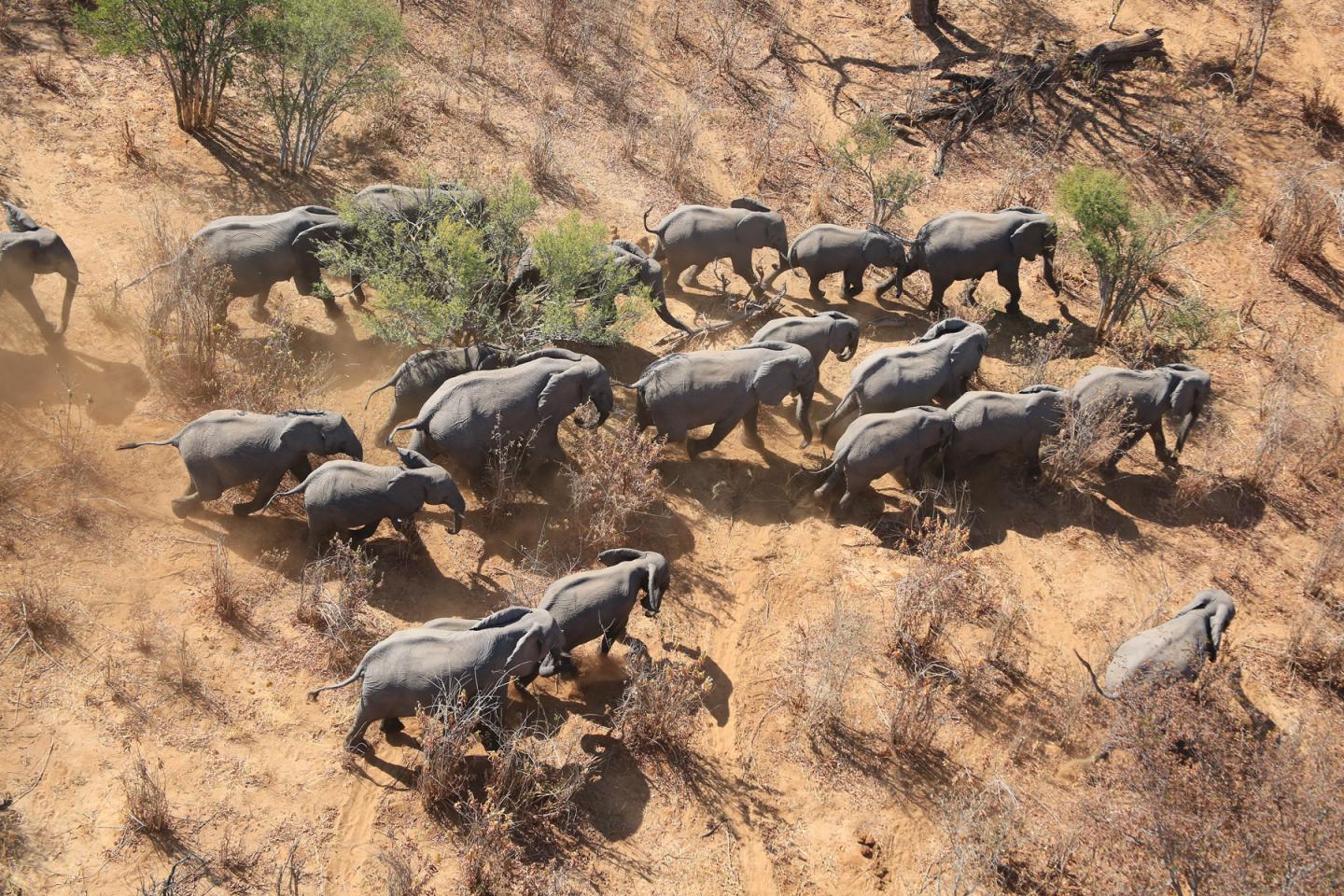
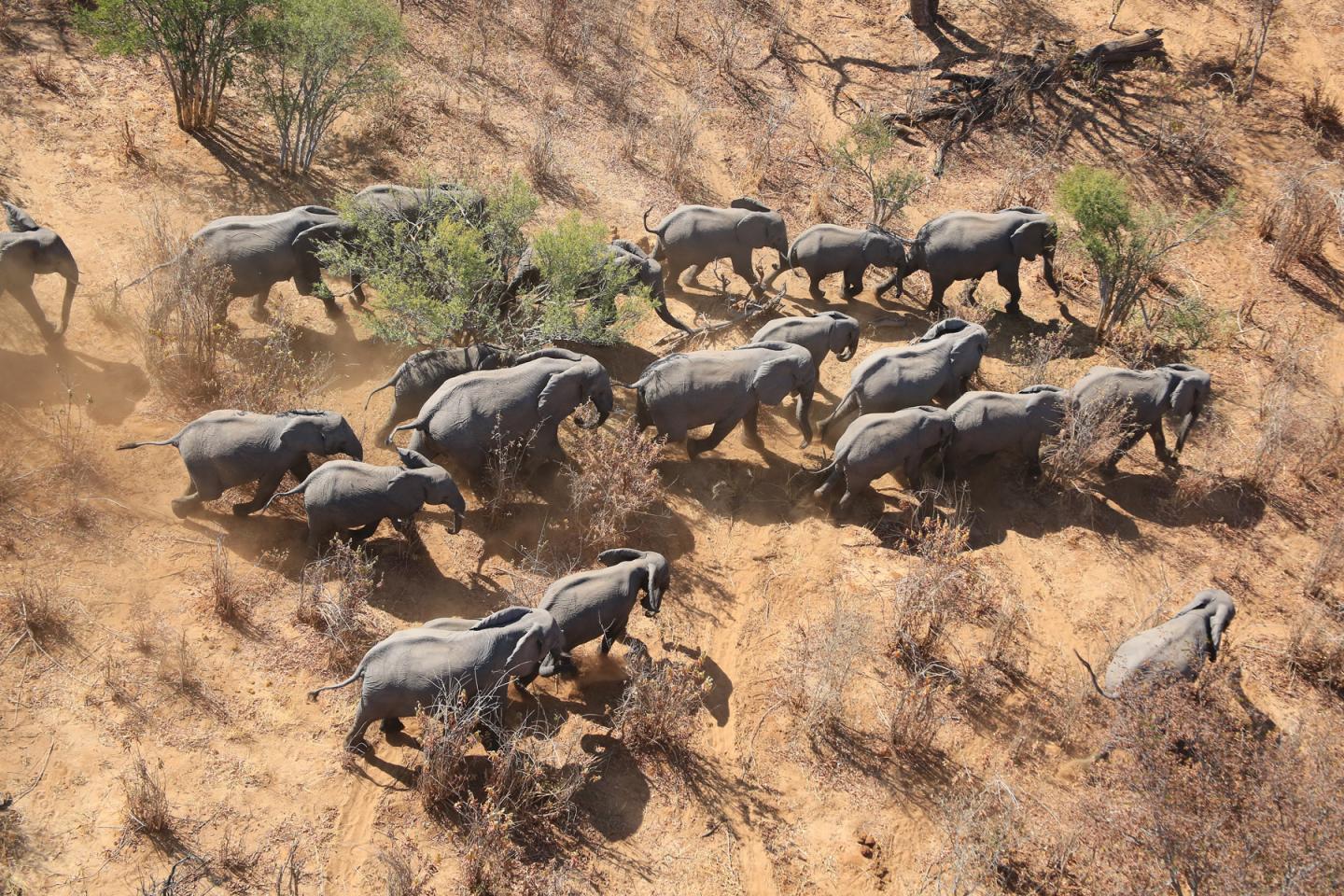
To address this, they used two approaches to assess the accuracy of aerial surveys for African savanna elephants in northern Botswana. With the first, double-observer sampling, two observers make observations on the same herds to determine if elephant herds are being missed by observers. Griffin says, "You would think that an animal as big as an elephant would be easy to spot from a plane, but factors such as herd size and habitat type can affect the ability of observers to see elephants from a small plane traveling at over 100 miles per hour, 300 feet off the ground."
In the second part of their study, they used a helicopter for a total count of all elephants in study areas to compare to their sample counts from fixed-wing aircrafts. Overall, total counts were not statistically distinguishable from sample counts, but they reported that observers typically detected about 76 percent of elephant herds and 87 percent of individual elephants present in survey strips. They concluded "that our population estimates based on sample counts were approximately 13 percent below the actual values."
"These findings are consistent with past research indicating that observers on aerial surveys miss some large animals," Griffin and colleagues add. "Even animals as large as elephants are not all detected."
The authors add that "undercounting is important to recognize because imperfect detectability can induce spurious trends in time series," and concerns about changes in detectability "are not merely hypothetical."
They cite a recent antelope study where a population decrease coincided with a drop in herd size that "likely reduced detectability." Similarly, for elephants in Africa, "biased trend estimates could hinder conservation and lead to misallocation of resources. Thus, assessing elephant detectability and correcting counts for vegetation, observers, herd size and other factors should become a standard part of survey protocols."
###
Media Contact
Janet Lathrop
[email protected]
413-545-0444
@umassscience
http://www.umass.edu