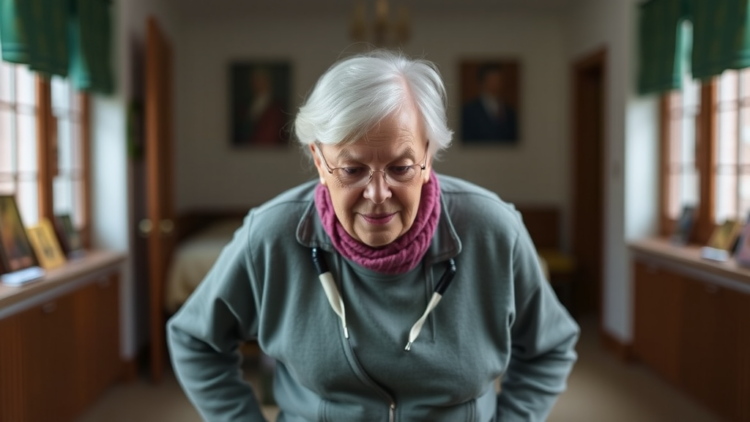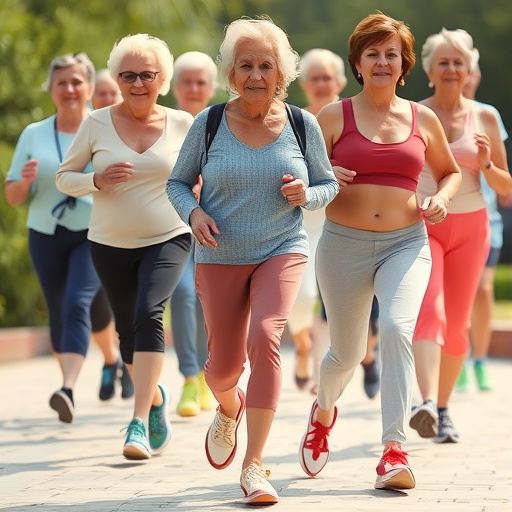
A subtle change in the way older adults walk may offer an important clue about a condition that combines two major threats to healthy ageing. A new cross-sectional study of community-dwelling older women, published in BMC Geriatrics, examines the association between stride length variability and osteosarcopenia—a combined disorder involving weakened bones and declining muscle mass or function. The research by Y. Jin, K. Han and D. Kim places everyday walking at the centre of a growing effort to detect age-related vulnerability before it becomes visible through falls, fractures, loss of independence or hospitalisation.
Stride length is the distance covered from one foot contact to the next corresponding foot contact. In healthy walking, this measurement naturally changes slightly from step to step, but the pattern is generally stable. When stride length becomes more inconsistent, it may reflect disturbances in balance, lower-limb strength, joint function, sensory feedback or motor control. Unlike a simple measurement of walking speed, stride length variability captures the regularity of movement. That makes it a potentially sensitive indicator of how effectively the nervous system and musculoskeletal system are working together during ordinary mobility.
Osteosarcopenia is increasingly recognised as more than the simultaneous presence of osteoporosis and sarcopenia. Osteoporosis reduces bone strength and increases fracture risk, while sarcopenia involves the loss of muscle mass, strength or physical performance. Together, the conditions may create a damaging biological loop: weaker muscles can reduce mechanical stimulation of bone, poor balance can increase the likelihood of falling, and fragile bones can make the consequences of a fall more severe. The combination may therefore threaten mobility and independence more powerfully than either condition alone.
The study focuses specifically on older women living in the community rather than in hospitals or long-term care facilities. This distinction is important because community-dwelling adults may appear relatively independent while already experiencing early changes in muscle performance, bone health or gait control. By examining women in their everyday living environment, the research addresses a population that is often active enough to avoid obvious clinical warning signs but may still carry an elevated risk of frailty-related outcomes.
At the heart of the investigation is the question of whether women with osteosarcopenia show greater stride length variability than their peers. If such an association is present, gait analysis could become a useful part of multidimensional screening. A walking assessment can be conducted with wearable sensors, pressure-sensitive walkways, motion-capture systems or increasingly sophisticated smartphone-based tools. These technologies can record step-to-step patterns that are difficult to identify through visual observation alone, transforming a familiar activity—walking across a room or along a corridor—into a source of detailed health data.
The biological explanation for a potential connection is complex. Osteosarcopenia may reduce the capacity to generate and control force during the stance and swing phases of walking. Loss of lower-limb muscle strength can make it harder to propel the body forward or stabilise the pelvis, while diminished proprioception and slower neuromuscular responses can interfere with precise foot placement. Pain, spinal alignment, fear of falling and reduced physical activity may further alter gait. These influences can produce a more cautious, irregular walking pattern, even when average walking speed remains relatively preserved.
The findings are especially relevant because stride variability may reveal instability that conventional assessments overlook. Two people can walk at the same average speed while differing substantially in the consistency of their steps. One may maintain a highly repeatable rhythm; the other may continually adjust stride length to compensate for weakness, discomfort or uncertainty. Such adjustments are not necessarily pathological in isolation, but elevated variability could signal that the body is using additional control effort to maintain forward movement. In an ageing population, that hidden instability may matter long before a major fall occurs.
However, the study’s cross-sectional design means that the results show an association at a particular point in time, not proof that osteosarcopenia causes irregular stride length. It is also possible that altered gait contributes to reduced activity, which then accelerates muscle loss and bone deterioration. Other factors—including age, body composition, medication use, arthritis, neurological disease, vision, physical activity and previous falls—may influence both gait and musculoskeletal health. Longitudinal studies will be needed to determine whether increased stride variability predicts the development of osteosarcopenia, identifies people at risk of falls or responds to targeted exercise and nutritional interventions.
Even with those limitations, the research highlights a promising direction for geriatric medicine. Screening for osteosarcopenia traditionally relies on combinations of bone-density testing, muscle-strength measurements, body-composition analysis and physical-performance assessments. Gait variability could complement these tools by providing a functional snapshot of how skeletal and muscular systems operate together in real time. The broader message is strikingly practical: the pattern of a person’s steps may contain information about hidden biological decline. As wearable technology becomes more accessible, carefully interpreted walking data could help clinicians recognise risk earlier and support interventions designed to preserve strength, bone resilience, balance and independence.
Subject of Research: Association between stride length variability and osteosarcopenia in community-dwelling older women
Article Title: Association between stride length variability and osteosarcopenia in community-dwelling older women: a cross-sectional study
Article References: Jin, Y., Han, K. & Kim, D. “Association between stride length variability and osteosarcopenia in community-dwelling older women: a cross-sectional study.” BMC Geriatrics (2026). https://doi.org/10.1186/s12877-026-07995-6
Image Credits: AI Generated
DOI: 10.1186/s12877-026-07995-6
Keywords: stride length variability, osteosarcopenia, sarcopenia, osteoporosis, gait analysis, older women, ageing, falls, muscle strength, bone health
Tags: aging-related vulnerability indicatorsbalance and muscle function in seniorsdetecting frailty through gait analysisearly detection of osteoporosis and sarcopeniagait analysis for elderly healthmobility assessment in aging populationsmusculoskeletal health and mobility declineosteosarcopenia in older womenpreventative strategies for osteosarcopeniasensory feedback and motor control in elderlystride length variability and fall riskwalking pattern analysis in community-dwelling older adults