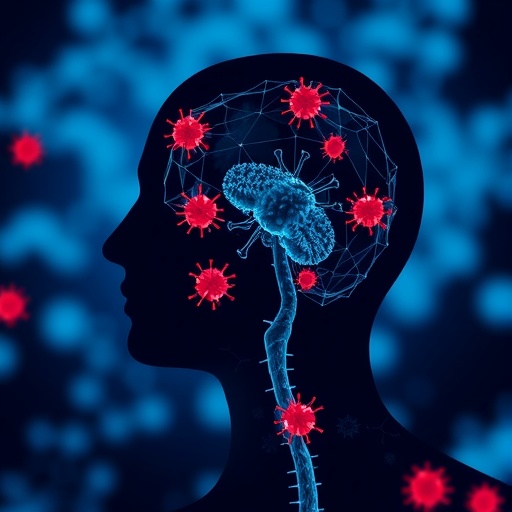
Researchers at The University of Texas MD Anderson Cancer Center have identified a possible biological link between ketamine, psychedelic compounds and rapid improvement in treatment-resistant depression. The study suggests that these therapies, despite acting on different brain receptors and producing very different subjective experiences, may ultimately influence overlapping communication routes between the immune system and the brain. The findings could help explain why some patients improve within hours or days of treatment, while others do not respond.
Published in Molecular Psychiatry, the research examined molecular and electrical changes associated with rapid-acting antidepressants in laboratory models and in data from a previous clinical trial. The investigators found that several compounds produced a shared pattern of immune-related activity in brain cells. In patients treated with ketamine, similar changes appeared in blood-based immune signals and in brain-wave activity, providing evidence that the response may involve coordinated changes throughout the body rather than a process confined to the brain.
Treatment-resistant depression is generally diagnosed when depressive symptoms persist despite multiple courses of conventional antidepressants or psychotherapy. Traditional medications often require weeks to produce noticeable effects, and many patients receive little or no benefit. Ketamine and psilocybin have attracted intense scientific attention because they can reduce symptoms rapidly in some people with difficult-to-treat depression. However, clinicians currently have few reliable biological indicators that can predict who will respond before treatment begins.
The new study focused on signaling pathways involving interleukin-7, or IL-7, and interleukin-15, or IL-15. Interleukins are small proteins used by immune cells to communicate and regulate inflammation, cell survival and the development of specific immune-cell populations. Although these molecules are best known for their role in immunology, immune signals can also influence neural function by affecting brain cells, blood vessels and the activity of neural circuits. This two-way interaction, often called neuroimmune communication, is increasingly viewed as relevant to depression and other psychiatric disorders.
In the clinical data, patients who responded to ketamine showed lower activity in the IL-15 pathway and stronger B-cell signaling before treatment than patients who failed to respond. B cells are immune cells involved in antibody production and broader immune regulation. After ketamine treatment, these patterns shifted in responders: IL-15-related activity and B-cell signaling moved toward a different balance. The researchers interpret the results as evidence that successful rapid antidepressant treatment may involve the restoration of equilibrium between IL-7 and IL-15 signaling.
The team also examined gamma power, a pattern of high-frequency electrical activity in the brain. Gamma activity is associated with the coordination of neural networks and the formation or strengthening of connections between brain regions. In patients with high IL-7 activity before treatment, brain-wave patterns differed from those observed after ketamine administration. The parallel movement of immune markers in the blood and gamma activity in the brain suggests that peripheral immune biology may be linked to changes in neural connectivity during antidepressant response.
The study does not suggest that ketamine or psychedelics directly act as immune therapies, nor does it establish that IL-7 or IL-15 causes depression or determines treatment response on its own. Instead, the findings point to a network of interacting biological processes. Ketamine is known to influence glutamate signaling and synaptic plasticity, while classic psychedelics primarily act on serotonin receptors, especially the 5-HT2A receptor. The researchers propose that these distinct mechanisms may converge downstream on immune-related pathways that support changes in neural plasticity and circuit function.
“Ketamine and psychedelics affect the brain in different ways subjectively, but our findings suggest that they eventually end up in some of the same neuroimmune pathways,” said Gregory Jones, M.D., assistant professor of Psychiatry at MD Anderson and co-leader of the study. He noted that combining blood-based measurements with brain-activity data could give researchers a clearer picture of how the body and brain cooperate during antidepressant treatment, including in people coping with depression after a cancer diagnosis.
The results remain exploratory and require confirmation in larger, prospective clinical studies. Future research will need to determine whether IL-7, IL-15, B-cell signals or related molecular patterns can predict response before therapy, rather than simply reflecting changes after treatment has occurred. Scientists will also need to establish how long these biological shifts last, whether they are specific to ketamine and psychedelics, and whether they correlate with durable symptom relief. If validated, such biomarkers could eventually help clinicians select treatments more efficiently and identify biological targets for extending the benefits of rapid-acting antidepressants. The work was supported in part by the National Institutes of Health.
Subject of Research: People
Article Title: Convergent neuroimmune signaling underlying rapid antidepressant response to ketamine and psychedelics
News Publication Date: 30 July 2026
Web References: https://www.mdanderson.org/ ; https://www.nature.com/articles/s41380-026-03777-z
References: Molecular Psychiatry, DOI: 10.1038/s41380-026-03777-z
Image Credits: The University of Texas MD Anderson Cancer Center
Keywords: treatment-resistant depression, ketamine, psilocybin, psychedelics, rapid-acting antidepressants, neuroimmune signaling, IL-7, IL-15, B cells, gamma brain waves, biomarkers, psychiatry
Tags: biological mechanisms of depression treatmentbrain-wave activity in depressioncytokine and immune response in mental healthimmune signaling biomarkersimmune system and brain communicationimmune-brain interaction in mood disordersinnovative approaches to treatment-resistant depressionketamine and psychedelic therapymolecular changes in depression therapypersonalized depression treatmentrapid-acting antidepressantstreatment-resistant depression