A new scientific reply has reignited debate over how researchers should interpret the relationship between outdoor air pollution and lung cancer. Published in the British Journal of Cancer on 20 July 2026, the correspondence by R.A.N. Alhattab, J.M. McKinley, R.F. Hunter and colleagues responds to a discussion titled “Clarifying causal and translational inference in studies of ambient PM2.5 and lung cancer.” Although brief compared with a full research article, the exchange addresses a question with major consequences for public health: when data show that polluted air is associated with cancer, how confidently can scientists say that the pollution caused the disease, and how should that evidence guide medical or regulatory action?
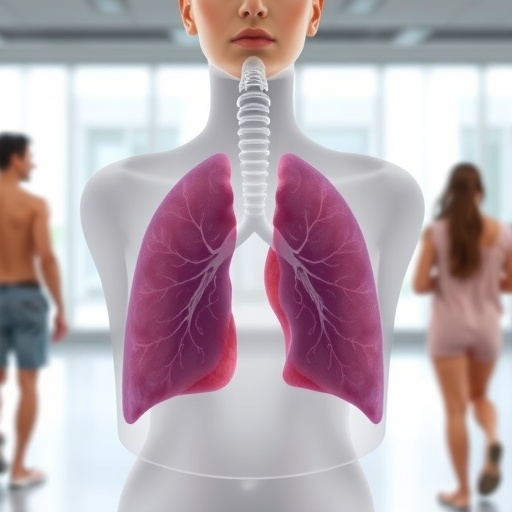
The focus is ambient PM2.5, a category of airborne particles with aerodynamic diameters of 2.5 micrometres or less. These particles can originate from vehicle exhaust, industrial combustion, power generation, construction activity, domestic heating and other sources. Their small size allows them to remain suspended in the atmosphere and penetrate deep into the respiratory system. Some particles can reach the alveoli, the tiny air sacs where oxygen enters the bloodstream, while their chemical components may trigger inflammation, oxidative stress and changes in cellular signalling. Because PM2.5 is a complex mixture rather than a single chemical, its biological effects may vary according to its source and composition.
The scientific challenge begins with the difference between correlation and causation. Epidemiological studies often compare long-term PM2.5 exposure with lung cancer incidence or mortality across individuals, regions or time periods. If higher exposure is linked to more disease, that association may reflect a causal effect, but it may also be influenced by other factors. Smoking is the most obvious potential confounder, yet researchers must also consider age, occupation, socioeconomic conditions, indoor air pollution, access to healthcare, pre-existing disease and geographic differences in diagnosis. Statistical adjustment can reduce these distortions, but it cannot automatically eliminate every source of uncertainty.
Causal inference provides a framework for testing whether an observed exposure is likely to be responsible for an outcome. Researchers may use longitudinal cohort studies, natural experiments, exposure modelling, instrumental-variable methods or other approaches designed to strengthen causal interpretation. Each method has assumptions. For example, an exposure model may estimate pollution levels at a person’s address without capturing time spent indoors, workplace exposure or daily travel. A natural experiment may offer stronger evidence if pollution changes for reasons unrelated to health, but the results may not apply equally to every population. The reply highlights why the design and interpretation of each study matter as much as the headline association.
The term translational inference introduces a second layer of complexity. Evidence that PM2.5 contributes to lung cancer at the population level does not immediately identify which individuals will develop the disease, which biological pathways dominate or which intervention will reduce risk most effectively. Translational science attempts to connect observations made in populations with mechanisms detected in laboratory models, clinical biomarkers and prevention strategies. A pollutant-related signal in an epidemiological dataset may therefore require support from toxicology, molecular biology and clinical research before it can be converted into a precise medical recommendation.
This distinction is especially important because lung cancer is not one uniform condition. Tumours can arise through different genetic and cellular pathways, and patients may have widely different histories of smoking, occupational exposure and inherited susceptibility. Scientists are investigating whether air pollution can promote cancer by causing direct DNA damage, by creating chronic inflammation, by altering immune surveillance or by stimulating the growth of pre-existing abnormal cells. These mechanisms are not mutually exclusive, and evidence from one experimental system cannot automatically establish how the disease develops across an entire population.
The exchange also matters for the way risk is communicated to the public. A causal relationship does not mean that every person exposed to PM2.5 will develop lung cancer, just as a modest relative risk can represent a substantial public-health burden when millions of people are exposed. Risk estimates depend on exposure concentration, duration, particle composition and individual vulnerability. Communicating these distinctions is essential: overstating certainty can damage trust, while presenting well-supported evidence as merely speculative can delay effective action. Clear language about what is known, what is probable and what remains unresolved is itself a critical part of science.
For policymakers, the implications extend beyond the laboratory. If ambient PM2.5 contributes to lung cancer, reducing exposure could potentially prevent cases even among people who have never smoked. Measures such as cleaner transport, stricter industrial controls, improved monitoring and reduced combustion emissions can lower population exposure, but the expected benefits depend on local pollution sources and how reductions are implemented. The reply’s emphasis on causal and translational reasoning reinforces the need to connect policy decisions with robust evidence rather than relying on a single study or a simplified interpretation of one statistical result.
The publication arrives as scientists continue refining methods for studying environmental hazards whose effects accumulate over years or decades. Alhattab, McKinley, Hunter and their co-authors do not present the citation as a new population dataset in the information available here; instead, it is a formal response within an ongoing scientific conversation. Its significance lies in that conversation’s central warning: understanding the health impact of PM2.5 requires more than detecting a statistical association. Researchers must carefully evaluate confounding, exposure measurement, biological plausibility, uncertainty and the extent to which findings can be translated into prevention. That disciplined approach may be less dramatic than a simple cause-and-effect headline, but it is what turns pollution research into reliable public-health knowledge.
Subject of Research: Causal and translational inference concerning ambient PM2.5 exposure and lung cancer.
Article Title: Reply to ‘Clarifying causal and translational inference in studies of ambient PM2.5 and lung cancer’.
Article References: Alhattab, R.A.N., McKinley, J.M., Hunter, R.F. et al. Reply to ‘Clarifying causal and translational inference in studies of ambient PM2.5 and lung cancer’. Br J Cancer (2026). https://doi.org/10.1038/s41416-026-03554-3
Image Credits: AI Generated
DOI: https://doi.org/10.1038/s41416-026-03554-3
Keywords: Ambient PM2.5; lung cancer; causal inference; translational inference; air pollution; epidemiology.
Tags: ambient PM2.5 and lung cancer riskbiological mechanisms linking PM2.5 to lung carcinogenesiscausal inference in air pollution health studieshealth effects of fine particulate matter (PM2.5)inflammation andpublic health implications of air pollution-cancer linkregulatory considerations for PM2.5 exposurerespiratory system penetration of fine particlesscientific debate on causality versus association in pollution studiessources and composition of ambient PM2.5translational research on air pollution and cancer