A recent study published in Nature has mapped convergent molecular and physiological alterations across eleven distinct mouse models of autism spectrum disorder (ASD), providing a granular look at how heterogeneous genetic risks may distill into shared pathophysiology. The research, led by investigators investigating the relationship between various genetic contributions and clinical outcomes, utilized single-nucleus multi-omic profiling to track the developing forebrain at three critical developmental stages: E14.5, P4, and P14. By integrating transcriptional data with electrophysiological recordings at P7, the study provides a robust roadmap of the temporal and molecular convergence that defines these models, offering insight into whether disparate genetic causes lead to a unified syndrome through common biological mechanisms.
The study, which examined eleven high-confidence ASD risk genes, primarily targeted those involved in chromatin and epigenetic remodeling, such as methyltransferases, demethylases, and members of the ubiquitin pathway. This list also included HnrnpU, an RNA/DNA-binding protein central to chromatin organization; Ptchd1, which is involved in synaptic membrane integrity; and Bckdk, a mitochondrial enzyme. The investigators focused on identifying how mutations in these genes impact cell development, gene expression, and intrinsic neuronal physiology. The scope of this work marks a significant advancement in the field, as it represents one of the first comprehensive studies to measure single-cell gene expression and physiology at scale across multiple established autism-related genetic models.
Initial analysis of the embryonic stage at E14.5 revealed evidence of disrupted neurogenesis, characterized by altered cell-type proportions. Specifically, the team observed increases in radial glia populations and corresponding decreases in cortical plate neurons across several mutants. These radial glia appeared to be in a stalled state within a cycling phase, resulting in decreased maturity. The investigators identified this developmental window as the period with the most significant impact on cell proportions.
By postnatal day 4 (P4), the focus shifted toward a massive impact on the transcriptional landscape. Gene expression at this stage showed convergence on pathways consistently altered in postmortem brain studies and previous developmental models of genetic forms of autism. The researchers used a measure of network similarity to quantify the overlap of differentially expressed genes (DEGs) across the eleven mutants, finding that P4 displayed the highest level of convergence. By postnatal day 14 (P14), however, minimal gene expression changes remained, mostly limited to pathways involved in metabolism and protein processing. The authors noted that this observation may potentially reflect reduced power in the more cellularly complex P14 cortex, even when profiled at equal depth to earlier stages.
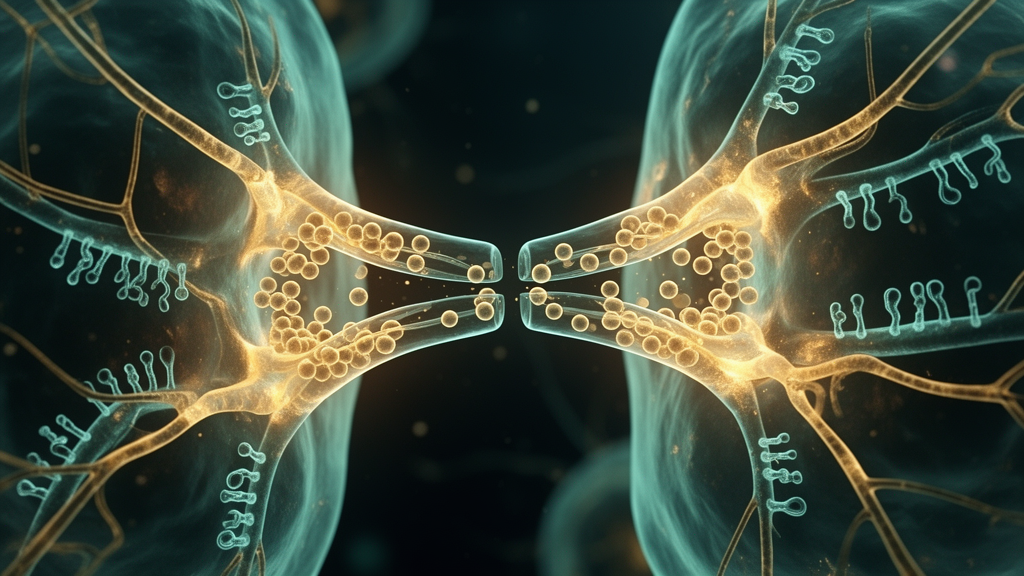
A critical component of the convergent findings at P4 involved the downregulation of a specific class of genes: ion channels. The analysis revealed that this downregulation spanned both potassium (K+) channels and various depolarizing channels, including several known neurodevelopmental disorder risk genes such as Scn1a, Scn2a, and Scn8a. These channels play distinct roles in neuronal function, spanning resting, subthreshold, spike, and repetitive firing conductances. The investigators used frequency–current relationships from whole-cell recordings of layer II/III pyramidal neurons at P7 to validate these transcriptional findings. They discovered that the transcriptomic distance from control animals across this select set of ion channel genes correlated with the measured severity of electrophysiological change in the mutants.
The electrophysiological phenotypes varied across the different genetic models. For instance, neurons from HnrnpU+/− and Usp7+/− models demonstrated a hyper-excitability phenotype, characterized by increased maximum firing rates. In contrast, Bckdk−/− neurons exhibited a left-shifted frequency–current curve and a decreased rheobase. This latter finding suggests a broad downregulation across subthreshold potassium conductance channels, such as Kcna1 and Kcna2, which typically provide a necessary brake on early depolarizing currents. The study employed computational models of intrinsic physiology to demonstrate that adjusting channel expression patterns within the range observed experimentally could indeed reproduce some of the electrophysiological findings, providing a direct link between gene expression and functional neuronal activity.
The research also explored the landscape of chromatin accessibility, identifying a distinct pattern of change that differs in timing from the transcriptional shifts. While transcriptional changes peaked at P4, chromatin accessibility differences were highest at E14.5. This temporal offset suggests a possible priming effect, where early changes in accessibility may precede and influence later changes in gene expression. As development progressed, individual mutations showed fewer changes, whereas the collective comparison of mutant versus control groups showed relative increases. Convergent changes across the mutants were generally enriched in peaks that experienced decreased accessibility, with the highest relative changes observed at P14. Notably, some mutants, including the epigenetic remodelers Kmt5b and Setd5, exhibited minimal accessibility changes, indicating that compensatory mechanisms likely exist to buffer against genetic perturbations throughout development.
Interestingly, the study reported that effect sizes for these molecular and physiological impacts were generally higher in females than in males, despite the mutations studied being observed with roughly equal frequency in patients of both sexes. Female-specific DEGs included a number of well-known ASD risk genes. While the specific biological mechanism driving this sex-specific transcriptional impact remains unclear, the researchers noted that the timing of this shift falls within the critical period for the hormonal organization of the brain. Whether this enhanced transcriptional liability in females extends to broader behavioral, physiological, or other molecular differences is a significant question for future investigation.
The investigators also conducted profiling on the cerebellum, a brain region that historically shows limited evidence of molecular changes in patients with ASD compared to other areas. Consistently, only one mutant, Bckdk−/−, showed significant differential gene expression in the cerebellum. This was accompanied by distinct alterations in motor patterns, potentially providing a mechanistic link between cerebellar circuit function and behavioral outcomes in ASD.
In summary, the study represents an ambitious step toward defining convergent molecular mechanisms across various genetic models of ASD. The investigators established that early disruptions in cell proportions and chromatin accessibility precede a postnatal peak in transcriptional and physiological effects, specifically concerning ion channel regulation. While the researchers caution that pairing RNA expression with physiological outcomes is not always straightforward—citing the example of Trip12+/− mutants which showed transcriptional shifts similar to Usp7+/− but lacked the corresponding action potential dynamics—the data suggests that mutation severity often scales across both omic and physiological domains. Future studies will be needed to determine whether these omic patterns can definitively predict morphological or physiological phenotypes, including the synaptic alterations reported in the current dataset, as data from additional neurodevelopmental models become available.
The concept of convergence central to this work reflects the broader medical framework of disease pathophysiology, which aims to identify common mechanisms that unite disparate causes of a single clinical syndrome. In a parallel noted by researchers, all metastatic cancers share defining biological properties of over-proliferation and tissue invasion despite arising from highly heterogeneous genetic and environmental contributions. In autism spectrum disorder, previous studies of convergence have demonstrated that causally associated genes are consistently enriched in specific molecular functions, particularly chromatin and epigenetic remodeling, synapse development, cytoskeleton organization, and protein homeostasis, with the greatest degree of overlap occurring during prenatal development. By evaluating these mechanisms across multiple embryonic and postnatal stages, the new study extends the multi-stage developmental strategy previously employed in neural organoid systems into whole-animal models.
The electrophysiological mapping in the study provides additional functional context for the convergent ion channel downregulation observed at postnatal day 4. Schematics of action potential dynamics indicate that the downregulated channel classes predominantly act at distinct operational phases of neuronal excitability: resting conductances, subthreshold conductances, spike conductances, and conductances that accumulate across spike trains to limit or sustain repetitive firing. In addition to measuring action potential dynamics, the researchers reported alterations in miniature excitatory and miniature inhibitory postsynaptic currents across mutant neurons. Determining whether these miniature postsynaptic current changes link directly to presynaptic transcriptional correlates remains an open question that can be explored as data from additional genetic models become available.
The progression of chromatin accessibility profiles across development revealed further structural details regarding how individual mutations behave over time. As forebrain development advanced, individual mutations displayed fewer accessibility changes, whereas the broader comparison between mutant and control groups showed relative increases, paralleling previous observations in organoid models of genetic forms of autism spectrum disorder. The convergent changes shared across mutants were enriched in chromatin peaks that decreased in accessibility, reaching their highest relative changes by postnatal day 14. Furthermore, the observation that several mutants, including epigenetic remodelers such as Kmt5b and Setd5, exhibited minimal accessibility changes highlights the presence of compensatory mechanisms that likely provide biological buffering across developmental stages.
By establishing that early embryonic shifts in cell proportions and chromatin accessibility precede a postnatal peak in transcriptional and electrophysiological disruptions, the authors have generated an experimental framework for tracing convergence across risk genes. According to the commentary, future research can build on this foundation to better define the sensitive postnatal window identified in these models. Expanding multi-omic and physiological profiling across an even wider set of neurodevelopmental genes will help determine how these early molecular disturbances affect synaptic formation and function across developmental stages to produce lasting neurodevelopmental differences in patients.
Subject of Research: Molecular convergence of gene expression, chromatin accessibility, and electrophysiological function in autism spectrum disorder mouse models.
Article Title: Identifying convergent pathophysiology in ASD models
Article References: Bicks, L. K., & Geschwind, D. H. (2026). Identifying convergent pathophysiology in ASD models. Cell Research. https://doi.org/10.1038/s41422-026-01315-8
Image Credits: AI Generated
DOI: 10.1038/s41422-026-01315-8
Keywords: Autism Spectrum Disorder, Neurodevelopment, Mouse Models, Multi-omics, Single-nucleus Profiling, Ion Channels, Chromatin Accessibility, Epigenetics, Neurobiology, Transcriptomics, Electrophysiology, Neurogenesis, Synaptic Function, Pathophysiology, Developmental Neuroscience
News Source: Drew Townsend. (November 18, 2026). Convergent Molecular and Physiological Pathways Identified in Autism Mouse Models. Scienmag.