Researchers have developed a magnesium-incorporated composite scaffold that promotes tissue remodeling and accelerates new bone repair in animal models. The biomaterial integrates the metal-organic framework Mg-MOF-74 into a collagen and hydroxyapatite matrix, designated as Mg-PHA-COL, to address incomplete understanding surrounding the biological mechanisms through which magnesium enhances bone regeneration.
Material characterization demonstrated that the Mg-PHA-COL scaffold possesses a porous architecture alongside improved mechanical properties. Laboratory testing also confirmed sustained release of magnesium ions and enhanced cytocompatibility relative to control structures, establishing baseline structural and biological suitability for tissue engineering.
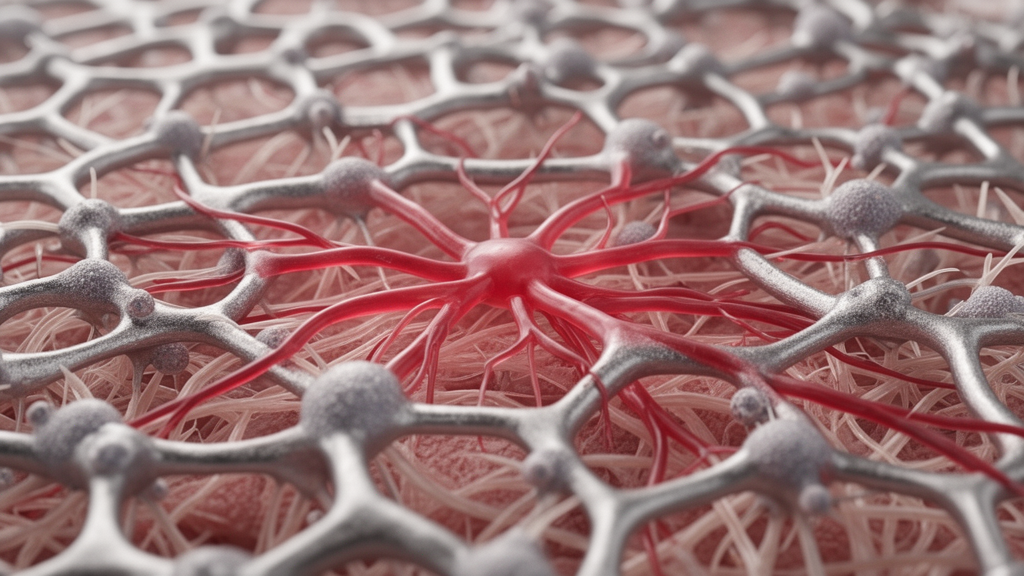
In a subcutaneous implantation model, the experimental scaffold actively altered the surrounding local environment. Compared with control scaffolds lacking the metal-organic framework, Mg-PHA-COL stimulated notable vascular infiltration and supported progressive tissue remodeling at the implantation site.
To identify the molecular responses governing these regenerative outcomes, the investigators conducted transcriptomic profiling on the affected tissues. The analysis revealed distinct transcriptional shifts, highlighting the cyclic guanosine monophosphate-dependent protein kinase, or PKG, signaling pathway as one of the most significantly enriched biological cascades.
Reverse transcription-quantitative polymerase chain reaction assays further validated the sequencing findings. The gene expression analyses confirmed differential regulation of key genes in the PKG signaling pathway, accompanied by elevated expression levels of markers associated with vascular infiltration, tissue repair, and osteogenesis.
Consistent with these molecular and histological indicators, evaluation in a critical-sized rat cranial defect model demonstrated that Mg-PHA-COL significantly enhanced new bone formation, vascularization, and mineralization. The authors noted that these findings connect Mg-MOF-74 incorporation with favorable microenvironmental remodeling and outline transcriptomic pathways underlying magnesium-assisted bone regeneration in rodents.
The investigation was designed to address an ongoing challenge in bone tissue engineering: although the incorporation of magnesium has been widely adopted to improve the osteogenic performance of bone biomaterials, the biological mechanisms underlying these beneficial effects have remained incompletely understood. To systematically investigate these processes, the experimental design bridged material science and biological analysis, evaluating the composite scaffold from initial material characterization through to full tissue regeneration across multiple experimental platforms.
The structured experimental strategy evaluated the material across sequential testing phases, combining in vitro characterization, subcutaneous implantation, high-throughput transcriptomic profiling, quantitative gene expression assays, and an in vivo bone repair model. During the material characterization phase, the integration of Mg-MOF-74 into the collagen-hydroxyapatite matrix (Mg-PHA-COL) yielded a porous architecture capable of sustained magnesium ion release while improving mechanical properties and cytocompatibility. These physical and cellular assessments demonstrated that the composite structure provided a stable, cytocompatible matrix suitable for evaluating downstream biological performance.
To examine how living tissue responds to the material prior to evaluating bone defect repair, the researchers employed an in vivo subcutaneous implantation model. Within this subcutaneous environment, the Mg-PHA-COL scaffold actively remodeled the local tissue response, driving pronounced vascular infiltration and progressive tissue remodeling when compared directly with the control scaffold. This phase confirmed that incorporating the metal-organic framework enabled the biomaterial to positively modulate its immediate cellular microenvironment and support blood vessel ingrowth under physiological conditions.
At the molecular level, transcriptomic profiling provided detailed insight into the biological responses accompanying improved tissue repair. The sequencing analysis identified distinct regenerative transcriptional changes, with the PKG signaling pathway emerging among the most significantly enriched biological cascades. To corroborate these high-throughput findings, the researchers conducted reverse transcription-quantitative polymerase chain reaction assays. The quantitative results confirmed the differential expression of selected genes associated with the PKG signaling pathway, alongside increased expression of genes related to tissue repair, vascular infiltration, and osteogenesis.
In the skeletal evaluation stage, the biomaterial was examined within a rat critical-sized cranial defect model to determine its functional bone repair capacity. Consistent with the molecular and histological observations, the Mg-PHA-COL scaffold significantly enhanced new bone formation, vascularization, and mineralization within the cranial defects. These coordinated findings demonstrate that incorporating Mg-MOF-74 successfully establishes a favorable regenerative microenvironment, linking metal-organic framework magnesium release to enhanced osteogenic outcomes.
The researchers emphasized that these experimental findings offer valuable transcriptomic and histological insights into the biological responses that accompany magnesium-assisted bone regeneration. However, the study scope remains focused on preclinical models, encompassing in vitro assays, subcutaneous rodent implantation, and cranial defect repair in rats. Consequently, these observations reflect localized regenerative behavior and tissue remodeling in animal systems rather than established clinical efficacy or therapeutic outcomes in human patients.
Subject of Research: Magnesium metal-organic framework scaffold for bone tissue regeneration
Article Title: Mg-MOF-74 incorporation remodels the regenerative microenvironment and enhances bone regeneration in a collagen–hydroxyapatite scaffold
Article References: Xing, Y., Liu, X., Li, Y., Chen, D., Zhong, X., Ha, S., Feng, J., Huang, R., Chen, S., Chen, Z., Wu, S., & Liu, Q. (2026). Mg-MOF-74 incorporation remodels the regenerative microenvironment and enhances bone regeneration in a collagen–hydroxyapatite scaffold. Frontiers in Bioengineering and Biotechnology, 14, Article 1983226. https://doi.org/10.3389/fbioe.2026.1983226
Image Credits: AI Generated
DOI: 10.3389/fbioe.2026.1983226
Keywords: Mg-MOF-74, collagen-hydroxyapatite scaffold, Mg-PHA-COL, bone regeneration, magnesium release, metal-organic framework, vascular infiltration, tissue remodeling, PKG signaling pathway, transcriptomic profiling, RT-qPCR, rat cranial defect model, cytocompatibility, osteogenesis, bone mineralization, osteoimmunomodulation, biomaterials
News Source: Drew Townsend. (November 14, 2026). Magnesium Framework Scaffold Enhances Bone Regeneration and Vascularization in Rats. Scienmag.