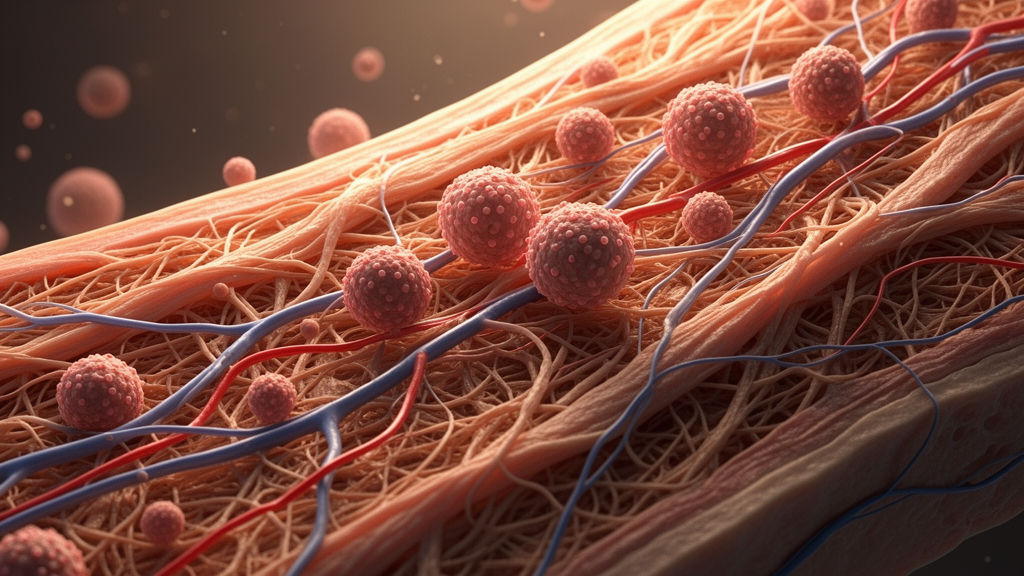
Researchers have published a single-cell transcriptomic atlas of the mouse periosteum, revealing that aging significantly alters both progenitor cell populations and the local immune microenvironment. The study, published in Cell Regeneration, profiles the cellular changes occurring in the outer membrane of long bones across three distinct age groups. By mapping these alterations at the single-cell level, the team identified specific shifts in mesenchymal stem cells, neutrophils, and macrophages that may underpin age-related declines in bone homeostasis and fracture healing. The findings suggest that the deterioration of bone regenerative capacity is not solely a result of stem cell loss but is also driven by a complex interplay between aging progenitors and an increasingly inflammatory immune landscape.
The investigation utilized single-cell RNA sequencing to analyze periosteal tissue harvested from the femurs and tibias of C57BL/6 mice. The animals were divided into three cohorts based on age: young mice at three months, middle-aged mice at nine months, and aged mice at eighteen months. Six males were included in each age group, with tissues pooled to minimize inter-individual variability and batch effects. After enzymatic digestion and quality control filtering, the researchers retained 32,931 cells for downstream analysis. This dataset allowed for the identification of seven distinct cell types, including neutrophils, macrophages, mesenchymal cells, T/NK cells, B cells, endothelial cells, and erythrocytes, providing a comprehensive baseline for comparing cellular composition across the aging spectrum.
One of the primary observations was a steady decrease in the proportion of mesenchymal cells as the mice aged. These cells, which are critical for bone growth and remodeling, showed a significant reduction in their population size in the aged group compared to the young group. Concurrently, the proportions of immune cells, specifically neutrophils and macrophages, increased in the aged periosteum. This shift was confirmed through flow cytometry analysis, which validated the transcriptomic findings. The enrichment analysis of differentially expressed genes indicated that pathways associated with leukocyte transendothelial migration and neutrophil extracellular trap formation were upregulated in the aged group, suggesting a heightened state of immune cell infiltration and activity in the aging bone membrane.
In contrast, pathways closely associated with mesenchymal cell niche maintenance and osteogenic differentiation, such as focal adhesion, ECM-receptor interactions, and Wnt signaling, were downregulated with age. This transcriptional shift highlights a diminished bone regenerative potential in the aged periosteum. The researchers also calculated senescence scores for various cell subpopulations using a published set of aging-related genes. Mesenchymal cells exhibited the highest senescence scores in the 18-month-old mice, indicating that these progenitor cells undergo significant functional changes during the aging process. The gradual increase in senescence scores for neutrophils and macrophages further supports the notion that the entire periosteal ecosystem is affected by aging-related stress.
To understand the functional implications of these cellular changes, the team re-clustered the mesenchymal cells into six distinct subpopulations based on marker gene expression. Two key subgroups were identified: Dpt-positive progenitors located in the fibrous layer and Postn-positive progenitors in the cambium layer. The Dpt-positive cells are known to regulate late-stage endochondral osteogenesis, while the Postn-positive cells support bone homeostasis and early osteogenesis after fracture. The study found that aging led to a significant reduction in the number of Postn-positive cells, whereas the proportion of Dpt-positive cells remained relatively stable. However, the Dpt-positive cells showed early signs of senescence in middle age, potentially reflecting a loss of self-renewal capacity due to impaired oxidative phosphorylation.
Transcriptional analysis of these progenitor subsets revealed that several key genes involved in angiogenesis and osteogenesis were consistently downregulated with age. Sparc, a regulator of both processes, exhibited the most pronounced decline. In the Dpt-positive progenitors, genes associated with stemness and differentiation potential, such as Nme2 and Hmgn3, were markedly reduced. In the Postn-positive progenitors, osteogenic genes like Serpinh1 and Gja1 were downregulated, along with mt-Co3, a crucial regulator of cellular energy metabolism. These transcriptional shifts suggest that even when progenitor cells are present, their functional capacity to generate new bone tissue is compromised by aging, likely due to limited energy supply and impaired differentiation potential.
The study also examined the heterogeneity of neutrophils, identifying two subpopulations: Nlrp3-high and Pclaf-high neutrophils. The Nlrp3-high neutrophils were enriched in pathways related to inflammation, phagocytosis, and osteoclast differentiation. With aging, these cells showed a diminished capacity to activate and amplify inflammation, as indicated by the reduced signaling of NF-κB, TNF, and Toll-like receptor pathways. Furthermore, factors related to bone formation and angiogenesis, such as Sparc and Mgp, were significantly reduced in aged Nlrp3-high neutrophils. This suggests that the initial inflammatory response required for effective bone healing is weakened in the aged periosteum, potentially delaying the repair process and contributing to the overall decline in skeletal health.
Macrophage populations also underwent significant changes with aging. The researchers identified seven macrophage subpopulations, noting a decline in Mrc1-positive macrophages and a predominant emergence of Cd38-high macrophages in the aged group. The Mrc1-positive macrophages, which exhibit a mixed M1/M2 phenotype, showed reduced expression of angiogenesis-related genes and a progressive loss of M2 markers with age. In contrast, the Cd38-high macrophages displayed high M1 markers and minimal M2 expression, indicating a pro-inflammatory state. These cells highly expressed Saa3, an inhibitor of osteoblast differentiation and bone repair, with levels rising from middle age to old age. The origin of these Cd38-high macrophages appears to be circulatory, as they expressed markers associated with circulating monocytes rather than resident macrophages.
A critical finding of the study was the altered communication between progenitor cells and immune cells during aging. The researchers found that aged progenitor cells upregulated CSF1 and CXCL signaling, which drove the infiltration of macrophages and neutrophils. Specifically, Csf1 secreted by progenitor cells increased substantially after middle age, primarily driven by certain progenitor subpopulations. This signaling promotes macrophage proliferation and differentiation, while CXCL signaling, mediated by CXCL1 and CXCL12, increased significantly with age, enhancing the recruitment of Nlrp3-high neutrophils. Co-culture experiments further demonstrated that aged periosteal stem cells significantly enhanced macrophage migration compared to young stem cells, providing functional evidence for this altered crosstalk.
The study acknowledges several limitations, including the relatively low abundance of certain cell types, which may have limited the detection of subtle changes. While some senescence-associated features were detected, their dynamics across age groups were modest, and not all cell populations exhibited a clear progression from middle-aged to aged mice. The authors note that cellular senescence in the periosteum may be heterogeneous and context-dependent. Additionally, several key conclusions remain primarily inferred from transcriptomic analyses, and future studies incorporating lineage tracing, functional perturbation, and injury models will be necessary to substantiate the mechanistic roles of these cell populations in periosteal aging and bone regeneration.
Despite these limitations, the study provides a comprehensive atlas of periosteal aging, revealing that the decline in bone regenerative capacity is driven by a complex interplay between mesenchymal progenitor senescence, chronic inflammation, and vascular dysfunction. The upregulation of inflammatory signaling pathways and the recruitment of pro-inflammatory immune cells create a microenvironment that favors bone resorption over formation. These findings offer new insights into the molecular mechanisms underlying skeletal aging and suggest potential targets for therapeutic interventions aimed at preserving bone health in the elderly. By modulating inflammatory signaling or rejuvenating periosteal progenitors, it may be possible to mitigate the age-related deterioration of bone homeostasis and improve fracture healing outcomes.
Subject of Research: Single-cell transcriptomic analysis of age-related changes in mouse periosteal progenitor cells and immune microenvironment
Article Title: Single-cell mapping reveals age-related alterations in periosteal progenitor cells and immune microenvironment
Article References: Zhao, L., Wu, C., Chen, K., Xu, Z., You, Y., Zhao, P., Zhu, D., Su, M., Luo, J., & Wang, Y. (2025). Single-cell mapping reveals age-related alterations in periosteal progenitor cells and immune microenvironment. Cell Regeneration, 14(1), Article 46. https://doi.org/10.1186/s13619-025-00263-9
Image Credits: AI Generated
DOI: 10.1186/s13619-025-00263-9
Keywords: single-cell RNA sequencing, periosteal aging, mesenchymal stem cells, bone homeostasis, immune microenvironment, macrophage polarization, neutrophil dysfunction, osteogenic potential, cellular senescence, fracture healing, mouse model, C57BL/6 mice, bone regeneration, inflammatory signaling, CSF1 signaling, CXCL chemokines, Postn-positive progenitors, Dpt-positive progenitors, skeletal stem cells, tissue remodeling
News Source: Beatrice Stafford. (November 13, 2026). Mouse study links periosteal aging to immune cell shifts. Scienmag.