Researchers have introduced an automated, high-throughput workflow for multi-omics investigations that integrates sequential extraction of DNA, RNA, and proteins with solid-phase sample preparation. By adapting non-precipitation protein processing to an automated liquid handling platform, the approach delivers deep, reproducible proteomic characterization alongside genomic and transcriptomic material from a single biological sample.
In standard multi-omics pipelines, biological specimens are routinely divided into separate aliquots to facilitate independent extractions, a practice that presents severe challenges when working with scarce or limited tissue inputs. While commercial kits such as the AllPrep DNA/RNA/Protein system enable the simultaneous isolation of nucleic acids and proteins from a unified sample, the direct compatibility of such sequential workflows with unbiased, global mass-spectrometry-based proteomics had remained largely uncharacterized.
To determine the viability of sequential extraction for comprehensive proteomic applications, the investigators systematically evaluated both precipitation-based and non-precipitation-based protein cleanup strategies.
The team compared this conventional precipitation approach against non-precipitation methods, centering on the single-pot, solid-phase-enhanced sample preparation protocol known as SP3. Across comparative benchmarks, the SP3-based workflow matched precipitation-based cleanup in total protein and peptide identifications while displaying equivalent peptide length distributions and missed cleavage frequencies. Subsequent testing revealed that altering the chemical conditions governing protein binding to the SP3 paramagnetic beads exerted minimal impact on downstream performance.
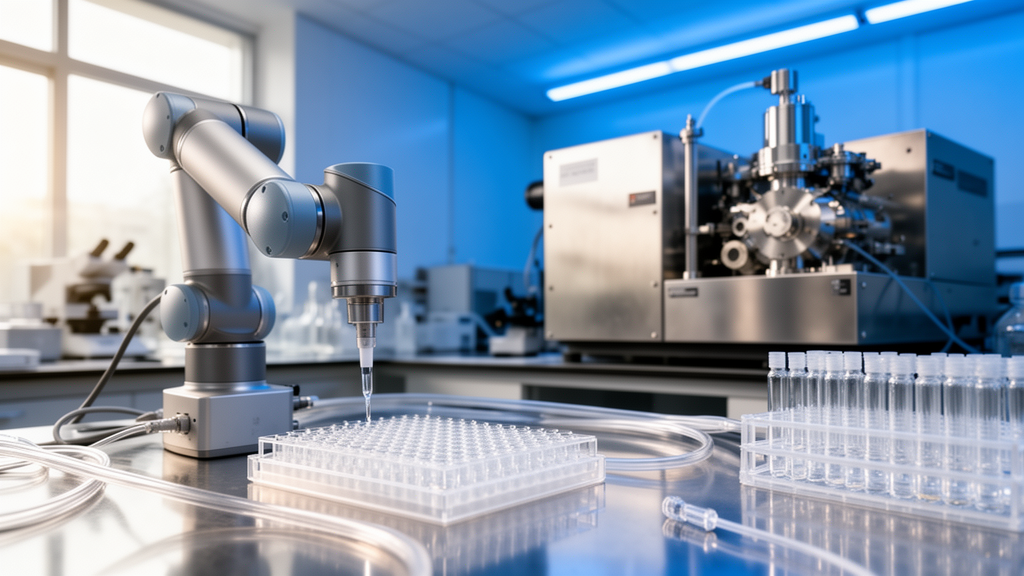
To ensure practical utility in large-scale studies, the research team automated the optimized SP3 cleanup procedure using the KingFisher Apex liquid handling platform. Automating the solid-phase workflow on this robotic system provided a robust, highly reproducible protocol capable of processing multiple samples without manual intervention.
To demonstrate the workflow on a relevant biological model, the authors applied the automated platform to evaluate proteomic alterations in a multiple myeloma cell line exposed to the immunomodulatory therapeutic pomalidomide. Coupling the automated sample preparation with diaPASEF mass spectrometry enabled in-depth proteome profiling, successfully identifying more than 6,300 proteins and confirming the targeted downregulation of the CRBN neosubstrates IKZF1, IKZF3, and RAB28 following drug exposure.
Overall, the authors concluded that the optimized workflow offers a robust, scalable and automated approach for integrated multi-omics studies, enabling efficient and reproducible proteomic profiling from limited sample inputs.
Subject of Research: High-throughput automated multi-omics workflow for sequential DNA, RNA, and protein extraction
Article Title: An automated high-throughput workflow for multi-omics analysis of biological samples by employing sequential extraction of DNA, RNA and proteins
Article References: Mangalaparthi, K. K., Arokia Balaya, R. D., Pasupuleti, R. R., Staub, J., Ahmann, G., Braggio, E., Fonseca, R., Kandasamy, R. K., & Pandey, A. (2026). An automated high-throughput workflow for multi-omics analysis of biological samples by employing sequential extraction of DNA, RNA and proteins. Clinical Proteomics. https://doi.org/10.1186/s12014-026-09639-8
Image Credits: AI Generated
DOI: 10.1186/s12014-026-09639-8
Keywords: multi-omics, proteomics, DNA extraction, RNA extraction, protein cleanup, AllPrep kit, SP3 protocol, KingFisher Apex, liquid handling automation, diaPASEF, multiple myeloma, pomalidomide, CRBN neosubstrates, IKZF1, IKZF3, RAB28, peptide identification, clinical proteomics
News Source: Ophelia Keating. (November 12, 2026). Automated Multi-Omics Workflow Successfully Profiles Over 6,300 Proteins from Single Samples. Scienmag.