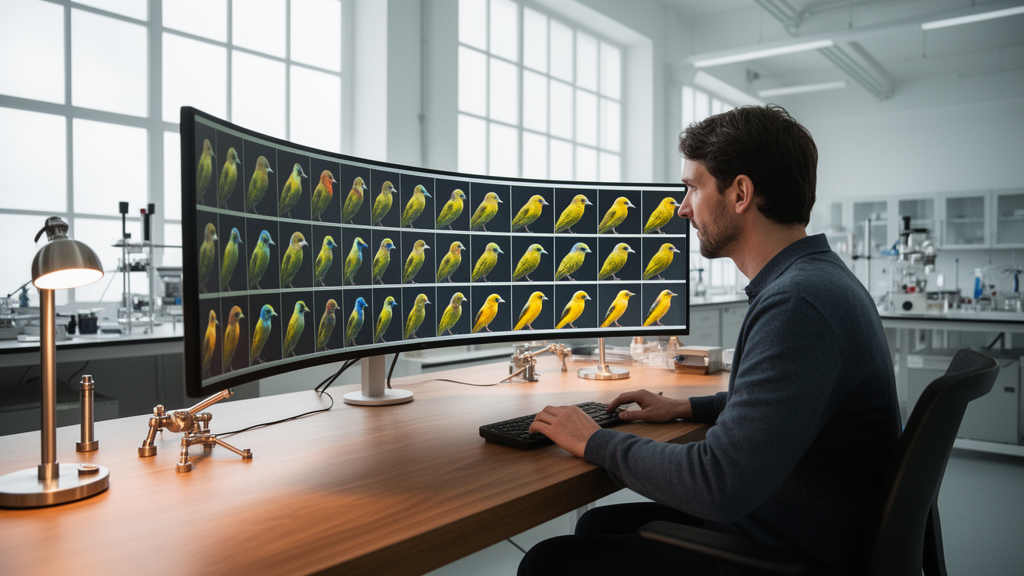
Researchers have introduced Fancy Growing Neural Gas, a cluster-specific color data augmentation technique that enhances deep neural network performance on color-sensitive visual recognition tasks. Evaluated using a ResNet-50 architecture across multiple image benchmarks, the method applies independently sampled color perturbations to partitioned chromatic clusters rather than applying a single uniform shift across the entire image.
Deep artificial neural networks frequently depend on large and diverse training datasets, prompting widespread reliance on data augmentation across modern computer vision pipelines. While geometric augmentations remain extensively studied, conventional color augmentation approaches primarily utilize global photometric transformations that simulate camera effects or broad illumination changes. However, chromatic variability in real-world recognition tasks often behaves heterogeneously across distinct material or object regions instead of following uniform global shifts.
To capture localized chromatic variance, Fancy GNG combines Growing Neural Gas clustering with color perturbations based on principal component analysis. The algorithm partitions an individual image’s RGB color distribution into coherent clusters within color space. Perturbations are then independently sampled and applied to each cluster, generating structured, image-adaptive chromatic variation without requiring semantic annotations or explicit spatial segmentation routines, all while maintaining the fundamental visual content of the image.
The research team assessed the technique by training ResNet-50 models across three distinct benchmark datasets: Flowers-102, ImageNet-1k, and CIFAR-10. This experimental evaluation demonstrated a pronounced dataset-dependent performance profile, reflecting how differently various visual recognition domains rely on chromatic features for category discrimination.
The largest performance gains occurred on the Flowers-102 benchmark, a fine-grained image classification task characterized by high sensitivity to color information. Consistent performance improvements were likewise observed on the large-scale ImageNet-1k dataset. In contrast, the augmentation yielded only marginal gains on CIFAR-10, where color information appears to be substantially less critical for distinguishing between object classes.
The authors additionally determined that measuring the performance degradation resulting from grayscale conversion provides a practical indicator for identifying whether an image dataset will benefit from color-aware augmentation. Overall, the findings indicate that cluster-specific, color-distribution-aware augmentation offers substantial advantages over conventional global photometric perturbations, particularly when chromatic patterns are both discriminative and internally structured.
Subject of Research: Cluster-specific color data augmentation for deep neural networks
Article Title: Fancy GNG: localized color augmentation via Growing Neural Gas
Article References: Andrikyan, T., Hansen, H.-O., Schönbrunner, P., & Madany Mamlouk, A. (2026). Fancy GNG: localized color augmentation via Growing Neural Gas. Frontiers in Artificial Intelligence, 9, Article 1954939. https://doi.org/10.3389/frai.2026.1954939
Image Credits: AI Generated
DOI: 10.3389/frai.2026.1954939
Keywords: Fancy GNG, Growing Neural Gas, color augmentation, data augmentation, computer vision, ResNet-50, Flowers-102, ImageNet-1k, CIFAR-10, principal component analysis, photometric transformations, RGB distribution, fine-grained classification, image classification, color perturbation, grayscale conversion
News Source: Cassandra Pierce. (November 11, 2026). Cluster-Specific Color Augmentation Improves Fine-Grained Image Recognition in Neural Networks. Scienmag.