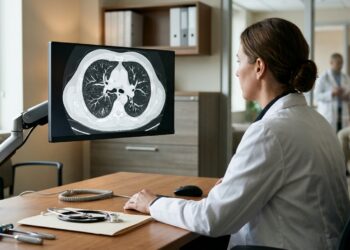
Optimal Transport Augmentation Preserves Node Degree Information in Graph Contrastive Learning
Researchers introduced OTGCL, an optimal transport augmentation framework that preserves node-level degree structure during graph contrastive learning.
Researchers introduced OTGCL, an optimal transport augmentation framework that preserves node-level degree structure during graph contrastive learning.

A dual-expert framework combining paraphrase-based augmentation and aspect tokenization reached 98.5% accuracy on the imbalanced Twitter US-Airline Sentiment dataset, outperforming ...

A systematic review of 60 strawberry detection studies finds that 35 percent applied data augmentation before dataset splitting, a controlled ...

Researchers report a graph contrastive learning framework called COIN that combines continuous orthogonal augmentation with an information-balancing training principle and ...
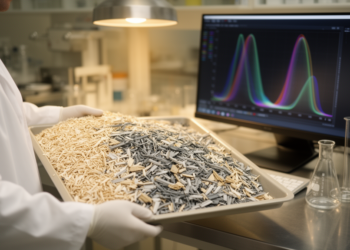
An explainable Kolmogorov-Arnold Network optimised by the Marine Predators Algorithm predicted six mechanical and durability properties of PET- and rice-husk-ash-blended ...
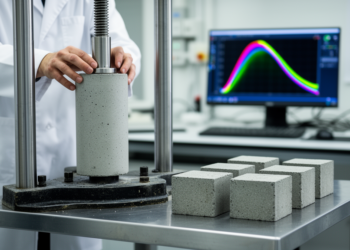
A new study reports that hybrid broad learning systems optimized by parameter-free metaheuristics predict concrete compressive strength with MAPE below ...

A machine learning framework combining a small experimental dataset with 300 VAE-generated synthetic mixes predicts the compressive strength of recycled-concrete-powder ...

A hybrid CNN–transformer model produces 128-dimensional medical image embeddings that stay robust under noise, blur, cropping, and occlusion across four ...

A systematic comparison of nine CNN architectures on label-free multimodal microscopy images of colonic tissue found ResNet50 with partial fine-tuning ...

Researchers combined a conditional diffusion model, a hypertuned YOLO26x detector and a Swin-V2-B classifier with a new SHAP-CAM explainability method ...

A hybrid ResNet50 and Transformer model achieved 89.7 percent accuracy on the FER2013 facial emotion benchmark, with an ablation study ...

Researchers report a Mamba-BiLSTM framework with Granger-inspired directional causal fusion that reached 81.86 percent accuracy for multimodal depression detection on ...
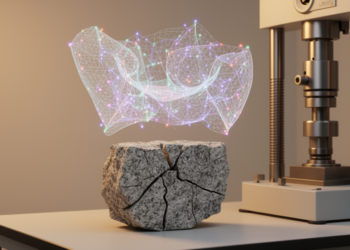
A physics-informed generative adversarial network produced 944 physically consistent synthetic rock-strength records from 944 laboratory measurements, preserving key UCS–porosity–density relationships.
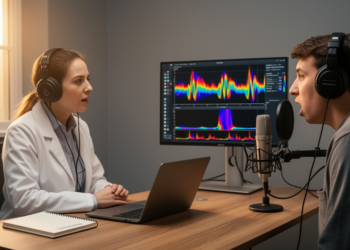
A diffusion-based text-to-speech model trained on eight dysarthric TORGO speakers generated 6,120 synthetic UA-Speech utterances that improved speaker-independent intelligibility classification ...
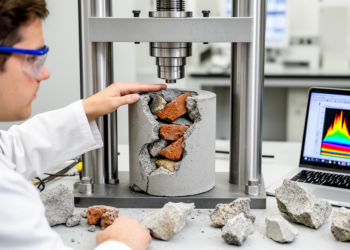
An integrated experimental and machine learning study predicted the 28-day compressive strength of recycled aggregate concrete, with Support Vector Regression ...

A hydropower-oriented AI framework combining physics-based residuals, constrained synthetic data generation, and deep residual networks achieves 98.6 percent accuracy on ...

A systematic review of 59 studies finds deep learning dominates fungal leaf disease detection while bacterial diagnosis, generative AI and ...

A new DCNN and EResNet model achieved an F1 score of 91.70% on an in-house conversational dataset, 2.8% higher than ...

A comparative study found that GAN-based augmentation of speech or cepstrogram images improved Parkinson's dysarthria severity classification, with relative performance ...

Researchers trained stage-specific StyleGAN3 models to synthesize human blastocyst images and validated them with distributional, spectral, and classifier-based tests, finding ...