• HOME
  • NEWS
  • EXPLORE
    • CAREER
      • Companies
      • Jobs
    • EVENTS
    • iGEM
      • News
      • Team
    • PHOTOS
    • VIDEO
    • WIKI
  • BLOG
  • COMMUNITY
    • FACEBOOK
    • INSTAGRAM
    • TWITTER
Tuesday, May 26, 2026
BIOENGINEER.ORG
No Result
View All Result
  • Login
  • HOME
  • NEWS
  • EXPLORE
    • CAREER
      • Companies
      • Jobs
        • Lecturer
        • PhD Studentship
        • Postdoc
        • Research Assistant
    • EVENTS
    • iGEM
      • News
      • Team
    • PHOTOS
    • VIDEO
    • WIKI
  • BLOG
  • COMMUNITY
    • FACEBOOK
    • INSTAGRAM
    • TWITTER
  • HOME
  • NEWS
  • EXPLORE
    • CAREER
      • Companies
      • Jobs
        • Lecturer
        • PhD Studentship
        • Postdoc
        • Research Assistant
    • EVENTS
    • iGEM
      • News
      • Team
    • PHOTOS
    • VIDEO
    • WIKI
  • BLOG
  • COMMUNITY
    • FACEBOOK
    • INSTAGRAM
    • TWITTER
No Result
View All Result
Bioengineer.org
No Result
View All Result
Home NEWS Bioengineering

Artificial retina could someday help restore vision

Bioengineer by Bioengineer
November 12, 2014
in Bioengineering
Reading Time: 2 mins read
0
Share on FacebookShare on TwitterShare on LinkedinShare on RedditShare on Telegram

The loss of eyesight, often caused by retinal degeneration, is a life-altering health issue for many people, especially as they age. But a new development toward a prosthetic retina could help counter conditions that result from problems with this crucial part of the eye. Scientists published their research on a new device, which they tested on tissue from laboratory animals, in the ACS journal Nano Letters.
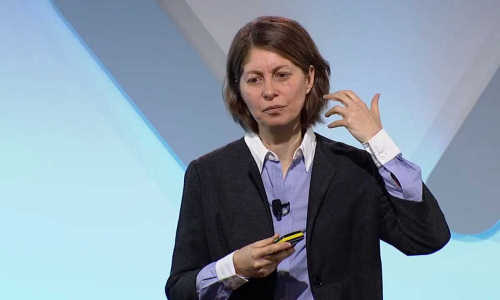
Yael Hanein

Photo Credit: Yael Hanein

Yael Hanein and colleagues point out that a growing range of medical devices has become available to treat conditions, including visual impairment, that involve sending sensory signals to the brain. Patients with one type of eye disorder called age-related macular degeneration (AMD), for example, could potentially benefit from such a device, they say. AMD usually affects people age 60 or older who have damage to a specific part of the retina, limiting their vision.

Scientists are trying different approaches to develop an implant that can “see” light and send visual signals to a person’s brain, countering the effects of AMD and related vision disorders. But many attempts so far use metallic parts, cumbersome wiring or have low resolution. The researchers, an interdisciplinary team from Tel Aviv University, the Hebrew University of Jerusalem Centers for Nanoscience and Nanotechnology and Newcastle University, wanted to make a more compact device.

The researchers combined semiconductor nanorods and carbon nanotubes to create a wireless, light-sensitive, flexible film that could potentially act in the place of a damaged retina. When they tested it with a chick retina that normally doesn’t respond to light, they found that the film absorbed light and, in response, sparked neuronal activity. In comparison with other technologies, the researchers conclude theirs is more durable, flexible and efficient, as well as better able to stimulate neurons.

Story Source:

The above story is based on materials provided by American Chemical Society, Michael Bernstein.

Share12Tweet8Share2ShareShareShare2

Related Posts

Why is the first Turkish bioengineering promotion website, Biyomuhendislik.com, so important?

February 4, 2023

Robo-fish

September 19, 2016

Mice born from ‘tricked’ eggs

September 17, 2016

UCLA researchers use stem cells to grow 3-D lung-in-a-dish

September 16, 2016
Please login to join discussion

POPULAR NEWS

  • ESMO 2025: mRNA COVID Vaccines Enhance Efficacy of Cancer Immunotherapy

    316 shares
    Share 126 Tweet 79
  • New Study Reveals Plants Can Detect the Sound of Rain

    734 shares
    Share 293 Tweet 183
  • Common Food Preservatives Associated with Elevated Blood Pressure and Increased Heart Disease Risk

    56 shares
    Share 22 Tweet 14
  • Research Indicates Potential Connection Between Prenatal Medication Exposure and Elevated Autism Risk

    847 shares
    Share 339 Tweet 212

About

We bring you the latest biotechnology news from best research centers and universities around the world. Check our website.

Follow us

Recent News

Global Shifts in Urban Population and Migration Patterns

Stable Tin-Lead Perovskite Inks Boost Tandem Efficiency

Targeting Arginine Metabolism Halts ARID1A-Deficient TNBC

Subscribe to Blog via Email

Enter your email address to subscribe to this blog and receive notifications of new posts by email.

Join 82 other subscribers
  • Contact Us

Bioengineer.org © Copyright 2023 All Rights Reserved.

Welcome Back!

Login to your account below

Forgotten Password?

Retrieve your password

Please enter your username or email address to reset your password.

Log In
No Result
View All Result
  • Homepages
    • Home Page 1
    • Home Page 2
  • News
  • National
  • Business
  • Health
  • Lifestyle
  • Science

Bioengineer.org © Copyright 2023 All Rights Reserved.