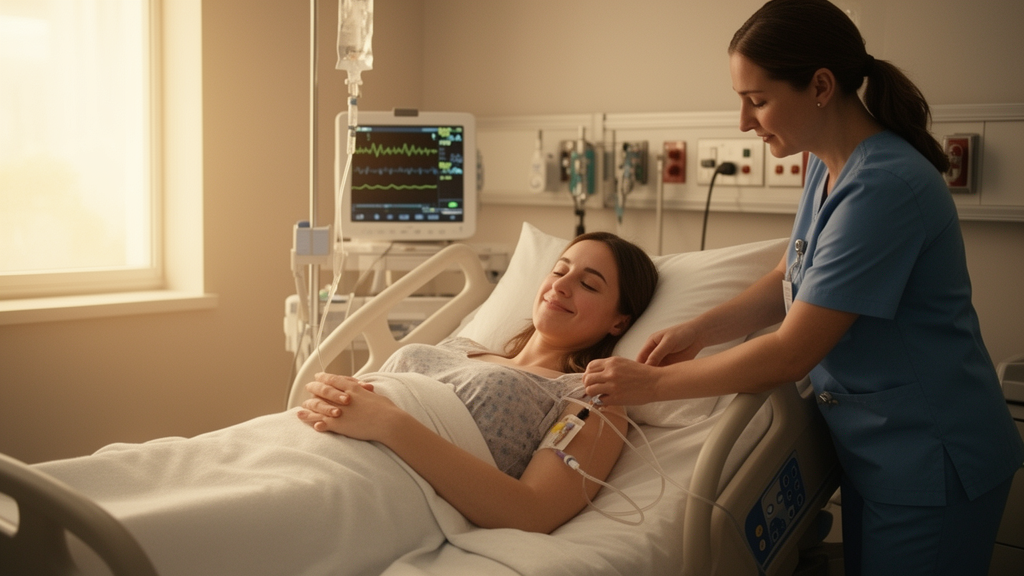
A prospective preference-based cohort study published in BMC Anesthesiology examined the relationship between epidural labor analgesia and postpartum depressive symptoms among first-time mothers. The research focused on singleton primiparous women who planned for vaginal delivery, aiming to evaluate whether the use of epidural analgesia during labor was associated with a positive screen on the Edinburgh Postnatal Depression Scale at six weeks postpartum. The study also explored the development of a parsimonious prediction model to identify risk factors for postpartum depressive symptoms in this specific population.
The study was conducted at a single center and enrolled 200 women who experienced spontaneous onset of labor between July and December 2021. Participants were allowed to choose whether or not to receive epidural labor analgesia, creating a preference-based design that reflects real-world clinical decision-making. The final analysis included 184 women, with 93 in the epidural group and 91 in the no-epidural group. The primary outcome was defined as a positive Edinburgh Postnatal Depression Scale screen, indicated by a score of nine or higher, assessed on postpartum day 42.
The statistical approach involved a primary logistic regression model that included epidural labor analgesia, educational attainment, and antenatal fear of labor pain as predictors. Variables that occurred after the exposure to epidural analgesia were excluded from the primary model to avoid bias. Sensitivity analyses were performed using inverse probability of treatment weighting based on baseline characteristics to account for potential confounding. Additionally, the fixed three-variable model was presented as an exploratory nomogram and internally validated using 1,000 bootstrap resamples to assess its predictive stability.
The results indicated that positive Edinburgh Postnatal Depression Scale screens occurred in 13 of the 93 women in the epidural group, representing a rate of 14.0 percent. In contrast, 25 of the 91 women in the no-epidural group had positive screens, corresponding to a rate of 27.5 percent. The difference between these groups was statistically significant in the unadjusted analysis, with a Yates-corrected P-value of 0.038. The absolute risk difference was calculated as minus 13.49 percentage points, with a 95 percent confidence interval ranging from minus 24.92 to minus 1.75.
However, when the data were adjusted for confounding factors in the logistic regression model, the association was no longer statistically significant. The adjusted odds ratio for epidural labor analgesia was 0.49, with a 95 percent confidence interval of 0.23 to 1.07 and a P-value of 0.075. This suggests that while the unadjusted data showed a lower rate of depressive symptoms in the epidural group, this difference may be explained by other baseline characteristics such as education level or fear of labor pain. The inverse probability of treatment weighting estimates were directionally similar to the adjusted model, but their confidence intervals also included the null value, further supporting the lack of a robust adjusted association.
The exploratory prediction model, represented as a nomogram, demonstrated an apparent area under the receiver operating characteristic curve of 0.720. After correcting for optimism using bootstrap resampling, the C-statistic was 0.708. These metrics suggest that the model has reasonable discriminative ability for predicting positive depression screens in this cohort. Nevertheless, the authors emphasized that this model is exploratory and requires external validation in independent populations before it can be considered for clinical use.
The authors concluded that while recipients of epidural labor analgesia had a lower unadjusted rate of positive depression screening, the adjusted and weighted confidence intervals included the null, indicating that a causal protective effect cannot be established. The preference-based design, potential for residual confounding, and limited sample size necessitate cautious interpretation of these findings.
Subject of Research: Association between epidural labor analgesia and postpartum depressive symptoms
Article Title: Association between epidural labor analgesia and postpartum depressive symptoms at 6 weeks in primiparous women: a prospective preference-based cohort study
Article References: Chen, Y.-Q., Chen, D.-D., Wu, Y.-Y., Zhong, X.-M., & Li, S.-Y. (2026). Association between epidural labor analgesia and postpartum depressive symptoms at 6 weeks in primiparous women: a prospective preference-based cohort study. BMC Anesthesiology. https://doi.org/10.1186/s12871-026-04402-w
Image Credits: AI Generated
DOI: 10.1186/s12871-026-04402-w
Keywords: epidural labor analgesia, postpartum depression, Edinburgh Postnatal Depression Scale, primiparous women, cohort study, maternal mental health, labor pain management, logistic regression, Association, between, epidural, labor
News Source: Glenn Wilkins. (November 7, 2026). Epidural Use Linked to Lower Postpartum Depression Risk. Scienmag.