Human cells build their voltage-gated calcium channels with help from a molecular chaperone that works while the channel protein is still being made, according to a study published in Nature Structural & Molecular Biology. The research shows that the endoplasmic reticulum membrane protein complex, known as the EMC, protects newly synthesized calcium channel subunits from premature destruction and that blocking this protective function disrupts the contraction of heart muscle cells grown from human stem cells.
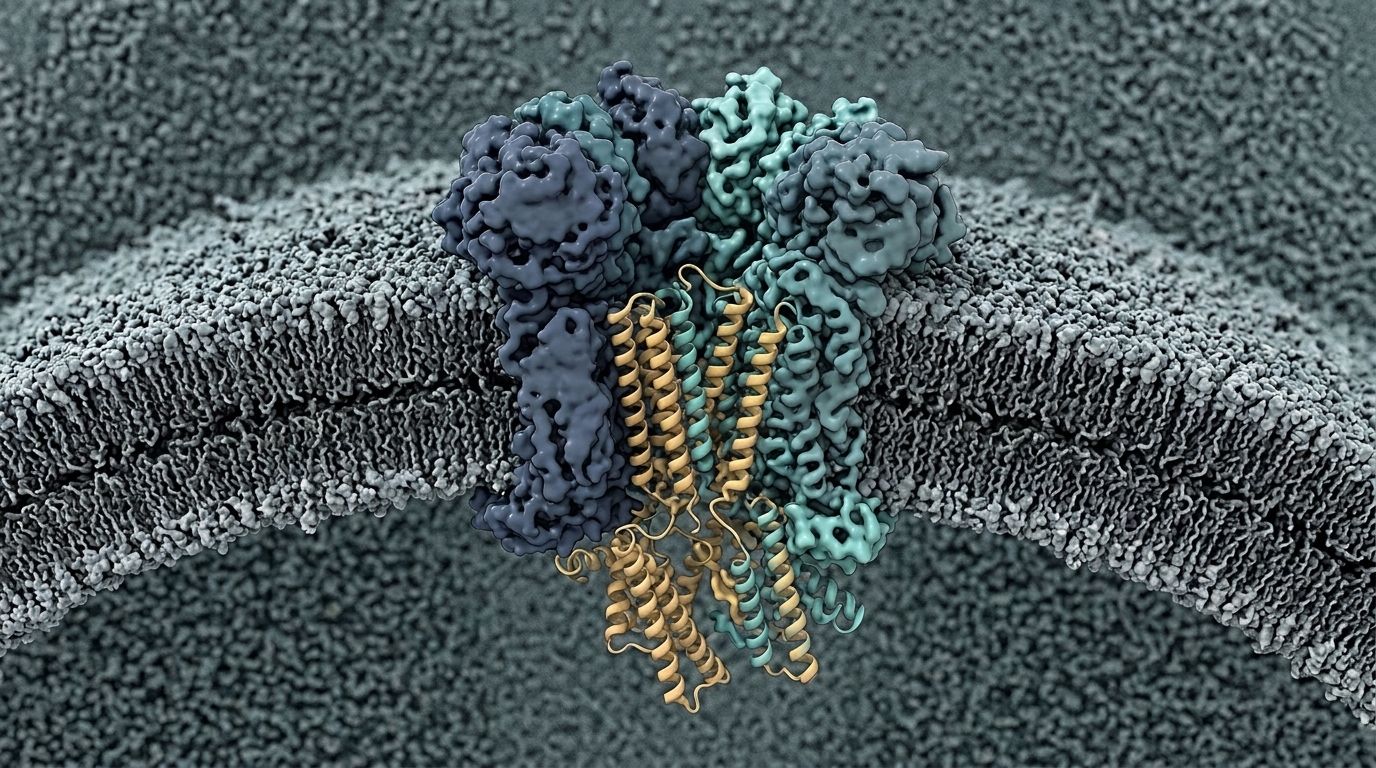
Nearly half of the roughly 5,000 human membrane proteins must assemble into stoichiometric complexes as part of their biogenesis at the endoplasmic reticulum membrane, yet how ER-resident biogenesis factors coordinate membrane insertion, folding and assembly has not been well understood. The new work, led by Marinda Stanton and Tino Pleiner, demonstrates that the EMC, already known as an insertase that pushes membrane segments into the ER membrane, additionally acts as a chaperone to facilitate the assembly of heterotrimeric voltage-gated calcium channels, or Cav channels. These channels consist of a pore-forming alpha-subunit, a cytosolic beta-subunit and, in some cases, an auxiliary alpha2delta1-subunit.
The team began by creating stable fluorescent reporter cell lines in which the calcium channel Cav1.2 alpha-subunit was fused to a green fluorescent protein alongside a separate red fluorescent protein used as a translation normalization control. The ratio of the two signals, measured by flow cytometry, reports on the post-translational stability of the alpha-subunit under different conditions. Knockdown or knockout of core EMC subunits reduced total EMC levels and led to strong degradation of the alpha-subunit, visible as a decrease in the GFP/RFP ratio and a reduction in full-length channel levels on western blots. Normal channel levels were restored when cells were treated with the proteasome inhibitor bortezomib, and the stabilized channels were highly ubiquitylated, indicating that the alpha-subunit is degraded by the ubiquitin-proteasome system in the absence of the EMC.
Because complete loss of the EMC would compromise its insertase activity as well, the researchers needed tools that could selectively perturb the complex’s chaperone function without touching its insertion work. Guided by a previously determined cryo-EM structure of the EMC bound to the Cav1.2 alpha-subunit and the beta3-subunit, they identified two interaction interfaces: an intramembrane interface between the channel alpha-subunit and EMC1, and a cytosolic interface between the channel beta-subunit and EMC8. Substituting three key residues on EMC8 that contact the beta-subunit produced a mutant that rescued total EMC levels and stabilized all known classes of insertase clients, proving that the substitutions did not interfere with EMC assembly or insertase activity, yet the same mutant strongly destabilized Cav1.2 alpha-subunit. A double mutant at the intramembrane interface on EMC1 behaved similarly, selectively destabilizing the calcium channel while leaving an EMC insertase client and control membrane proteins unaffected.
As an orthogonal test, the researchers immunized an alpaca with purified EMC complex and generated a toolbox of 16 distinct nanobody classes that specifically enrich the assembled EMC complex. Four of these classes, when expressed inside cells, selectively inhibited EMC’s chaperone function without affecting its insertase function, causing strong degradation of Cav1.2 alpha-subunit while the biogenesis of the insertase client SQS remained essentially unimpaired. A cryo-EM structure of the EMC bound to one inhibitory nanobody, NbG9, revealed that the nanobody contacts both EMC2 and EMC8 and sterically clashes with binding of the channel beta-subunit, explaining how it blocks the cytosolic chaperone interface directly.
The chaperone requirement was not limited to the cardiac channel. Stable reporter cell lines for the brain-specific P/Q-type channel Cav2.1 and the skeletal muscle-specific L-type channel Cav1.1, both coexpressed with the beta3-subunit, showed a similar dependence on EMC’s cytosolic chaperone interface for stability. All four human beta-subunit paralogs stabilized the Cav1.2 alpha-subunit and strongly stimulated EMC binding to it. Together with the high sequence conservation of EMC’s binding sites across Cav1 and Cav2 alpha-subunits, the authors argue that the chaperone role likely extends to Cav channels expressed throughout the human body.
To test whether these effects matter in an excitable cell type that endogenously expresses Cav1.2, the team turned to human induced pluripotent stem cell-derived cardiomyocytes carrying a fluorescent calcium indicator. Differentiating cardiomyocytes were transduced with either a control nanobody or the inhibitory anti-EMC nanobodies NbG9 or NbC10, and live-cell imaging captured their behavior. Both the percentage of beating cells and the beating rate per cell were dramatically and selectively reduced upon expression of the inhibitory nanobodies. Control cells showed synchronized, circulating calcium waves accompanying contraction, whereas inhibitory nanobody-treated cells showed very little activation of the calcium indicator. Staining of nonpermeabilized cells with an antibody against an extracellular epitope of Cav1.2 alpha-subunit showed that blocking EMC chaperone function reduced cell-surface levels of the channel, suggesting that channel loss contributed to the absence of calcium transients and the strongly reduced contraction.
The study also addressed when during biogenesis the EMC engages its client. Using a cell-free in vitro translation system built from rabbit reticulocyte lysate supplemented with human ER-derived microsomes, the researchers generated stalled ribosome-nascent chain complexes exposing two, four, six or 12 transmembrane segments of Cav1.2 alpha-subunit. Stable EMC recruitment was detectable once at least two transmembrane segments were membrane inserted, and EMC abundance increased further with the 12-transmembrane intermediate, suggesting that nascent chains must be of sufficient length to protrude from the lipid-filled cavity of the multipass translocon to allow efficient EMC engagement. A two-step immunoprecipitation confirmed that the EMC associates with Cav1.2-synthesizing ribosome-multipass translocon complexes, and sucrose gradient centrifugation showed that both EMC and the beta-subunit comigrate with stalled ribosome-nascent chain complexes in the ribosome fraction.
Strong EMC binding to the two-bundle, 12-transmembrane intermediate required the addition of purified beta-subunit, indicating engagement through the chaperone interfaces, and crosslinking experiments demonstrated a direct interaction between EMC8 and the beta3-subunit at the ER membrane while the stalled intermediate was being translated. The authors propose a model in which the EMC engages nascent calcium channel alpha-subunits cotranslationally to protect the exposed first transmembrane bundle, a folding intermediate vulnerable to nonspecific interactions, aggregation or recognition by quality control factors, thereby preventing wasteful premature degradation and promoting alpha-subunit folding and cotranslational assembly with a matching beta-subunit.
The work also revealed that EMC complexes containing EMC8 or its paralog EMC9 are not functionally equivalent: only EMC8-containing complexes support calcium channel assembly because only EMC8 can bind Cav beta-subunits, and the corresponding interface residues are not preserved in EMC9. Comparative quantitative proteomics of EMC8-knockout cells further identified several endogenous multipass membrane proteins, including multiple transporters, as sensitive to EMC8 loss, though the authors note that future work must establish whether these proteins directly interact with the EMC and require its chaperone function. The researchers suggest that the validated function-separating mutations and inhibitory nanobodies will facilitate the search for additional chaperone clients and note that the role of EMC’s chaperone function in viral membrane protein biogenesis constitutes an important future research direction.
Subject of Research: Cotranslational chaperone function of the human ER membrane protein complex in voltage-gated calcium channel assembly
Article Title: EMC chaperone activity is required for cotranslational calcium channel assembly
Article References: Stanton, M., Scheuing, C. E., Biswal, M., Singal, B., Agarwal, M., Vargas, G. D., Gao, A., Brademan, D. R., Hüttenhain, R., Gifford, C. A., & Pleiner, T. (2026). EMC chaperone activity is required for cotranslational calcium channel assembly. Nature Structural & Molecular Biology. https://doi.org/10.1038/s41594-026-01916-2
Image Credits: AI Generated
DOI: 10.1038/s41594-026-01916-2
Keywords: EMC, chaperone, calcium channels, endoplasmic reticulum, membrane protein biogenesis, cardiomyocytes, nanobodies, cryo-EM, ribosome, multipass translocon, Cav1.2, proteasome
News Source: Drew Townsend. (November 6, 2026). Cellular chaperone EMC found essential for building calcium channels. Scienmag.