A specialized population of immune cells that takes up permanent residence in the body’s barrier tissues is drawing renewed attention as both a marker of anti-tumor immunity and a target for next-generation cancer therapies. In a review published in Cancer Immunology, Immunotherapy, researchers Yizhou Yuan, Pengxu Qian and Penglei Jiang synthesize current knowledge on tissue-resident memory T cells, known as TRM cells, and their role in cancer immunosurveillance and immunotherapy. The open access article traces how these cells develop, how they maintain their position within tissues, and how their presence inside tumors relates to patient outcomes.
TRM cells are a subset of memory T cells defined by long-term residency in peripheral non-lymphoid tissues. Rather than circulating through the bloodstream, they embed themselves at barrier sites such as the skin, intestines, lungs and liver, where they provide frontline immune surveillance. This positioning allows them to respond rapidly to threats at the surfaces where the body first encounters the outside world.
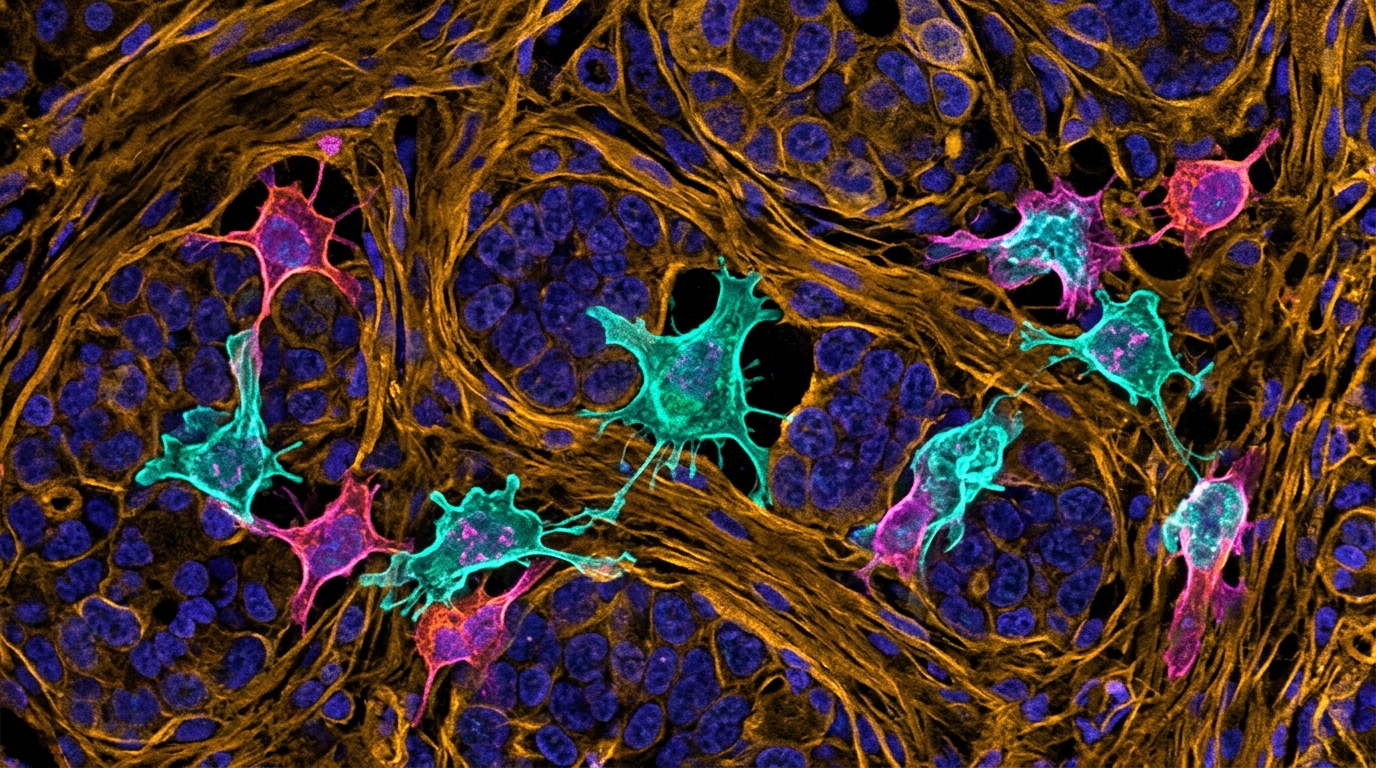
The review highlights accumulating evidence that tumor-infiltrating lymphocytes carrying the canonical TRM markers CD69 and CD103 can be found across diverse cancers. The abundance and functional states of these cells have been linked to anti-tumor immunity and reported as predictors of favorable clinical outcomes. The authors emphasize that tumor-associated TRM-like TILs are heterogeneous: their phenotypic features and functional states vary, and their relationships with bystander and exhausted T cell populations differ across cancer types.
A central theme is the differentiation trajectory that transforms naïve T cells into TRM cells. The authors delineate core phenotypic markers and trace developmental pathways that lead to tissue residency, noting that these pathways differ between tissues. Understanding how a naïve T cell commits to a tissue-resident fate is considered key to interpreting tumor immune landscapes and designing interventions that exploit this biology.
The molecular machinery enforcing TRM residency and function is described as a layered network. Transcription factor and epigenetic programs establish the resident state, cytokine cues shape cell behavior, and metabolic reprogramming toward lipid oxidation supports energy needs within the tumor microenvironment. The review also integrates evidence on multicellular crosstalk, in which TRM cells exchange signals with neighboring cells, collectively stabilizing their residency and function inside tumors.
Because TRM-like tumor-infiltrating lymphocytes are heterogeneous, the authors examine their abundance, phenotypic features and functional states while considering how they relate to bystander T cells, which are present in tumors but not tumor-specific, and to exhausted T cells, which have lost effector capacity through chronic antigen stimulation. Distinguishing genuinely anti-tumor TRM populations from these neighboring states is presented as essential for interpreting single-cell analyses and identifying which patients may benefit from immunotherapy.
The translational potential of TRM cells occupies the final section. The authors evaluate their use as predictive biomarkers for immune checkpoint blockade, therapies that release molecular brakes on T cells. The presence and state of TRM-like cells within tumors may help identify which patients respond to checkpoint inhibitors. Beyond biomarkers, the review positions TRM cells as engineering targets for next-generation adoptive cell therapies and cancer vaccines. Adoptive cell therapies could in principle be designed to confer tissue-resident properties that improve persistence within tumors, while vaccines might be tailored to drive differentiation of vaccine-primed T cells toward a tissue-resident phenotype suited to patrolling barrier tissues and tumor sites.
The authors frame the review as a mechanism-to-bedside framework, connecting fundamental tissue immunity with the practical demands of cancer immunotherapy and identifying where future work must focus to translate that understanding into improved patient outcomes.
Subject of Research: Tissue-resident memory T cells in cancer immunosurveillance and immunotherapy
Article Title: Tissue-resident memory T cells: resilient sentinels in cancer immunosurveillance and immunotherapy
Article References: Yuan, Y., Qian, P., & Jiang, P. (2026). Tissue-resident memory T cells: resilient sentinels in cancer immunosurveillance and immunotherapy. Cancer Immunology, Immunotherapy. https://doi.org/10.1007/s00262-026-04586-7
Image Credits: AI Generated
DOI: 10.1007/s00262-026-04586-7
Keywords: tissue-resident memory T cells, TRM cells, tumor-infiltrating lymphocytes, cancer immunotherapy, immune checkpoint blockade, adoptive cell therapy, CD69, CD103, tumor microenvironment, biomarkers, cancer vaccines, Tissue-resident
News Source: Nathaniel Bowman. (November 6, 2026). Tissue-resident memory T cells emerge as key sentinels and targets in cancer immunotherapy. Scienmag.