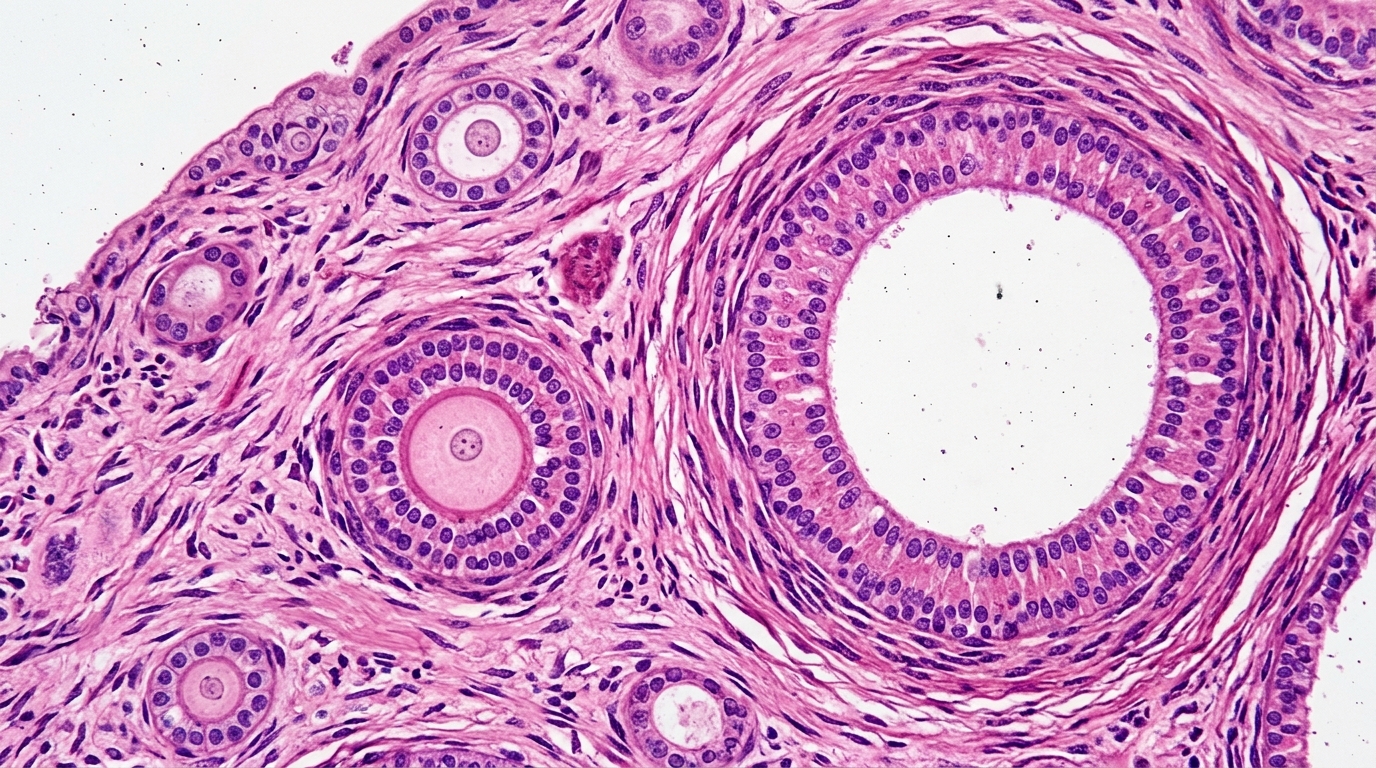
A systematic review of 26 original studies has concluded that polymorphisms in the KISS1 gene—the gene that encodes kisspeptin, a neuropeptide central to reproductive hormone control—may contribute to the development of polycystic ovary syndrome, one of the most common endocrine disorders among women of reproductive age. The review, published in the Egyptian Journal of Medical Human Genetics, synthesizes evidence from populations spanning Saudi Arabia, Iraq, Sri Lanka, China, India, Turkey, and beyond, and identifies rs4889 as the most frequently studied and most consistently reported variant associated with the condition.
Polycystic ovary syndrome is the leading cause of anovulatory infertility in women of reproductive age. It is characterized by a broad spectrum of clinical manifestations, including reproductive dysfunction arising from hyperandrogenism, ovulatory abnormalities, and altered gonadotropin secretion, along with metabolic disturbances. A significant proportion of women with the syndrome exhibit insulin resistance, which often contributes to or coexists with obesity. The syndrome is thought to arise from a complex interplay of neuroendocrine, metabolic, and ovarian dysfunction, and various hypotheses have implicated genetic predisposition, epigenetic modifications, and environmental influences in its development and progression.
The KISS1 gene encodes a family of polypeptides known as kisspeptins, ranging from Kp-54 to shorter forms such as Kp-14, Kp-13, and Kp-10. The gene is primarily expressed in the hypothalamus, specifically within the arcuate nucleus, the anteroventral periventricular nucleus, and the periventricular nucleus, all of which play essential roles in reproductive neuroendocrine regulation. These peptides exert their biological effects by binding to a G-protein-coupled receptor known as GPR54, or Kiss1R. The discovery of the kisspeptin/Kiss1R signaling system marked a significant advancement in reproductive neuroendocrinology, particularly for its role in the initiation and regulation of puberty, and kisspeptin is now recognized as a key regulator of the hypothalamic–pituitary–gonadal axis.
In the context of polycystic ovary syndrome, dysregulation of the kisspeptin–GPR54 signaling pathway may contribute to altered pulsatility of gonadotropin-releasing hormone, particularly in the presence of elevated androgen levels. This disruption may underlie the neuroendocrine abnormalities commonly observed in the syndrome, such as elevated luteinizing hormone levels and impaired follicular development. Kisspeptin also plays a role in stimulating the secretion of follicle-stimulating hormone from the pituitary, and the identification of KISS1R mutations in patients with idiopathic hypogonadotropic hypogonadism has further fueled interest in the role of kisspeptin signaling in reproductive endocrinology.
The review’s authors conducted a comprehensive literature search across PubMed, Scopus, and Web of Science, using keywords and Medical Subject Headings related to polycystic ovary syndrome, KISS1, and polymorphism. The search covered studies published in English from 2010, the year of the first human KISS1 gene publication, through 2025. Following PRISMA 2020 guidelines, the authors screened 346 records, excluded 276 after title and abstract review, assessed 70 full-text articles, and ultimately included 26 studies in the qualitative synthesis. The review did not apply a formal risk-of-bias assessment tool, a limitation the authors acknowledged.
The analysis identified several KISS1 polymorphisms—most notably rs4889 C>G, rs372790354 G>A, rs12998 G>A, and rs587777844—associated with polycystic ovary syndrome susceptibility, hormonal dysregulation including elevated luteinizing hormone, testosterone, and altered LH/FSH ratios, and metabolic markers. Among these, rs4889 was the most frequently studied variant, reported across multiple populations including Saudi Arabia, Iraq, Sri Lanka, and China. Population-specific differences were noted in the distribution and significance of individual SNPs, suggesting possible ethnic variation in genetic risk. Kisspeptin levels were also variably associated with reproductive hormones such as Anti-Müllerian Hormone and estradiol, but less consistently with metabolic markers like insulin and HOMA-IR.
Several individual studies within the review illustrate the range of findings. Albalawi and colleagues, in a 2018 case-control study of 28 patients and 30 controls, found that the GG genotype of rs4889 was significantly more frequent in the patient population and that patients carrying this genotype had higher levels of follicle-stimulating hormone, kisspeptin, and obesity measures. Farsimadan and colleagues, analyzing 770 blood samples from 385 patients and 385 controls, found substantial associations between the condition and the variants rs12998 G>A and rs4889 C>G, though not with rs35431622 A>G. In Iraq, Musawi and colleagues reported in 2022 that rs372790354 G>A and rs4889 G>A might be connected to the pathogenesis of the syndrome and raise serum levels of luteinizing hormone, with patients carrying the AA genotype showing greater kisspeptin levels.
Not all genetic associations were consistent across populations. Branavan and colleagues, studying 55 patients and 110 controls in Sri Lanka, found no appreciable difference in SNP frequency between patients and controls for any of the detected variants, concluding that genetic differences in the GPR54 and KISS1 genes seem unlikely to cause the syndrome in Sri Lankan women starting in adolescence. Meanwhile, a study of 160 individuals in Iraq focusing on rs35431622 (T>A) found that the AT and TT genotypes were substantially more common in patients, with odds ratios of 3.52 and 9.63 respectively, and that carriers showed significantly lower HDL levels and higher levels of insulin, glucose, HOMA-IR, cholesterol, and triglycerides, suggesting the T allele may be involved in both disease risk and linked metabolic disorders.
The review also examined circulating kisspeptin levels. Thirteen of fifteen investigations reported that women with the syndrome had significantly higher serum or cellular kisspeptin levels than healthy controls, while one study found no significant difference and another did not include a healthy control group. Kisspeptin levels and luteinizing hormone concentrations were positively correlated in six of fifteen studies. Five of fifteen studies identified a statistically significant positive correlation between elevated kisspeptin levels and increased androgen concentrations, specifically DHEAS and total testosterone. However, the authors caution that most existing studies are cross-sectional in design, which limits the ability to draw causal inferences, and that the lack of dynamic endocrine assessments such as GnRH stimulation tests further constrains interpretation of kisspeptin–GnRH–LH axis function.
The authors emphasize that the field faces significant methodological shortcomings. Genetic association data from 11 studies with a pooled sample of 3,556 persons showed that none of the literature included independent replication cohorts, and 81.8 percent of the assessed studies had insufficient statistical power due to small sample sizes. No studies employed genome-wide approaches such as genome-wide association studies, limiting the capacity to identify novel genetic loci. The authors call for large-scale, phenotype-stratified, and functionally validated studies to confirm the associations and explore their clinical utility in diagnosis and management, noting that the genetic architecture of the syndrome is likely at least partially population-specific and cautioning against generalizing results across ethnic groups without appropriate validation.
Subject of Research: KISS1 gene polymorphisms and kisspeptin signaling in the pathogenesis of polycystic ovary syndrome
Article Title: Decoding the KISS1 gene: unraveling KISS1 polymorphisms in the pathogenesis of polycystic ovarian syndrome (PCOS)
Article References: Shah, B. V., Medithi, S., & Muley, A. (2026). Decoding the KISS1 gene: unraveling KISS1 polymorphisms in the pathogenesis of polycystic ovarian syndrome (PCOS). Egyptian Journal of Medical Human Genetics, 27(1), Article 73. https://doi.org/10.1186/s43042-026-00899-5
Image Credits: AI Generated
DOI: 10.1186/s43042-026-00899-5
Keywords: KISS1 gene, kisspeptin, polycystic ovary syndrome, PCOS, genetic polymorphism, rs4889, reproductive endocrinology, GnRH pulsatility, hyperandrogenism, insulin resistance, systematic review, women's health
News Source: Juliet Wilcox. (November 6, 2026). KISS1 gene variants linked to PCOS risk across multiple populations, review finds. Scienmag.