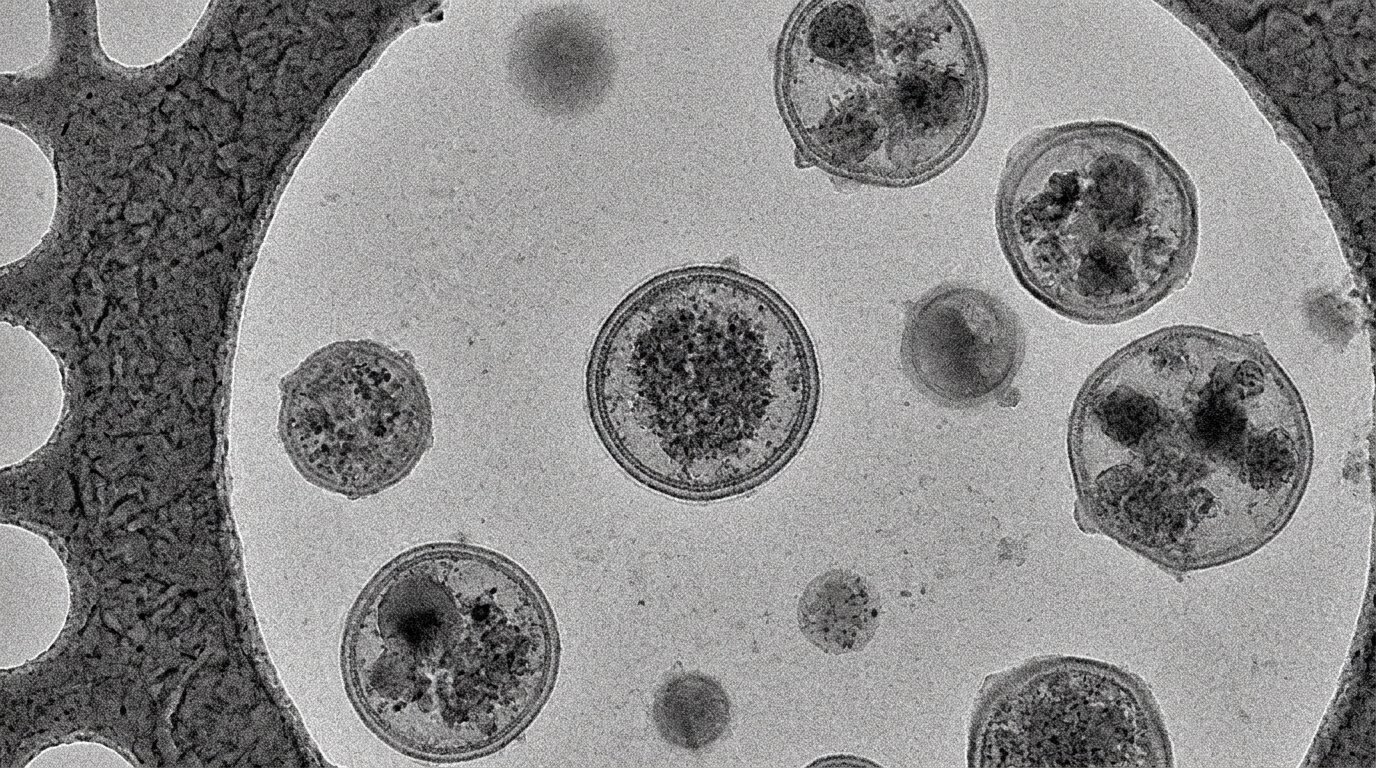
Nanoparticles harvested from the aerial herbage of Houttuynia cordata, a plant long used in traditional medicine, suppressed non-small cell lung cancer tumors in mice when taken by mouth, and researchers have now mapped which of their molecular cargos appear to drive the effect.
The work tackles a stubborn problem in plant-derived nanomedicine. Exosome-like nanoparticles from plants carry a mixture of proteins, microRNAs, and metabolites, all of which could in principle influence tumor biology across species boundaries. That richness has made it difficult to say which cargo component drives which downstream effect. To cut through the ambiguity, the researchers developed a prioritization strategy called Multi-omics Convergence Screening, or MOCS, a transparent, rule-based framework that anchors predicted microRNA and metabolite target relationships to differentially expressed proteins measured directly in tumor tissue from the same treatment cohort.
The experimental pipeline was thorough. The team evaluated the aerial-herbage particles in three non-small cell lung cancer cell lines, A549, H1975, and H520, and in a subcutaneous A549 xenograft model in which mice received oral gavage at 10, 20, or 30 milligrams of protein per kilogram every other day for 18 days. Cargo profiling combined label-free proteomics, small RNA sequencing, and headspace SPME-GC-MS metabolomics, while tumor tissue was analyzed with 4D-DIA proteomics. Validation steps included dual-luciferase reporter assays, an eight-gene RT-qPCR panel, molecular docking, molecular dynamics simulations, a drug affinity-responsive target stability assay, and Western blotting, all anchored to The Cancer Genome Atlas lung adenocarcinoma cohort of 517 tumors and 58 normal samples.
The screening converged on two complementary candidate modules. The first is a microRNA-dominant module involving the genes TRPC7, ABL2, SENP1, and CXCL14. The second is a metabolite-associated module involving SHBG, ADH1C, and FABP3. Reporter experiments confirmed that two plant microRNAs, hco-miR166e-3p and hco-miR447a-3p, directly suppress the 3-prime untranslated regions of TRPC7 and ABL2 respectively in a seed-dependent manner. The wild-type plus mimic condition showed a fold change of 0.73 relative to wild-type plus negative control, with a t-statistic of -16.51, a P value below 0.001, and a Cohen’s d of -10.44.
The eight-gene RT-qPCR panel supported the predicted transcriptional directionality for most candidates. The panel included a built-in negative control, PRKAR1B, a gene that MOCS was expected not to implicate.
On the metabolite side, the volatile compound beta-caryophyllene emerged as a candidate ligand for SHBG, sex hormone-binding globulin. Computational docking placed the molecule within the SHBG ligand pocket with a binding energy of -8.526 kilocalories per mole, and molecular dynamics simulations showed a stable protein-ligand complex. The DARTS assay, which detects ligand binding by measuring whether a small molecule stabilizes its target protein against enzymatic digestion, showed concentration-dependent protection of SHBG from proteinase K. Western blotting independently confirmed concentration-dependent SHBG accumulation.
Human relevance was probed through The Cancer Genome Atlas lung adenocarcinoma cohort. Both TRPC7 and SHBG were significantly reduced in tumor tissue compared with normal lung tissue, with Mann-Whitney P values below 0.001 for both genes. When the two genes were combined into a logistic classifier, the model achieved an area under the curve of 0.774, with a 95 percent confidence interval of 0.718 to 0.826, estimated using a DeLong bootstrap procedure with 2000 resamples. Gene-set enrichment analysis linked TRPC7 to proliferative Hallmark programs including G2M, E2F, and Myc, while SHBG connected to metabolism-related programs such as oxidative phosphorylation, bile-acid metabolism, and fatty-acid metabolism.
A key concern with any multi-omics prioritization scheme is whether its rankings are artifacts of arbitrary parameter choices. The researchers addressed this by running MOCS across a grid of 27 different parameter-perturbation combinations. The top-five candidate lists showed a median Jaccard similarity of 0.750 across the grid, and SHBG was recovered in 27 of 27 combinations.
They position MOCS as a general framework for prioritizing cargo-target relationships in medicinal nanoparticles. Because the findings rest on xenograft models, cell lines, computational predictions, and retrospective human cohort correlations, the candidate mechanisms remain hypotheses to be tested rather than established therapeutic pathways, and the study does not establish clinical efficacy in patients. Still, the convergence of reporter confirmation, target-stability biochemistry, and human tumor expression data provides a well-triangulated starting point for a class of nanomedicines whose complexity has long outpaced the tools used to study them.
Subject of Research: Multi-omics screening of antitumor cargo mechanisms in orally administered Houttuynia cordata-derived exosome-like nanoparticles against non-small cell lung cancer
Article Title: Multi-omics convergence screening reveals dual-cargo antitumor mechanisms of orally administered Houttuynia cordata-derived exosome-like nanoparticles
Article References: Zhu, H., Zhang, N., Tang, X., Li, W., Yang, F., Chen, Q., Gao, T., Chang, M., & He, W. (2026). Multi-omics convergence screening reveals dual-cargo antitumor mechanisms of orally administered Houttuynia cordata-derived exosome-like nanoparticles. Cancer Nanotechnology. https://doi.org/10.1186/s12645-026-00419-5
Image Credits: AI Generated
DOI: 10.1186/s12645-026-00419-5
Keywords: exosome-like nanoparticles, Houttuynia cordata, non-small cell lung cancer, multi-omics, microRNA, metabolomics, MOCS, SHBG, TRPC7, oral delivery, xenograft model, cancer nanotechnology
News Source: Nathaniel Bowman. (November 6, 2026). Plant Nanoparticles That Fight Lung Tumors: Multi-Omics Screen Pinpoints Dual Cargo Mechanisms. Scienmag.