Pulsed low-dose-rate radiotherapy (PLDR) is a reirradiation strategy designed to spare normal tissue in patients with refractory solid tumors, yet its immunomodulatory mechanisms have remained poorly understood. A new study, published in Cell Biology and Toxicology, now reports that PLDR remodels the tumor immune microenvironment and is associated with altered crosstalk between SPP1-positive tumor-associated macrophages and GZMK-positive CD8-positive T cells, findings that may also carry prognostic weight in rectal cancer.
The researchers retrospectively analyzed clinical outcomes and treatment-related adverse events in 16 patients with refractory solid tumors treated with PLDR. To probe mechanism, they turned to MC38 tumor-bearing mice, comparing PLDR with conventional radiotherapy (cRT) under biologically equivalent dose conditions and performing single-cell RNA sequencing to characterize treatment-associated remodeling of the tumor immune microenvironment. Multiplex immunofluorescence staining and spatial analysis were then conducted in an independent cohort of 114 patients with rectal cancer to evaluate the clinical relevance of the identified immune features.
In the mouse models, PLDR achieved local tumor control comparable to that of cRT while reducing treatment-related toxicity and improving overall survival. These results position PLDR as a strategy that can match conventional dosing in efficacy against the tumor while easing the burden on healthy tissue, a balance that matters greatly when patients have already received prior courses of radiation.
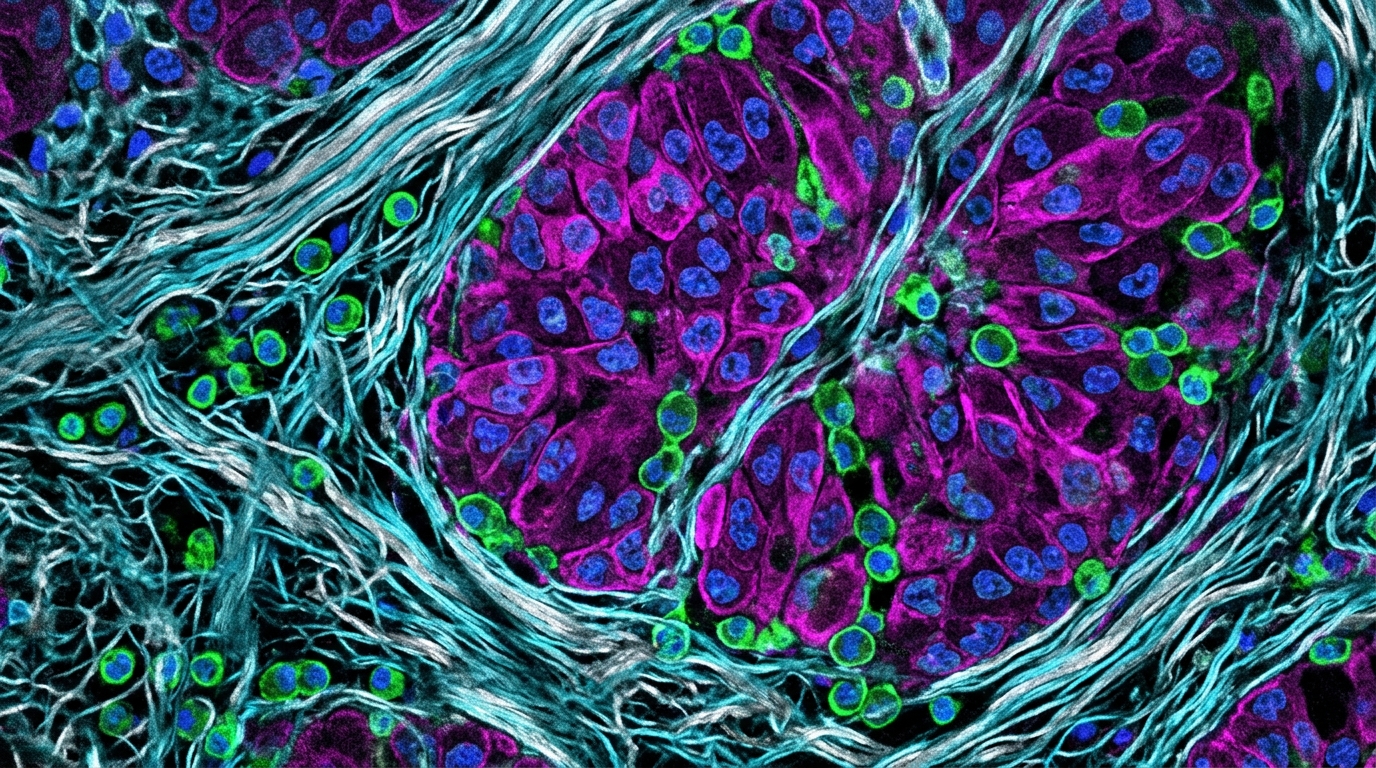
The single-cell analyses focused on the combination-treatment setting, in which radiotherapy was paired with immunotherapy using an anti-PD-1 antibody combined with the targeted agent anlotinib, a regimen abbreviated ITT. Compared with cRT plus ITT, PLDR plus ITT was associated with enrichment of Gzmk-positive CD8-positive T cells and reduced abundance of Spp1-positive tumor-associated macrophages. The treatment was also associated with altered cell–cell communication between these populations.
To test whether these immune features matter in patients, the team examined the independent rectal cancer cohort using multiplex immunofluorescence and spatial analysis. There, the spatial distance between SPP1-positive TAMs and GZMK-positive CD8-positive T cells was independently associated with overall survival. In other words, how closely these two cell types sit to one another within the tumor tissue correlated with how long patients lived, independent of other factors assessed in the analysis.
The authors conclude that the interaction between SPP1-positive TAMs and GZMK-positive CD8-positive T cells may be closely associated with PLDR-related remodeling of the tumor immune microenvironment and may also serve as a potential prognostic biomarker in rectal cancer.
Several limitations frame these findings. The clinical arm was retrospective and small, involving 16 patients with refractory solid tumors, so the results describe associations in a selected group rather than outcomes from a randomized comparison. The mechanistic evidence comes from a mouse model, and while the MC38 experiments were conducted under biologically equivalent dose conditions, translating single-cell findings from mice to humans requires caution. The rectal cancer cohort was independent and larger, at 114 patients, but it was used to evaluate spatial immune features rather than to test PLDR itself.
The article was shared ahead of the final Version of Record, is citable with a permanent DOI, and remains subject to further edits, with all legal disclaimers applying.
Subject of Research: How pulsed low-dose-rate radiotherapy alters the tumor immune microenvironment and macrophage–T cell crosstalk
Article Title: Pulsed Low-dose-rate Radiotherapy Remodels the Tumor Immune Microenvironment and is Associated With Crosstalk Between SPP1⁺ tumor-associated macrophages and GZMK⁺ CD8⁺ T cells
Article References: Zhou, Z., Hong, Y., You, J., Que, K., Lan, Y., Lin, Y., Peng, J., Lin, Z., Li, L., Han, L., & Xu, B. (2026). Pulsed Low-dose-rate Radiotherapy Remodels the Tumor Immune Microenvironment and is Associated With Crosstalk Between SPP1⁺ tumor-associated macrophages and GZMK⁺ CD8⁺ T cells. Cell Biology and Toxicology, 42(1), Article 133. https://doi.org/10.1007/s10565-026-10324-7
Image Credits: AI Generated
DOI: 10.1007/s10565-026-10324-7
Keywords: pulsed low-dose-rate radiotherapy, reirradiation, tumor immune microenvironment, SPP1 macrophages, GZMK CD8 T cells, single-cell RNA sequencing, rectal cancer, anlotinib, anti-PD-1, overall survival, toxicity, immunotherapy
News Source: Nathaniel Bowman. (November 6, 2026). Pulsed Low-Dose-Rate Radiotherapy Reshapes Immune Cells Around Tumors. Scienmag.