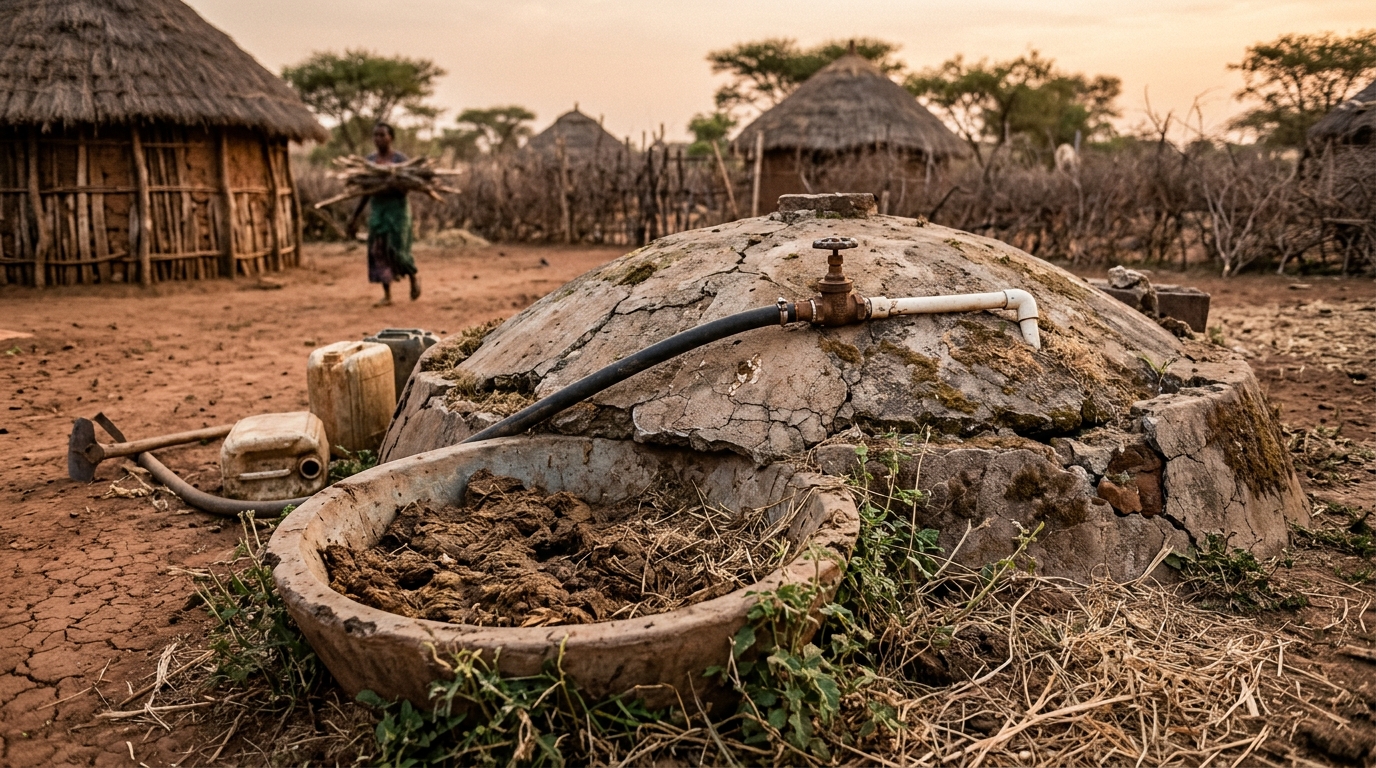
More than half of Ethiopia’s small-scale household biogas plants are not working, according to a field study published in Energy, Sustainability and Society. Of 243 biogas plants surveyed across the country, 53.1% were not operational, 19.8% were partially operational and only 27.1% were fully functional. The findings come despite a national programme that had installed 46,160 household biogas systems by 2023, all operating at varying levels.
The study, led by Henok Habte with Mihret Dananto and Shemelis Nigatu, assessed the functionality of small-scale biogas plants in Ethiopia, focusing on technical flaws and challenges as well as factors that could improve rural energy use. Biogas is considered essential for achieving sustainable development and addressing energy poverty, environmental damage and health problems in the country, making the poor performance of installed units a significant concern for the National Biogas Programme of Ethiopia.
Where plants did work, the benefits were measurable. Depending on the size of the digester and household cooking habits, biogas reduced firewood use by 40 to 65%. The average methane content of the gas produced was 57.5%, ranging from 54.3% in Ana Lemo to 60.3% in Damot Woyde, indicating that the plants were capable of producing gas of usable quality when they functioned properly.
The researchers identified the main operational challenges as low awareness among users, shortages of feedstock, poor maintenance, incomplete construction and a lack of support. These problems appear to be compounded by weak follow-up services: only 27.2% of users received post-construction training, while 68.3% did not receive any support at all after their plants were built.
The authors argue that improving the operation of biogas systems requires a combination of interventions, including awareness campaigns, technical training, financial aid and innovative designs suited to local agroecological conditions. They also call on policymakers to develop tailored strategies and ensure robust post-installation support, suggesting that the current gaps in training and maintenance services are central to the high failure rate observed in the field.
Subject of Research: Functionality of small-scale household biogas plants in Ethiopia
Article Title: Functionality of small-scale biogas plants in Ethiopia: a field study on technical faults, challenges, and enabling factors
Article References: Habte, H., Dananto, M., & Nigatu, S. (2026). Functionality of small-scale biogas plants in Ethiopia: a field study on technical faults, challenges, and enabling factors. Energy, Sustainability and Society. https://doi.org/10.1186/s13705-026-00618-3
Image Credits: AI Generated
DOI: 10.1186/s13705-026-00618-3
Keywords: biogas, Ethiopia, renewable energy, rural energy, methane, firewood, National Biogas Programme, digester, maintenance, energy poverty, Functionality, small-scale
News Source: Denise Maddox. (November 5, 2026). Most Ethiopian household biogas plants are failing, field study finds. Scienmag.