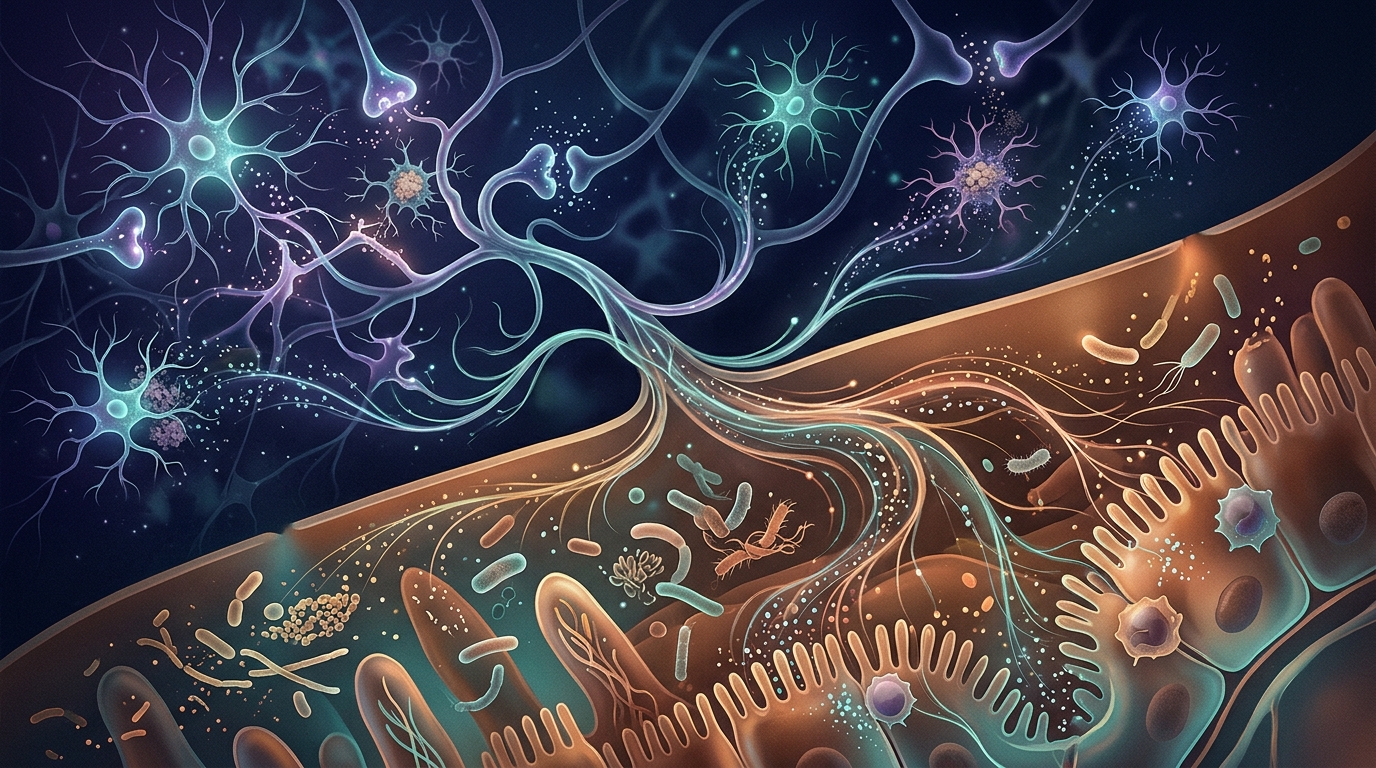
A review integrates gut microbiota and neuroimmune interactions within a stage-oriented conceptual framework for understanding systemic contributions to Alzheimer’s disease pathophysiology. This conceptual framework encompasses disease susceptibility, pathological initiation, amplification, and chronic progression, while emphasizing that these stages represent overlapping biological processes rather than established clinical categories and that current human evidence remains predominantly associative.
In patients with Alzheimer’s disease and mild cognitive impairment, gut microbial dysbiosis and alterations in microbial functional output have been reported, although current human evidence remains predominantly associative. Alzheimer’s disease is a progressive neurodegenerative disorder characterized by cognitive decline and distinct neuropathological and biological alterations, including amyloid-beta deposition, tau pathology, synaptic dysfunction, and neuronal loss. Increasing evidence suggests that dysregulated neuroimmune responses are closely associated with Alzheimer’s disease progression and may provide an important interface through which the gut microbiota influences brain homeostasis.
Mechanistic possibilities come from experimental and animal studies rather than confirmed causal findings in humans. Experimental and animal studies suggest that microbial structural components, microbiota-derived metabolites, and long-distance communication signals, including bacterial extracellular vesicles and microbial nucleic acids, may modulate intestinal barrier integrity, peripheral immunity, cerebrovascular interfaces, and central glial responses, thereby potentially influencing amyloid-beta clearance, tau pathology, and synaptic function.
Conversely, the review describes how disease-related biological changes may affect the intestinal ecological niche, supporting a bidirectional gut microbiota–neuroimmune regulatory network. Specifically, Alzheimer’s disease-associated alterations in neuroimmune regulation, autonomic signaling, neuroendocrine function, and mucosal immunity may reshape the intestinal ecological niche and further modify both microbial composition and microbial function.
Beyond mapping pathophysiological interactions, the review evaluates a range of microbiota-based interventions, including dietary strategies, prebiotics, probiotics, psychobiotics, postbiotics, fecal microbiota transplantation, next-generation probiotics, engineered microorganisms, and metabolite-targeted approaches. Each of these candidate approaches is evaluated with explicit consideration of its distinct evidence base, translational limitations, and safety concerns. Overall, while gut microbiota–neuroimmune crosstalk provides an integrative framework for understanding systemic contributions to Alzheimer’s disease pathophysiology, establishing causal relevance in humans will require longitudinal studies, mechanistic validation, and population-stratified clinical trials.
Subject of Research: Bidirectional gut microbiota–neuroimmune crosstalk and candidate microbiota-based interventions in Alzheimer's disease pathophysiology
Article Title: Mechanistic roles and therapeutic potential of gut microbiota–neuroimmune crosstalk in the development and progression of Alzheimer's disease
Article References: Fang, X., Xi, O., Yang, R., Tang, S., Wu, J., & Dong, X. (2026). Mechanistic roles and therapeutic potential of gut microbiota–neuroimmune crosstalk in the development and progression of Alzheimer's disease. Frontiers in Microbiology, 17, Article 1958902. https://doi.org/10.3389/fmicb.2026.1958902
Image Credits: AI Generated
DOI: 10.3389/fmicb.2026.1958902
Keywords: Alzheimer's disease, gut microbiota, neuroimmune crosstalk, mild cognitive impairment, gut microbial dysbiosis, amyloid-beta, tau pathology, microbiota-based interventions, Mechanistic, roles, therapeutic, potential
News Source: Diana Fleming. (November 3, 2026). Review assesses tentative gut microbiota and neuroimmune roles in Alzheimer’s disease. Scienmag.