


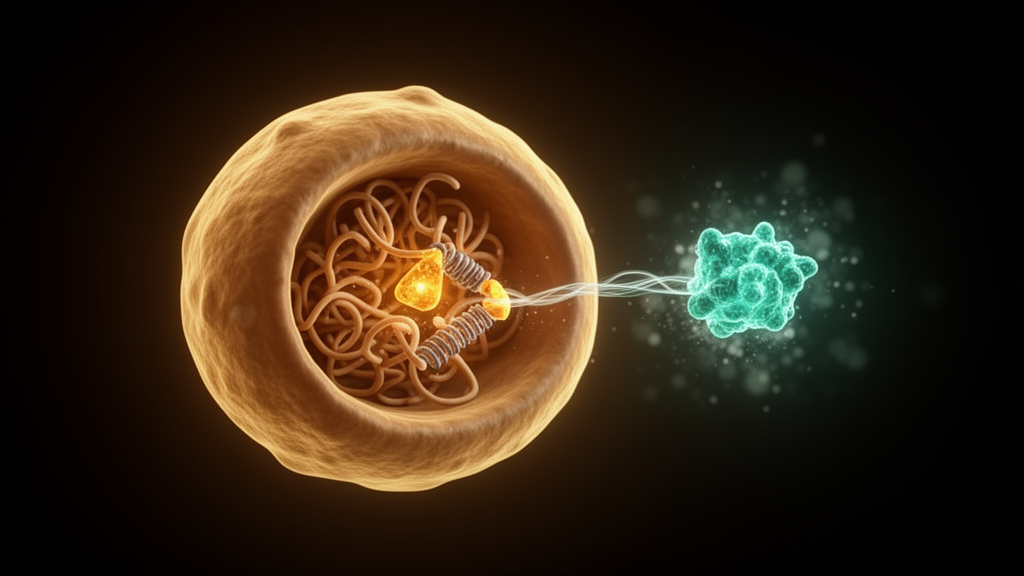
A single chemical tag on histone proteins turns out to be a decisive switch for the main antioxidant enzyme that the filamentous fungus Neurospora crassa uses to defend itself against hydrogen peroxide, according to a study published in Current Genetics on 21 August 2025. The research, carried out by Yupeng Zhao, Qun He, and Muqun Yu, shows that when the fungus loses the ability to place trimethyl marks on the fourth lysine residue of histone H3, expression of the catalase-3 gene collapses and the organism becomes markedly more vulnerable to oxidative stress. When the methyltransferase responsible for that mark is overproduced, catalase-3 output rises and the fungus grows better on plates laced with hydrogen peroxide. The finding adds a chromatin-based layer to the known control circuitry of a gene whose regulation has already proven to be unusually intricate.
Reactive oxygen species arise constantly from normal metabolism and redox reactions in cells. They include hydroxyl radicals, superoxide anions, hydrogen peroxide, and singlet oxygen, and they participate in processes ranging from signal transduction to immune responses and metabolism. Because of their high chemical reactivity, however, an excess can attack proteins, nucleic acids, and lipids, producing cellular damage and oxidative stress that in other organisms has been linked to disease and cancer. Cells therefore depend on enzymatic antioxidants, among them superoxide dismutase, catalase, glutathione peroxidase, peroxiredoxin, and thioredoxin reductase, to keep reactive oxygen species in check and preserve cellular integrity.
Catalases decompose hydrogen peroxide into water and oxygen and are found across many species. Neurospora crassa possesses two major catalases, CAT-1 and CAT-3, both large-subunit monofunctional catalases. CAT-1 is highly expressed and accumulates in conidia, where it serves as the primary catalase protecting against oxidative and light-induced stress and supporting spore survival. CAT-3 behaves differently: it is the predominant catalase induced and accumulated during the exponential hyphal growth phase, responding to reactive oxygen species and to stresses such as exogenous hydrogen peroxide, paraquat, CaCO3, and heat shock. The antioxidant function of CAT-3 is described as indispensable and not compensated by other catalases, which makes understanding how its gene is switched on and off a matter of genuine biological consequence for the organism.
Earlier work from the same group had already mapped several transcriptional controls acting on cat-3. A five-kilobase heterochromatin region adjacent to the cat-3 promoter, mediated by the protein DIM-5, partially suppresses the gene. Hydrogen peroxide treatment induces cat-3 expression by enriching recruitment of the acetyltransferase GCN5 at the promoter through the transcription factor CPC-1/GCN4, raising histone H3 acetylation levels. CPC-1 is antagonized by the histone variant H2A.Z, whose deposition depends on the INO80 family of chromatin remodelers and which suppresses cat-3 expression. Histone deacetylase 2, HDA-2, establishes a permissive chromatin environment by modulating H4 acetylation, facilitating pre-initiation complex assembly and counteracting the repressive effect of H2A.Z. More recently, the transcription factor VIB-1 was found to activate cat-3 by promoting pre-initiation complex assembly and evicting H2A.Z from the promoter. What remained poorly understood was whether epigenetic modifications beyond histone acetylation contribute to cat-3 expression.
The new study focused on histone H3 trimethylation at lysine 4, one of the most studied histone modifications and one long associated with transcription initiation. The enzymes that place H3K4 methylation are conserved across eukaryotes from yeast to mammals. All carry a canonical SET methyltransferase domain and require assembly with conserved core components, WDR5, RbBP5, and ASH2L, to form a functional complex. These complexes fall into two principal groups: the SET1/COMPASS complexes, whose orthologs range from yeast to humans, and the metazoan-specific MLL family proteins. Genome-wide mapping in mammals showed that H3K4me1 marks poised or active enhancers, H3K4me3 marks poised or active promoters, and H3K4me2 marks both active promoters and enhancers. Yet the idea that H3K4me3 actively contributes to transcription has been debated, because studies in Saccharomyces cerevisiae, Drosophila melanogaster, and mouse embryonic stem cells showed that transcription can be maintained, and genes can still be activated during differentiation, in cells that have lost H3K4me3.
To test the role of this mark in Neurospora, the researchers characterized the conserved SET1/COMPASS complex of the fungus, which consists of five subunits: SWD-1, SWD-2, SWD-3/WDR-5, SET-1, and SDC. They created knock-out strains for each subunit as well as an H3K4R mutant, using the Ku70RIP strain as the host for homologous recombination with hygromycin resistance selection. Western blot analysis showed that dimethylated and trimethylated H3K4 signals were absent in the swd-1KO, swd-3KO, set-1KO, and H3K4R strains, but not in the swd-2KO and sdcKO strains, compared with wild type. Plate assays then revealed that the strains lacking H3K4me2 and H3K4me3 were sensitive to hydrogen peroxide-induced stress, tested at concentrations of 10 and 20 millimolar under constant light at 25 degrees Celsius.
Because CAT-3 is the major catalase in mycelia, the team examined it directly. Western blots showed that CAT-3 protein levels were decreased in the set-1KO, swd-1KO, swd-3KO, and H3K4R strains relative to wild type and to the swd-2KO and sdcKO strains. In-gel zymograms of native catalases, loaded with 25 micrograms of total protein per lane, showed weaker stained bands corresponding to both CAT-3 and CAT-1 activity in the same set of mutants. Consistent with the protein and activity results, RT-qPCR measurements showed that cat-3 mRNA levels were also lower in these mutants. Together, the data indicate that the reduced catalase expression in the H3K4me-deficient strains underlies their heightened sensitivity to hydrogen peroxide.
Rescue and overexpression experiments strengthened the causal interpretation. Transforming Myc-tagged SWD-1 or SWD-3 constructs into the corresponding knock-out strains restored hydrogen peroxide sensitivity to wild-type levels on plate assays. Myc-tagged SET-1 did not fully restore the growth phenotype of set-1KO to wild type, but it did restore hydrogen peroxide sensitivity to wild-type levels, indicating that the observed phenotypes stemmed from deletion of the COMPASS subunits themselves. Ectopic expression of SET-1, SWD-1, and SWD-3 efficiently restored CAT-3 protein levels and enzyme activity to wild-type levels. Conversely, overexpressing SWD-1, SWD-3, or SET-1 in a wild-type background increased hydrogen peroxide resistance on plates and raised CAT-3 protein levels and catalase activity, supporting a dose-dependent relationship between the methyltransferase machinery and cat-3 output. Notably, overexpression of SWD-1 reduced growth rate on plates even as it improved peroxide resistance, a reminder that pushing a chromatin regulator upward carries its own costs.
The mechanism was probed with chromatin immunoprecipitation. ChIP assays with an H3K4me3-specific antibody detected deposition of the mark at the transcription start site and the 5-prime region of the cat-3 open reading frame in wild-type cells, while the set-1KO and H3K4R strains, consistent with their global loss of H3K4me2/3, showed no H3K4me3 enrichment at those sites. Repeating ChIP with an antibody against RPB-1, the largest subunit of RNA polymerase II, showed that RPB-1 recruitment at the cat-3 locus was decreased in the set-1KO and H3K4R strains compared with wild type. A commercial antibody against the RNA polymerase II C-terminal domain gave the same result: CTD recruitment at the cat-3 locus was reduced in the mutants. The authors conclude that loss of H3K4me3 disrupts RNA polymerase II recruitment, leading to reduced cat-3 transcription, and they present a model in which SET-1/COMPASS-mediated H3K4me2/3 at the promoter, transcription start site, and 5-prime open reading frame regions facilitates polymerase recruitment and activates transcriptional initiation, with complex deficiency lowering the mark and inhibiting initiation, and overexpression raising the mark and enhancing it.
The study is confined to a filamentous fungus, and the authors note that whether SET-1/COMPASS-mediated H3K4me2/3 collaborates with other known regulators of cat-3, such as CPC-1, GCN5, or VIB-1, remains a possibility requiring further study. They also situate their result against the broader literature: in Saccharomyces cerevisiae, genome-wide studies have found that H3K4 methylation by Set1 affects transcription of only a small number of genes and is mostly repressive, whereas in Neurospora the mark here acts positively at cat-3 by affecting transcriptional initiation. The work also connects to observations that H3K4me3 can recruit initiation and chromatin-remodeling factors such as TAF3, CHD1, BPTF, and the SAGA complex to maintain open chromatin, and to findings that the level of H3K4 methylation at an open reading frame reflects how long COMPASS lingers near a nucleosome and how many rounds of transcription RNA polymerase II completes. Within that framework, the new results establish the COMPASS-dependent H3K4me3 mark as a key activating requirement for cat-3 expression in Neurospora crassa, and they demonstrate in a clean genetic system how a single histone modification can govern the recruitment of the transcription machinery to one of the cell’s frontline antioxidant genes.
Subject of Research: Epigenetic regulation of the catalase-3 antioxidant gene by SET-1-mediated H3K4 methylation in Neurospora crassa
Article Title: SET-1-mediated H3K4me3 modification regulates catalase-3 expression in Neurospora crassa
Article References: Zhao, Y., He, Q., & Yu, M. (2025). SET-1-mediated H3K4me3 modification regulates catalase-3 expression in Neurospora crassa. Current Genetics, 71(1), Article 18. https://doi.org/10.1007/s00294-025-01320-1
Image Credits: AI Generated
DOI: 10.1007/s00294-025-01320-1
Keywords: Neurospora crassa, H3K4me3, SET-1, COMPASS complex, catalase-3, histone methylation, reactive oxygen species, hydrogen peroxide, RNA polymerase II, chromatin, epigenetics, oxidative stress
News Source: Roger Howard. (October 30, 2026). Fungus study reveals how a histone mark switches on a key antioxidant enzyme. Scienmag.



