

• HOME
  • NEWS
  • EXPLORE
    • CAREER
      • Companies
      • Jobs
    • EVENTS
    • iGEM
      • News
      • Team
    • PHOTOS
    • VIDEO
    • WIKI
  • BLOG
  • COMMUNITY
    • FACEBOOK
    • INSTAGRAM
    • TWITTER
Monday, November 2, 2026
BIOENGINEER.ORG
No Result
View All Result
  • Login
  • HOME
  • NEWS
  • EXPLORE
    • CAREER
      • Companies
      • Jobs
        • Lecturer
        • PhD Studentship
        • Postdoc
        • Research Assistant
    • EVENTS
    • iGEM
      • News
      • Team
    • PHOTOS
    • VIDEO
    • WIKI
  • BLOG
  • COMMUNITY
    • FACEBOOK
    • INSTAGRAM
    • TWITTER
No Result
View All Result
Bioengineer.org
No Result
View All Result
Home NEWS Science News Biology

Immobilized Enzyme Shows Enhanced Stability for Alkane Bioconversion

by
October 30, 2026
in Biology
Reading Time: 2 mins read
0
Immobilized Enzyme Shows Enhanced Stability for Alkane Bioconversion

Immobilized Enzyme Shows Enhanced Stability for Alkane Bioconversion

Share on FacebookShare on TwitterShare on LinkedinShare on RedditShare on Telegram

Long-chain alkanes, the hydrocarbon molecules spanning 15 to 36 carbon atoms, are among the most stubborn substrates in industrial chemistry. Their chemical inertness and hydrophobic nature make them difficult to transform, yet a bacterial enzyme known as long-chain alkane monooxygenase, or LadA, can break them down through terminal oxidation, producing primary alcohols as the first oxidation products. A new study published in AMB Express reports that this enzyme, taken from the thermophilic bacterium Geobacillus thermodenitrificans NG80-2, becomes markedly more robust when immobilized on a solid support, opening a path toward reusable biocatalysts for alkane conversion.

Their approach was physical adsorption, a straightforward immobilization technique in which the enzyme attaches to the surface of a polymeric support without chemical modification. After testing conditions, the researchers identified an enzyme-to-support ratio of 1.5 percent by weight, a reaction time of two hours, and a buffer system at pH 8.0 as the optimal setup for binding LadA onto a commercial resin called Seplite LX120.

Confirming that the enzyme had indeed bound to the support required structural evidence. Together, these techniques validated the successful immobilization, yielding a preparation the researchers designate LX_LadA.

The performance gains reported for the immobilized enzyme are substantial. It also sustained high activity across a broad temperature range from 30 to 80 degrees Celsius.

Stability across chemical conditions proved equally impressive. The immobilized enzyme displayed its highest stability at pH 8.0 but remained stable over a wide pH range stretching from 6.0 to 11.0, spanning mildly acidic to strongly alkaline environments.

In operational stability tests, LX_LadA retained significant activity for up to four consecutive reaction cycles. The authors conclude that immobilizing LadA on Seplite LX120 enhanced both the physicochemical and operational properties of the enzyme, highlighting its potential for sustainable industrial alkane bioconversion processes.

By fixing this catalyst onto a durable polymeric resin, the study converts a fragile biological tool into a sturdier, recoverable one.

Subject of Research: Immobilization of the long-chain alkane monooxygenase LadA on Seplite LX120 to enhance enzyme stability and reusability

Article Title: Immobilized long-chain alkane monooxygenase as an enhanced biocatalyst

Article References: Johan, U. U. M., Ishak, S. N. H., Latip, W., Kamarudin, N. H. A., Rahman, R. N. Z. R. A., & Ali, M. S. M. (2026). Immobilized long-chain alkane monooxygenase as an enhanced biocatalyst. AMB Express. https://doi.org/10.1186/s13568-026-02105-6

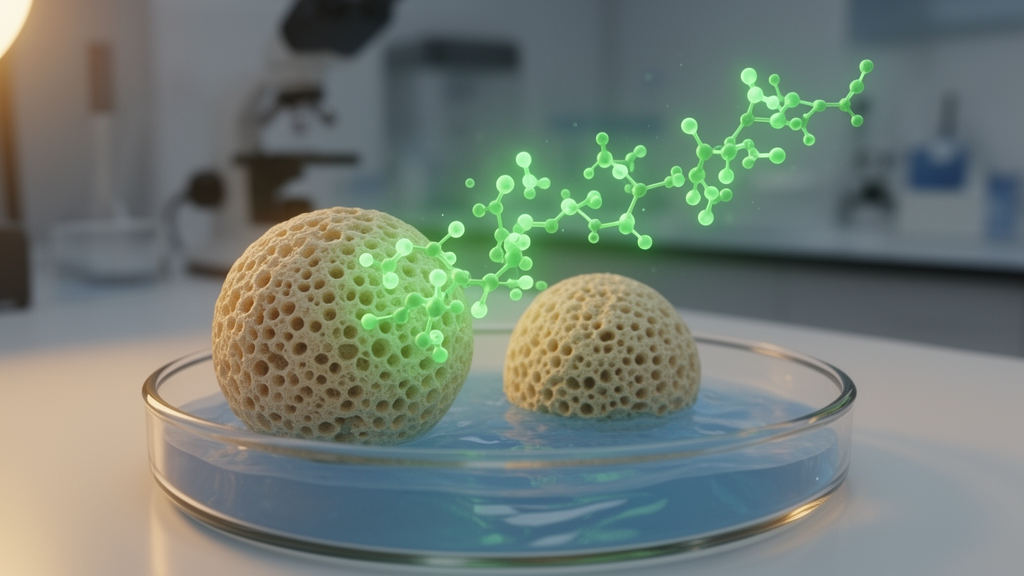
Image Credits: AI Generated

DOI: 10.1186/s13568-026-02105-6

Keywords: alkane monooxygenase, LadA, enzyme immobilization, Geobacillus thermodenitrificans, Seplite LX120, biocatalysis, thermostability, long-chain alkanes, terminal oxidation, industrial biotechnology, enzyme reuse, biodegradation

News Source: Gregory Coleman. (October 30, 2026). Immobilized Enzyme Shows Enhanced Stability for Alkane Bioconversion. Scienmag.


Tags: alkane monooxygenasebiocatalysisbiodegradationenzyme immobilizationenzyme reuseGeobacillus thermodenitrificansindustrial biotechnologyLadAlong-chain alkanesSeplite LX120terminal oxidationthermostability
Share12Tweet7Share2ShareShareShare1

Related Posts

Microbial Sources and Stress Shape the Hidden Endophytes of an Invasive Plant

Microbial Sources and Stress Shape the Hidden Endophytes of an Invasive Plant

October 30, 2026
Firebreaks Leave Lasting Scars in Grasslands While Wildfire Heals Fast

Firebreaks Leave Lasting Scars in Grasslands While Wildfire Heals Fast

October 30, 2026

Hidden Peptides in Non-Coding RNAs Reshape Cardiovascular Biology

October 30, 2026

Phage K Holin’s C-Terminal Region Shapes Antibacterial Activity, Study Finds

October 30, 2026

POPULAR NEWS

  • Microbial Sources and Stress Shape the Hidden Endophytes of an Invasive Plant

    Microbial Sources and Stress Shape the Hidden Endophytes of an Invasive Plant

    29 shares
    Share 12 Tweet 7
  • Firebreaks Leave Lasting Scars in Grasslands While Wildfire Heals Fast

    29 shares
    Share 12 Tweet 7
  • ZNF207 shields glutamine transporter ASCT2 from degradation to fuel liver cancer growth

    29 shares
    Share 12 Tweet 7
  • Systematic review maps sustainability tensions in offshore wind development

    29 shares
    Share 12 Tweet 7

About

We bring you the latest biotechnology news from best research centers and universities around the world. Check our website.

Follow us

Recent News

Microbial Sources and Stress Shape the Hidden Endophytes of an Invasive Plant

Firebreaks Leave Lasting Scars in Grasslands While Wildfire Heals Fast

ZNF207 shields glutamine transporter ASCT2 from degradation to fuel liver cancer growth

Subscribe to Blog via Email

Enter your email address to subscribe to this blog and receive notifications of new posts by email.

Join 86 other subscribers
  • Contact Us

Bioengineer.org © Copyright 2023 All Rights Reserved.

Welcome Back!

Login to your account below

Forgotten Password?

Retrieve your password

Please enter your username or email address to reset your password.

Log In
No Result
View All Result
  • Homepages
    • Home Page 1
    • Home Page 2
  • News
  • National
  • Business
  • Health
  • Lifestyle
  • Science

Bioengineer.org © Copyright 2023 All Rights Reserved.
