


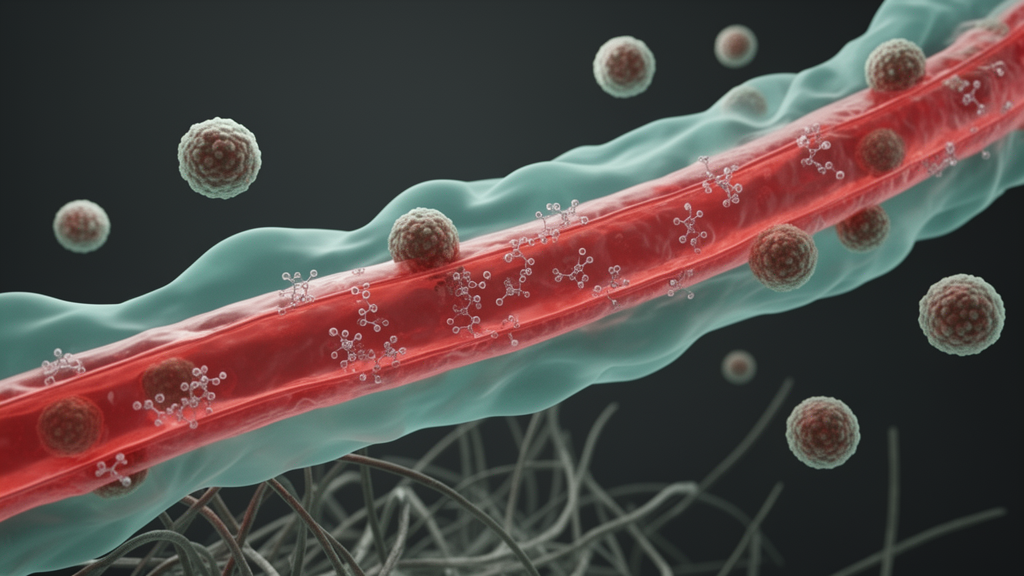
Tumor blood vessels do far more than deliver oxygen and nutrients to growing cancers. A review published in Cellular Oncology on 23 September 2026 argues that the vasculature surrounding and inside tumors should be understood as an active immune-regulatory system, one that continuously shapes how immune cells behave within the tumor microenvironment. The article, authored by Xiaoying Li, Hao Wei, Dan Cao and Wanting Hou, synthesizes recent findings from single-cell, spatial and functional multi-omics studies into a single conceptual framework.
The authors propose that the tumor vascular niche regulates immunity through three interconnected dimensions. The first, which they call angiocrine education, describes how signals produced by vascular and stromal cells reprogram the states of myeloid and lymphoid immune cells. Rather than simply lining the vessel wall, endothelial cells emit molecular cues that can push infiltrating immune populations toward immunosuppressive phenotypes.
The second dimension, termed metabolic exclusion, centers on the chemical environment created by abnormal tumor vessels. According to the review, endothelial metabolic rewiring, accumulation of lactate, acidosis and competition for nutrients combine to impair the fitness and function of immune cells. In this view, the vasculature does not merely fail to support immune attack; it actively constructs a metabolic landscape in which immune cells struggle to operate.
The third dimension, structural barricading, concerns the physical architecture of tumor vasculature. Pericyte loss, abnormal vascular branching and vasculogenic mimicry, a process in which tumor cells form vessel-like structures, restrict the trafficking and infiltration of immune cells. Even a functionally potent immune response, the framework implies, can be physically limited by the routes available for entering tumor tissue.
A central claim of the review is that these three mechanisms do not operate independently. The authors describe a self-reinforcing vascular–immune circuit in which structural abnormalities intensify hypoxic and metabolic stress, metabolic perturbations reshape endothelial and stromal signaling, and angiocrine programs further entrench immunosuppressive immune states and vascular dysfunction.
The framework also addresses spatial heterogeneity. The authors map how the vascular–immune circuit manifests across distinct niches within and around tumors, including perivascular regions, hypoxic zones, venular areas, stem cell-associated compartments and pre-metastatic niches. Because these compartments differ in vascular architecture and signaling, the review argues that immune regulation varies substantially both within a single tumor and across different tumor types, complicating any assumption of a uniform tumor microenvironment.
From a translational standpoint, the authors position the framework as a basis for defining tumor vascular niche states that could inform biomarker development, patient stratification and the rational selection of therapies. The interventions they discuss include vascular normalization, metabolic intervention and vascular–immune combination therapies. As a conceptual review, the article proposes how such approaches might be matched to specific vascular niche states rather than reporting new clinical trial outcomes.
The review’s synthesis rests on advances in single-cell and spatial multi-omics technologies, which have made it possible to resolve vascular abnormalities and immune states at higher resolution than earlier bulk approaches. The authors note that these methods have revealed coordinated changes in endothelial signaling, metabolism and architecture that regulate immune states, moving the field beyond the older picture of tumor vessels as passive conduits.
By framing the tumor vascular niche as a spatially organized and mechanistically integrated immune-regulatory system, the article aims to link vascular pathology to immune dysfunction in a way that can guide what the authors call mechanism-informed precision oncology. The paper is published open access, carries a permanent DOI and is currently available as a peer-reviewed accepted version that may undergo further edits before the final version of record appears.
Subject of Research: The role of the tumor perivascular microenvironment in regulating antitumor immunity
Article Title: The tumor perivascular microenvironment in immune regulation: mechanisms, spatial heterogeneity, and therapeutic opportunities
Article References: Li, X., Wei, H., Cao, D., & Hou, W. (2026). The tumor perivascular microenvironment in immune regulation: mechanisms, spatial heterogeneity, and therapeutic opportunities. Cellular Oncology. https://doi.org/10.1007/s13402-026-01298-z
Image Credits: AI Generated
DOI: 10.1007/s13402-026-01298-z
Keywords: tumor microenvironment, tumor vasculature, angiocrine signaling, immunoregulation, metabolic exclusion, vascular normalization, spatial heterogeneity, pericytes, vasculogenic mimicry, hypoxia, precision oncology, review
News Source: Nathaniel Bowman. (October 30, 2026). Tumor Blood Vessels Act as an Immune-Regulatory Hub, Review Proposes. Scienmag.



